After-Sales:
 EN
EN
 AR
AR
 HR
HR
 NL
NL
 FI
FI
 FR
FR
 DE
DE
 EL
EL
 HI
HI
 IT
IT
 PT
PT
 RO
RO
 RU
RU
 ES
ES
 TL
TL
 ID
ID
 SL
SL
 VI
VI
 ET
ET
 MT
MT
 TH
TH
 FA
FA
 AF
AF
 MS
MS
 IS
IS
 MK
MK
 HY
HY
 AZ
AZ
 KA
KA
 UR
UR
 BN
BN
 BS
BS
 KM
KM
 LO
LO
 LA
LA
 MN
MN
 NE
NE
 MY
MY
 UZ
UZ
 KU
KU


News
Why choose a commercial gas cooktop?
The Role of the Cooktop in a Professional Kitchen
A commercial gas cooktop is often the hardest-working piece of equipment in a restaurant kitchen, running continuously through lunch and dinner services, sometimes 12 to 16 hours per day. Unlike residential cooktops that are designed for occasional use, a commercial gas cooktop is engineered for durability under extreme conditions, with heavy-gauge stainless steel construction, sealed burners that resist spills and corrosion, and control knobs rated for tens of thousands of cycles. The decision between gas and electric cooking equipment has far-reaching implications for food quality, energy costs, kitchen ventilation requirements, and the type of cuisine a kitchen can produce. For most professional chefs, the instant heat response and visible flame of a commercial gas cooktop provide the precision control needed for techniques such as wok cooking, flame searing, and rapid temperature changes that are fundamental to many cuisines.
Gas vs. Electric: The Technical Trade-Offs That Matter
The primary advantage of a commercial gas cooktop is thermal responsiveness. Gas burners deliver heat to the cooking surface almost instantly and cool down just as quickly when the flame is reduced or extinguished. This immediate control over heat input allows chefs to execute delicate sauces that require rapid temperature adjustments, sear proteins at high heat then reduce to a simmer, and manage multiple pans across different burners with independent heat levels. Electric cooktops, by contrast, have thermal inertia. The heating element takes time to reach temperature and retains residual heat after being turned down, which can lead to scorching if the chef is not careful. Gas also provides visual feedback through the flame, allowing the cook to judge heat intensity at a glance without relying solely on control knob positions. From an operational cost perspective, natural gas is generally less expensive per BTU than electricity in most markets, though the total cost comparison must factor in the additional ventilation requirements that gas equipment demands.
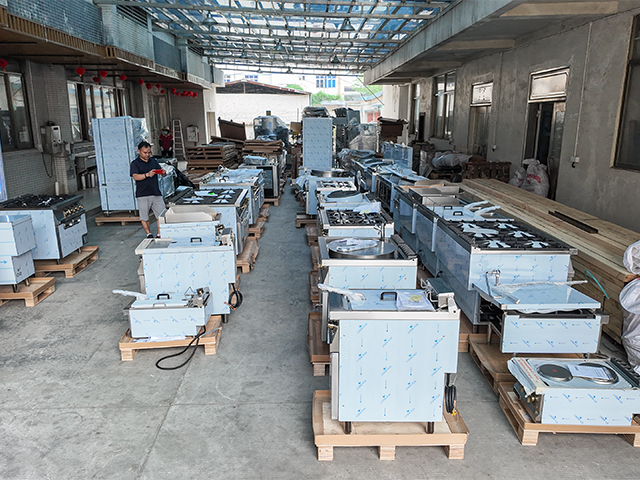
Key Features to Evaluate When Selecting a Commercial Gas Cooktop
When evaluating a commercial gas cooktop for purchase, several technical specifications deserve close attention. Burner output is measured in BTUs, with typical commercial burners ranging from 20,000 to 35,000 BTUs per burner. High-output burners of 35,000 BTUs are essential for wok cooking, rapid boiling, and high-volume saute stations, while 20,000 BTU burners suffice for general-purpose cooking and simmering. The grate design affects both pan stability and cleaning effort. Continuous grates that span multiple burners allow chefs to slide heavy stock pots between burners without lifting, while individual grates are lighter and easier to remove for cleaning. The ignition system should be either standing pilot or electronic spark ignition. Electronic ignition is more energy-efficient but requires a nearby electrical connection. Standing pilots are simpler and operate independently of electricity but consume a small amount of gas continuously. The cooktop's overall dimensions and configuration must fit the kitchen's layout, with options ranging from compact 24-inch two-burner units for small prep kitchens to 72-inch six-burner models with integrated griddles for main cooking lines.
Ventilation and Safety Requirements for Gas Cooktops
Every commercial gas cooktop must be installed under a Type I exhaust hood, as gas combustion produces grease-laden vapors, carbon monoxide, and heat that require mechanical ventilation. The hood must be sized to capture the entire cooking surface with an overhang of at least six inches on all open sides. The exhaust rate, measured in cubic feet per minute or CFM, is calculated based on the cooktop's surface area and the type of cooking being performed. Heavy-duty cooking with high grease production, such as grilling or wok cooking, requires higher CFM rates than light-duty cooking like simmering or boiling. The fire suppression system, typically an ANSUL wet chemical system, must be designed to cover all gas cooking equipment, with nozzles positioned to discharge suppressant directly over each burner. Gas safety also requires a manual gas shutoff valve within easy reach of the cooktop, and in many jurisdictions, an automatic gas shutoff interlocked with the exhaust hood and fire suppression system. The gas supply line must be sized correctly for the total BTU load of all connected equipment, with a dedicated shutoff and flexible connector for each appliance.
Practical Operation Comparison: Gas vs. Electric in a Working Kitchen
Consider a mid-scale restaurant that serves 200 covers during dinner service with a menu featuring pan-seared fish, stir-fried vegetables, pasta dishes with made-to-order sauces, and simmered stocks. A six-burner commercial gas cooktop costing approximately 4,500 dollars handles this menu with ease, providing instant heat control for the fish station, high-BTU output for the wok station, and stable low-heat output for the sauce and stock stations. The annual natural gas cost for this cooktop, operating 12 hours daily, is approximately 900 to 1,200 dollars at average commercial gas rates. An equivalent electric induction cooktop setup would cost approximately 8,000 to 10,000 dollars for the equipment and approximately 1,500 to 2,000 dollars annually in electricity, though it would reduce the kitchen's cooling load by generating less ambient heat. The gas cooktop also allows the use of traditional round-bottom woks, which do not function on flat induction surfaces, preserving the restaurant's ability to produce authentic stir-fried dishes. This real-world comparison illustrates why gas remains the preferred choice for most full-service restaurant kitchens, despite induction technology's efficiency advantages in specific applications.
Maintenance and Longevity Considerations
A well-maintained commercial gas cooktop can serve a kitchen reliably for 10 to 15 years, significantly outlasting most electric alternatives. Daily maintenance includes wiping down the stainless steel surfaces, removing and cleaning the grates and burner caps, and checking that burner ports are free of debris that could cause uneven flame patterns. Weekly maintenance involves a deeper cleaning of the burner assemblies, inspection of gas connectors for signs of wear or leakage, and verification that all control knobs operate smoothly. Quarterly professional service should include a combustion analysis to verify proper gas-air mixture, inspection of the ignition system, and testing of the gas safety valve. The most common repair issues with commercial gas cooktops are igniter failures, thermocouple degradation that prevents burners from staying lit, and gas valve wear from repeated cycling. Keeping a spare igniter kit and a set of thermocouples in inventory can minimize downtime, as these are parts that service technicians can replace in under 30 minutes, provided the parts are on hand.
Questions and Answers
Q: Is a commercial gas cooktop more expensive to operate than an induction cooktop?
A: In most markets, natural gas costs less per BTU than electricity, making gas cooktops cheaper to operate. However, gas cooktops require a Type I exhaust hood, which adds to both capital and operating costs. The total cost analysis should include equipment cost, energy cost, ventilation cost, and the value of cooking performance for your specific menu. For a typical full-service restaurant, the total cost of ownership over 10 years favors gas for most cooking applications.
Q: Can I install a commercial gas cooktop in a space without an existing gas line?
A: Yes, but it requires a licensed gas fitter to run a new gas line from the meter or main to the kitchen. The installation cost depends on the distance, pipe sizing requirements, and any structural obstacles. In some locations, propane gas may be used as an alternative to natural gas, with on-site storage tanks. Always check local building codes and obtain necessary permits before beginning any gas line installation.
Q: What size commercial gas cooktop do I need for my restaurant?
A: The size depends on your menu, peak volume, and available kitchen space. A general guideline is one burner per two to three menu items that require stovetop cooking during peak service, plus at least one spare burner for stock pots or backup. A 60-seat bistro may operate with four burners, while a 150-seat full-service restaurant typically needs six to eight burners. Consult with a kitchen equipment supplier who can analyze your menu and service patterns to recommend the right configuration.