After-Sales:
 EN
EN
 AR
AR
 HR
HR
 NL
NL
 FI
FI
 FR
FR
 DE
DE
 EL
EL
 HI
HI
 IT
IT
 PT
PT
 RO
RO
 RU
RU
 ES
ES
 TL
TL
 ID
ID
 SL
SL
 VI
VI
 ET
ET
 MT
MT
 TH
TH
 FA
FA
 AF
AF
 MS
MS
 IS
IS
 MK
MK
 HY
HY
 AZ
AZ
 KA
KA
 UR
UR
 BN
BN
 BS
BS
 KM
KM
 LO
LO
 LA
LA
 MN
MN
 NE
NE
 MY
MY
 UZ
UZ
 KU
KU

News
Tips for selling restaurant equipment effectively
Understanding the Restaurant Equipment Buyer's Mindset
Selling restaurant equipment is fundamentally different from selling consumer appliances or general commercial goods. The typical buyer is a restaurant owner, executive chef, or food service director who makes purchasing decisions based on durability, total cost of ownership, regulatory compliance, and the equipment's impact on menu execution. Unlike a homeowner buying a refrigerator based on aesthetics and brand recognition, a restaurant equipment buyer evaluates heat output in BTUs, stainless steel gauge thickness, NSF certification status, and the availability of replacement parts in their geographic region. Understanding this technical, operations-focused mindset is the first and most important step in selling restaurant equipment effectively. Buyers have been burned before by equipment that failed during dinner service, by suppliers who could not deliver on time, and by installations that did not pass health department inspection. They are skeptical of marketing claims and trust tangible evidence: specification sheets, third-party certifications, client references, and the demonstrated technical knowledge of the sales representative.
Build Credibility Through Technical Knowledge, Not Sales Pitches
The most effective restaurant equipment sales professionals are those who can discuss the technical details of their products with the same fluency as a chef or kitchen designer. This means understanding the difference between a 20,000 BTU and a 35,000 BTU burner and explaining when each is appropriate for the buyer's menu. It means knowing the electrical requirements for a combi oven, including voltage, phase, and amperage, and confirming compatibility with the buyer's existing panel capacity before writing the order. It means recognizing when a Type I exhaust hood is required versus when a Type II hood suffices, and advising on the ventilation implications of equipment choices before the buyer commits. When a sales representative demonstrates this level of technical competence, the conversation shifts from price negotiation to solution consultation. Buyers are willing to pay a premium for equipment when they trust that the supplier has specified the correct solution and will stand behind it.
Offer Complete Solutions, Not Just Individual Products
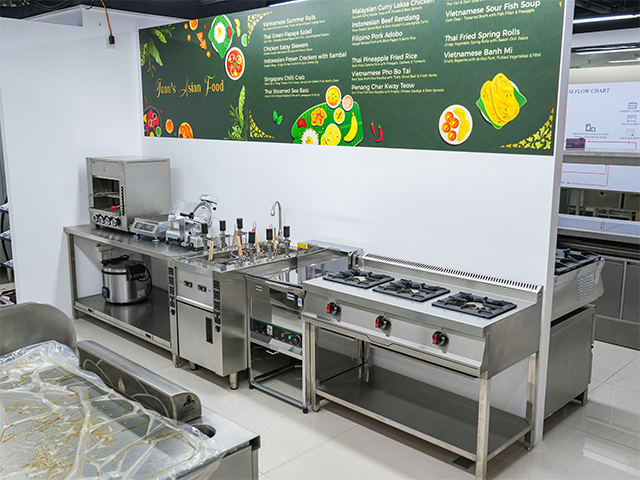
Restaurant operators rarely need a single piece of equipment in isolation. A new fryer purchase typically implies the need for a filtration system, a fire suppression nozzle adjustment, possibly a larger grease interceptor, and accompanying utensils and accessories. A commercial refrigerator purchase often leads to questions about shelving configurations, temperature monitoring systems, and whether the unit should be paired with a prep table. By selling restaurant equipment as part of a complete solution, the supplier delivers more value to the buyer while increasing the average transaction size. This approach requires the sales team to understand how different equipment categories interact within a kitchen ecosystem. A cooking line is not just a collection of independent appliances. It is an integrated system where the performance of each component affects the output of the whole. The supplier who can design and quote a complete cooking line, including the hood, fire suppression, gas connections, and stainless steel worktables, delivers a far more compelling value proposition than one who simply offers the lowest price on a six-burner range.
Leverage Project References and Case Studies
Nothing builds buyer confidence in restaurant equipment sales like demonstrated experience with similar projects. Maintain a portfolio of completed kitchen projects organized by cuisine type, project scale, and geographic region. When a prospect inquires about equipment for a new sushi restaurant, the ability to reference six recent sushi kitchen installations and discuss the specific equipment configurations used in each is far more persuasive than reciting generic product specifications. Case studies should include photographs of the completed kitchen, a list of all equipment supplied, any custom fabrication or modification work performed, and a testimonial from the chef or owner. For prospects who request reference calls, connect them with project contacts who have agreed to serve as references, ideally those whose projects are similar in scope and cuisine to the prospect's planned operation. A 10-minute reference call with a satisfied chef who can speak to equipment performance during service is worth more than an hour of sales presentation.
Provide After-Sale Support That Creates Repeat Business
Restaurant equipment sales do not end when the equipment is delivered and installed. The most profitable dealer-distributor relationships are built on ongoing support that creates loyalty and repeat purchases. This support infrastructure includes a responsive spare parts operation with commonly needed components in stock, a network of qualified service technicians who can respond to emergency repair calls within 24 hours, and a preventive maintenance program that extends equipment life and reduces unexpected failures. When a restaurant's fryer goes down on a Friday night and the supplier can dispatch a technician who arrives within two hours with the replacement thermocouple in hand, that supplier earns a customer for life. Preventive maintenance contracts also provide predictable recurring revenue for the dealer while reducing the buyer's total cost of ownership. A quarterly service visit that includes burner cleaning, gas pressure verification, thermostat calibration, and hinge lubrication costs the restaurant a few hundred dollars per visit but can prevent a five-thousand-dollar compressor replacement.
Practical Sales Approach: A Dealer Success Scenario
Consider a kitchen equipment dealer who received an inquiry from a restaurant group planning to open three fast-casual locations over an 18-month period. Instead of responding with a standard equipment quote, the dealer proposed an initial consultation at the group's test kitchen, where the sales representative spent three hours with the executive chef and operations director mapping out the menu workflow, discussing equipment preferences, and identifying potential pain points from the group's previous buildouts. Based on this consultation, the dealer provided a comprehensive proposal that specified equipment for all three locations, included volume discount pricing, scheduled phased deliveries to match construction timelines, and offered a two-year preventive maintenance contract covering all supplied equipment. The proposal also identified three equipment substitutions that would reduce the total package cost by 12 percent without compromising performance. The restaurant group accepted the entire proposal without requesting competitive bids, because the dealer had demonstrated a deeper understanding of their operational needs than any previous supplier. This approach to selling restaurant equipment, prioritizing consultation and long-term partnership over transactional pricing, consistently produces higher margins and customer retention rates.
Questions and Answers
Q: How should I price used or refurbished restaurant equipment?
A: Used restaurant equipment typically sells for 40 to 60 percent of the new retail price, depending on age, condition, brand reputation, and whether the unit has been professionally refurbished. Factors that increase value include recent service records, remaining manufacturer warranty, and the availability of replacement parts. Always provide a warranty of at least 30 days on used equipment and be transparent about any known issues. Buyers of used equipment are particularly sensitive to the risk of imminent failure, so documentation and warranty terms are more important than rock-bottom pricing.
Q: What certifications should restaurant equipment have to be sold in North America?
A: For the North American market, restaurant equipment must carry NSF International certification for sanitation compliance, UL or ETL listing for electrical safety, and CSA or UL certification for gas-fired equipment. Equipment without these certifications cannot pass health department or building code inspections. As a dealer or distributor, verifying certification status before listing equipment is essential to avoid liability and customer disputes.
Q: How can I differentiate my equipment dealership from online marketplaces?
A: Online marketplaces compete primarily on price and convenience. Differentiate by offering services they cannot match: on-site kitchen assessment and measurement, equipment layout and specification services, coordination with MEP contractors during installation, local spare parts availability with same-day pickup, emergency repair dispatch, and preventive maintenance programs. The value of having a dealer who can deliver, install, and service equipment within 48 hours in the same city far outweighs saving 5 to 10 percent on an online purchase that arrives on a pallet with no support.