After-Sales:
 EN
 AR
 HR
 NL
 FI
 FR
 DE
 EL
 HI
 IT
 PT
 RO
 RU
 ES
 TL
 ID
 SL
 VI
 ET
 MT
 TH
 FA
 AF
 MS
 IS
 MK
 HY
 AZ
 KA
 UR
 BN
 BS
 KM
 LO
 LA
 MN
 NE
 MY
 UZ
 KU

News
What Is An Industrial Kitchen Oven For Bakeries?
What an Industrial Kitchen Oven Actually Is
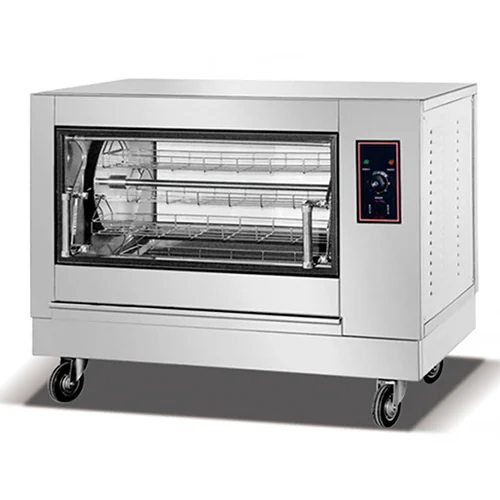
An industrial kitchen oven is a production baking appliance built for continuous daily output rather than occasional household use: heavier insulation, higher heating capacity, commercial grade controls, and a chamber sized to accept full bakery trays. For a bakery the industrial kitchen oven is not one appliance among many but the piece of bakery equipment that sets the rhythm of the whole day, because every product line waits on it. The difference between an industrial kitchen oven and a domestic oven is duty cycle. A domestic oven runs for an hour and rests; an industrial kitchen oven may run two shifts, six days a week, with the door opening every few minutes. That duty cycle drives the specification, not the number of functions printed on the control panel. Buyers should read every claim on a bakery oven data sheet against the hours that oven will actually work.
The Main Types of Bakery Oven
Most bakeries choose between four types, and the choice is a production decision rather than a matter of preference. A deck oven bakes on independent stone or steel decks, each with its own top and bottom heat, which is why a deck oven remains the standard for artisan bread, baguettes, and any product needing hearth contact and steam. A convection oven drives heated air with a fan, giving even colour across a full tray, which makes the convection oven the practical choice for croissants, cookies, and high volume sheet production. A rotary rack oven carries whole racks on a rotating platform, useful where loading speed matters more than hearth character. A combi oven adds programmable steam for mixed menus. A bakery needing both crust and volume often installs a deck oven for bread and a convection oven for pastry, then treats the pair as one bakery oven system rather than two separate purchases.
How to Size an Industrial Kitchen Oven
Sizing starts from the production list, never from the catalogue. Write down each product, its batch size, its bake time, and how many batches a day, then convert that into chamber area and the number of decks or racks required. A bakery oven that is slightly too large wastes energy on warm up and idle time; an industrial kitchen oven that is too small forces double shifts and bakes at compromised temperature. Tray format is the second constraint, because the industrial kitchen oven must accept the tray and rack size the bakery already uses, or every rack in the building becomes obsolete overnight. Steam injection, hearth material, and hood requirements should be settled at the same stage, since adding steam to a deck oven later is a rebuild rather than an upgrade. Floor loading and door clearance belong in sizing an industrial kitchen oven as well, because a chamber that cannot be moved into the building is not a bargain.
Temperature Control, Consistency, and Bakery Equipment Quality
Consistency separates professional bakery equipment from equipment that merely reaches temperature. Look for independent top and bottom heat control on every deck of a deck oven, because lean bread needs floor heat while laminated pastry needs a gentler top. Look for recovery time after the door opens: a convection oven that takes minutes to recover will produce pale trays followed by dark trays within the same bake. Digital controllers with programmable profiles let a bakery oven repeat a curve instead of relying on a baker's memory, which matters when staff rotate between shifts. Insulation, gasket quality, and door hinge design are the least discussed parts of an industrial kitchen oven and the ones that decide energy cost across ten years. A bakery comparing bakery equipment should ask for the recovery figure in writing, not only the maximum temperature.
Energy Use, Ventilation, and Installation Requirements
An industrial kitchen oven is an energy intensive appliance, and its running cost is decided at specification. Gas deck oven models usually cost less per unit of delivered heat, while electric convection oven models offer finer low temperature control and simpler installation where gas is unavailable. Whichever fuel is chosen, the industrial kitchen oven has to be matched to the ventilation plan, because baking releases heat, moisture, and combustion products, so the hood must be sized for the oven load and for the bakery equipment standing beside it. Utilities should be verified before delivery: gas type and pressure, electrical phase and capacity, water for steam, and drainage. A bakery oven installed into a room that cannot support its heat load will either run below its rated temperature or push the ventilation system past design capacity, and neither fault is solved by the manufacturer.
Evaluating a Bakery Oven Supplier
A supplier should be able to discuss the production list, not simply quote a model number. Ask for chamber dimensions, tray count, heat up time, recovery time, and hourly fuel consumption. Ask whether the decks of a deck oven are truly independent, whether the convection oven offers steam injection, and what the service interval is for burners or heating elements. Confirm that spare parts for the industrial kitchen oven are held locally, because a bakery oven waiting three weeks for a door gasket is a stopped production line. Ask for references from bakeries running the same product mix and ask what failed first on those installations. A supplier who provides bakery equipment to hotels, central kitchens, and retail bakeries can usually predict the failure points of a given configuration; one who cannot describe them is selling a box.
A Practical Specification Example
Consider a retail bakery producing 400 loaves and 60 trays of laminated pastry per day. The bread line needs hearth contact and steam, which points to a double deck oven with independent control; the pastry line needs even air and speed, which points to a convection oven with steam injection. The industrial kitchen oven package is then sized against tray format so that both units accept the same rack. Ventilation is calculated from the combined load of the deck oven and the convection oven, and the electrical supply is checked against the convection oven's elements rather than the entire bakery equipment list. Written specifications for each unit, reviewed by the baker and the ventilation contractor together, prevent the most expensive mistake in this category: buying the right bakery oven for the wrong room.
Q: What is the difference between a deck oven and a convection oven?
A: A deck oven bakes on solid hearth decks with independent top and bottom heat, favouring crust and oven spring, while a convection oven circulates air for even colour across full trays of pastry or cookies.
Q: How much capacity should a bakery oven have?
A: Size the industrial kitchen oven from daily batch counts, bake times, and tray format rather than from the largest model available, then leave modest headroom for seasonal peaks.
Q: Which bakery equipment is needed besides the oven?
A: A working bakery equipment list usually includes a spiral mixer, dough sheeter, proofer, blast chiller, and stainless work tables, all sized to feed and cool what the industrial kitchen oven can bake in a shift.