After-Sales:
 EN
 AR
 HR
 NL
 FI
 FR
 DE
 EL
 HI
 IT
 PT
 RO
 RU
 ES
 TL
 ID
 SL
 VI
 ET
 MT
 TH
 FA
 AF
 MS
 IS
 MK
 HY
 AZ
 KA
 UR
 BN
 BS
 KM
 LO
 LA
 MN
 NE
 MY
 UZ
 KU


News
How An Industrial Kitchen Steamer Works?
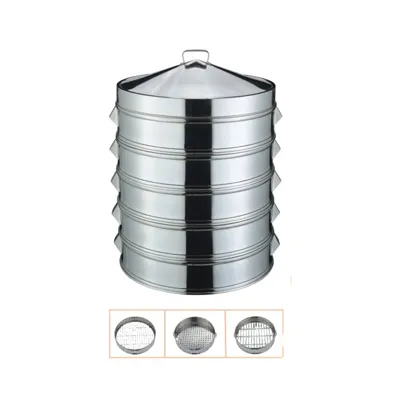
What an Industrial Kitchen Steamer Does to Food
An industrial kitchen steamer cooks with steam instead of dry heat, and that single difference decides what the appliance can do in a production kitchen. Moisture transfers heat far faster than air does, so an industrial kitchen steamer brings a tray of dumplings or a batch of rice up to serving temperature without drying the surface. Inside a commercial steamer the cooking medium is water in vapour form, which means the surface of the food never passes the point where its own moisture is driven out. A steamer cabinet holds several trays at once at a controlled temperature and pressure, so the output of a steamer cabinet is measured in trays per cycle rather than in portions per hour. For an operator comparing commercial kitchen equipment, the case for an industrial kitchen steamer is repeatability at volume: the thousandth portion leaves the chamber in the same condition as the first, without a cook watching it. That predictability is why steam equipment anchors the production line in hospitals, schools, and central kitchens rather than sitting at the edge of it.
The Three Ways Steam Is Generated
Steam generation separates one industrial kitchen steamer from another more than any other line on a specification sheet. A boiler based commercial steamer raises steam in a separate vessel and delivers it to the chamber, which gives a continuous supply and high output at the cost of water treatment and regular descaling. A generatorless steamer cabinet injects water directly onto heated elements inside the chamber, which simplifies maintenance and shortens warm up, though the steam supply is less constant under heavy load. Atmospheric steam cooking, where the chamber sits at outside pressure, is gentler and suits custards, fish, and delicate dumpling skins. Pressurised steam cooking runs hotter and shortens the cycle, but it demands a door interlock and trained staff. Choosing an industrial kitchen steamer therefore starts with the menu and with the maintenance capability of the site, not with the purchase price, because a commercial steamer that the team cannot descale will fail on schedule.
Chamber Design, Trays, and Capacity Planning
Capacity for an industrial kitchen steamer is counted in trays, and that number should drive the purchase. Take the busiest meal period, list every steamed item on the menu, and count the trays each one requires at that moment. A steamer cabinet with six levels running a fifteen minute cycle can turn a compartment several times inside a lunch service; a three level unit cannot, whatever the brochure implies. Tray format is the second constraint, because an industrial kitchen steamer must accept the gastronorm pans and perforated trays the kitchen already owns, or every rack in the building becomes useless. Chamber depth, door swing, and clearance for pulling a hot tray out with a cloth need checking against the room, not against the catalogue. Drainage, water quality, and extraction belong on the same drawing, since a commercial steamer that cannot drain safely will be closed by a hygiene inspector long before a service engineer sees it.
Water Quality and Maintenance: Where Steam Equipment Fails
Scale is the failure mode of steam cooking, and it is decided by water rather than by the machine. Every industrial kitchen steamer that heats water deposits minerals, and the rate depends on hardness and on how many cycles run each day. A commercial steamer fed hard water without treatment loses heat transfer within months, then blocks jets and probes, then lengthens every cycle until the kitchen stops relying on it. Ask for the water specification before installation, fit filtration where hardness exceeds the manufacturer's limit, and schedule descaling as a production task rather than a breakdown repair. Door gaskets on a steamer cabinet are consumables, and a worn gasket leaks steam the operator pays for twice, once in energy and once in time. A daily blowdown and a documented deliming interval separate an industrial kitchen steamer that lasts a decade from one that is replaced in three years.
Where Steam Beats Other Cooking Methods
Steam earns its place on a menu where volume, moisture, and rethermalisation matter more than browning. Rice, dim sum, vegetables, and seafood lose less weight in a commercial steamer than under dry heat, and lost weight is lost margin. Steam cooking also suits cook chill operations, because a steamer cabinet can bring a chilled tray back to serving temperature without drying it out. Institutions depend on the same logic: a hospital or a school must deliver an identical standard at eleven in the morning and again at six in the evening, and an industrial kitchen steamer does that without a skilled cook standing over it. The method is limited wherever crust or caramelisation is the point, which is why an industrial kitchen steamer is normally specified beside a combi oven and a range rather than instead of them. Read the menu first, then decide where the steamer sits in the line.
Specifying and Evaluating an Industrial Kitchen Steamer
A specification should begin with cycles per hour, not with litres of chamber volume. Ask for the heat up time from cold, the recovery time after the door opens, and the steam saturation at the tray level where the food actually sits. Confirm which water treatment the warranty requires, because that condition often decides the true cost of ownership. Ask how the element or boiler is reached for descaling and whether service parts are stocked locally. Request references from sites running the same menu, and ask how long their door gaskets last in practice. For a multi-site buyer the strongest signal is whether the supplier can also provide the commercial kitchen equipment around the unit, since an industrial kitchen steamer arriving without compatible trays, hoods, and drainage is a project delay rather than a saving. A written specification reviewed by the production manager and the maintenance lead together closes most of the risk before the order is placed.
Q: How long does an industrial kitchen steamer take to cook a tray of rice?
A: Expect twenty five to thirty five minutes in an atmospheric steamer cabinet and less in a pressurised chamber. Confirm the figure against your own tray depth and rice variety rather than a generic chart.
Q: Do I need water treatment for a commercial steamer?
A: Yes, wherever hardness exceeds the manufacturer's stated limit. Untreated water scales the elements, lengthens every cycle, and voids many warranties on a commercial steamer.
Q: Can steam cooking replace a range in a production kitchen?
A: No. Steam cooking cannot brown or seal a surface, so an industrial kitchen steamer works alongside a range and a combi oven rather than replacing either of them.