After-Sales:
 EN
 AR
 HR
 NL
 FI
 FR
 DE
 EL
 HI
 IT
 PT
 RO
 RU
 ES
 TL
 ID
 SL
 VI
 ET
 MT
 TH
 FA
 AF
 MS
 IS
 MK
 HY
 AZ
 KA
 UR
 BN
 BS
 KM
 LO
 LA
 MN
 NE
 MY
 UZ
 KU


News
Why Your Restaurant Needs A Commercial Gas Cooker?
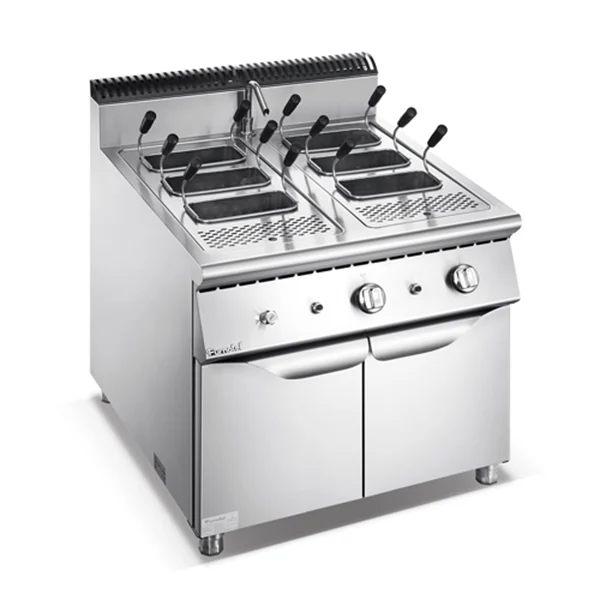
What a Commercial Gas Cooker Provides That Other Appliances Cannot
A commercial gas cooker burns mains natural gas or liquefied petroleum gas to deliver direct, high intensity heat to a cooking surface, typically through open burners, a wok ring, or a heated plate. Restaurants choose a commercial gas cooker for one reason that matters more than any specification sheet: heat arrives instantly and stops instantly. When a cook drops a pan onto a gas burner, the response is immediate, and when the pan is lifted the heat stops. Electric appliances must cycle a heating element up and down, which introduces a lag that shows up as inconsistent searing, uneven wok cooking, and longer recovery times during a rush. In a commercial kitchen producing hundreds of covers per service, that lag changes how the line works, how many staff are needed, and how consistent the output is at the end of a busy evening.
Gas Versus Electric: The Decision That Shapes the Whole Kitchen
The choice between a commercial gas cooker and an electric appliance is usually presented as a cost question, but it is really a question about cooking technique and workflow. A gas cooker heats up faster because the flame contacts the vessel directly rather than transferring heat through a coil or a glass surface. It also holds temperature well during peak hours and is generally cheaper to run where gas tariffs are low relative to electricity. The trade off is control resolution. Electric appliances, particularly induction, offer finer and more stable low temperature control, which suits slow reduction and precise holding. Gas responds faster at high heat but is less precise at low settings, and it adds heat load that the ventilation system must remove. Most commercial kitchens therefore end up with a mixed line of cooking equipment: a commercial gas range for wok work and stock production, induction for precise low temperature tasks.
The Main Configurations of a Commercial Gas Range
Commercial gas equipment is configured around the technique it must support, and the differences affect both output and the space required. A commercial gas range with open burners provides a flat grate over individual gas burner positions and suits general pan work, sauce production, and stock pots. A wok range delivers a concentrated flame through a deep ring, which is essential for stir frying because the wok must be surrounded by heat rather than sitting on top of it. A commercial gas range with an oven base combines surface cooking with roasting in one footprint, which suits smaller kitchens that cannot dedicate separate equipment. A tilting bratt pan provides a large flat heated surface for batch searing and braising, and tilting allows contents to be decanted without lifting. Choosing between these configurations is a menu question first and a budget question second, because a kitchen that buys a commercial gas cooker and then tries to run wok dishes will produce poor results regardless of the price paid.
What to Specify Before Ordering a Commercial Gas Cooker
Specification of a commercial gas cooker should begin with the gas supply available on site, because the appliance must match the fuel type and pressure the building can deliver. Natural gas and liquefied petroleum gas require different burner jets, and a commercial gas range configured for the wrong fuel will either underperform or create a safety hazard. Gas burner power is the second variable: total output should be calculated from the dishes the kitchen actually cooks, not from a desire to have the largest number in the catalogue. A commercial gas range with excessive total gas burner power adds heat load that the exhaust hood must remove, which raises both ventilation capacity and running cost. Physical dimensions matter as much as output: appliance depth, working height, and clearance to adjacent cooking equipment determine whether the gas burner line is comfortable to work at for ten hours. Material and construction deserve the same scrutiny as on any stainless unit, including cooking surface grade, frame thickness, and whether the gas burner assembly can be removed for cleaning. Finally, confirm spare parts availability, because a gas burner is a serviceable item.
Ventilation, Fire Safety, and Installation Compliance
A commercial gas cooker produces combustion products as well as cooking effluent, and both must be handled by the extraction system. The exhaust hood must be sized to the total heat load of the gas burner line and any other cooking equipment beneath it, with the canopy covering the full cooking surface and make up air replacing the extracted volume at a rate that keeps the kitchen in pressure balance. Gas cooking equipment also requires a fire suppression arrangement appropriate to the fuel and cooking type, with the fuel supply shut off automatically when the system discharges. Installation must be carried out by technicians qualified for gas work locally, and the installation should be documented, because insurers and inspectors ask for commissioning records. A commercial kitchen that installs a commercial gas range without verifying ventilation capacity will discover the problem as heat, condensation, and odour complaints during the first busy service.
An Application Example in a High Volume Noodle Kitchen
Consider the commercial gas cooker specification for a restaurant whose menu is built around wok cooked noodles and rice, with a lunch peak compressing most of the day revenue into ninety minutes. The kitchen needs gas burners that reach high heat immediately, recover fast between dishes, and let the cook lift and toss without waiting for an element to respond. A wok range with a dedicated gas burner ring per station solves the cooking problem, but it also sets the ventilation requirement, because the heat output of six simultaneous gas burners is substantial. The practical sequence is to define the menu and target dishes per hour, calculate the gas burner count and output, size the exhaust hood from the total heat load, and only then confirm the room can support that ventilation capacity. Kitchens that reverse the order, buying a commercial gas range first and installing ventilation afterwards, usually end up derating the equipment or accepting a working environment staff will not tolerate in summer.
How to Evaluate Suppliers and Avoid Common Purchasing Errors
Buyers should treat a commercial gas cooker purchase as a maintenance commitment rather than a one time transaction. Ask for the gas burner assembly drawings, the fuel type and pressure requirement in writing, and the recommended spare parts list. Confirm whether the supplier provides installation supervision and whether commissioning records are issued. Check that the commercial gas range carries the food safety and electrical certifications required in the destination market, and that gas components meet local conformity requirements. Verify the service structure: who attends a gas burner fault, how quickly, and whether parts are held locally. The most common expensive errors are ordering the wrong fuel configuration, under specifying ventilation, and choosing gas burner power by intuition rather than by dish output. Each is avoidable at the specification stage and expensive to correct afterwards, which is why a written specification for the commercial gas cooker, reviewed by both the kitchen operator and the ventilation contractor, is worth the extra week.
Q: Is a commercial gas cooker cheaper to run than electric equipment?
A: It depends on local energy prices. A gas cooker is often cheaper per unit of heat delivered where gas tariffs are low, but induction offers higher efficiency at the appliance.
Q: How much gas burner power does a restaurant kitchen need?
A: Calculate from the dishes cooked per hour and the techniques used, then add a modest margin. Excess gas burner power on a commercial gas range raises heat load and ventilation cost.
Q: Can a commercial gas cooker be installed in a kitchen with limited ventilation?
A: Not safely. A commercial gas cooker requires extraction sized to its heat load plus make up air to maintain pressure balance, verified before the appliance is specified.