After-Sales:
 EN
EN
 AR
AR
 HR
HR
 NL
NL
 FI
FI
 FR
FR
 DE
DE
 EL
EL
 HI
HI
 IT
IT
 PT
PT
 RO
RO
 RU
RU
 ES
ES
 TL
TL
 ID
ID
 SL
SL
 VI
VI
 ET
ET
 MT
MT
 TH
TH
 FA
FA
 AF
AF
 MS
MS
 IS
IS
 MK
MK
 HY
HY
 AZ
AZ
 KA
KA
 UR
UR
 BN
BN
 BS
BS
 KM
KM
 LO
LO
 LA
LA
 MN
MN
 NE
NE
 MY
MY
 UZ
UZ
 KU
KU


News
What defines good commercial catering equipment?
The Foundation of Professional Culinary Engines
In the realm of professional food service, the kitchen isn’t just a kitchen; it’s an engine. Be it a bustling hotel restaurant, a school cafeteria, or even a central kitchen, the quality of your machinery dictates how fast and how much output can be produced. When we ask, “What defines good commercial catering equipment?” we’re not just talking about some fancy shiny stainless steel or a digital display. We’re looking for a combination of strong, accurate, and operational efficiency that can endure the never-ending brutal conditions of a commercial kitchen. From fieldwork experience spanning years in large kitchen projects, it is evident that superior equipment has the ability to merge top quality engineering with a chef’s basic, but also practical, requirements.
Industrial-Strength Construction and Material Integrity
First, let’s take a look at the physical construction of professional-grade commercial catering equipment, and in particular, the equipment’s commercial-grade construction. To illustrate, in a home setting, an oven might be used for two hours each day. But in commercial environments, ovens may work for literally up to twenty-four hours!
So, “good” equipment will be in 304-series stainless steel which is a mark of quality engineering. It is visually superior to other steels, and it is also non-corrosive at elevated temperatures, resists the destructive effects from the chemicals used in the dishwasher, and the high and low temperatures of the deep cleaning process. To explore reliable hardware built with this robust DNA, you can browse our full range of certified
From what I have gathered, the major cause for failure in cheaper units during site visits seems to stem from the structural joints or the plate thickness. Equipment of higher caliber has frame warping protections in the form of reinforced frames and seamless welds. This "industrial-strength" DNA vastly extends the potential operational lifespan of the units, far outliving cheaper alternatives and drastically decreasing long-term ownership costs from structural failure.
Precision Engineering for Consistent Culinary Results
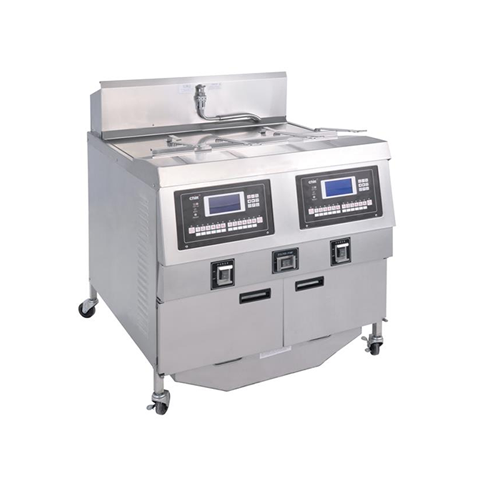
Commercial catering equipment must incorporate the highest level of engineering to ensure repeatable success for the user. That level of engineering must precede the construction of the unit. An exemplary commercial fryer, for example, must incorporate an efficient heating system and must ensure the maintenance of a set temperature. An exemplary commercial fryer must also have the ability to recover heat instantly.
It is also through experience with a variety of catering clients that we can note a temperature tolerance of plus or minus 5°C can cause the failure of an entire batch of very delicate sweet pastries or can cause the failure to sear meat at an optimum level. The ability to maintain a set temperature in real-time is achieved through the use of high-quality temperature measuring devices coupled with advanced PID (Proportional Integral Derivative) controllers.
Workflow Automation and Throughput Optimization
Absolute certainty in one’s craft comes from confidence that every piece of heavy-duty culinary machinery will perform equally well, no matter how many times one needs to open the pass. Control, still, is critical. Automation of the process means it is possible to predict sales, as well as how quickly staff will serve customers. With more predictable workflows, head chefs are more confident in their scheduling and task delegation, since predictability in the process will facilitate the staff to finish their tasks faster and serve customers more efficiently.
Seen from a different angle, commercial cookers produced today must invariably assist their owner in process automation and must assist in the owner’s most expensive tasks—labor and time. Incorporating smart
Hygienic Design and Food Safety Compliance
Absolute compliance with the requirements to ensure hygienic conditions and food safety demonstrates a processor’s reliability. Any commercial catering equipment that is not easy to clean should not be used. Top-notch equipment utilizes the principles of "Hygienic Design” for example: rounded internal corners (coved corners) for smooth food build-up evacuation, removable gaskets for decontamination, and IPX-rated waterproof controls that are hose-down able.
Based on the industry guides like NSF (National Sanitation Foundation) and CE, professional equipment must minimize so-called “dead zones” where bacteria live and thrive. Throughout the years capitalizing on knowledge during kitchen refurbishment, ease of maintenance is as important as the speed of cooking. A machine that requires three hours to disassemble, clean, and reassemble will end up being neglected, creating a potential for health code violations.
Energy Sustainability and Long-Term Operational Value
With “green” laws becoming stricter and global energy costs increasing, good commercial catering equipment now must also offer an element of caring for the environment. High-efficiency burners, better insulation, and smart power-saving modes are now no longer optional extras; they are required as standard.
More than just resulting in a smaller energy bill, an energy-efficient appliance means less heat will be released into the kitchen, so the work environment will become more comfortable and the staff’s HVAC burden will be lessened. Energy efficiency in commercial appliances offers a potential saving of 25% in annual operational costs, according to energy experts. For a business, the value of equipment lies in these savings; it is not just a purchase, but a financial commitment to the organization’s future planning.
Ergonomics and Human-Centric Kitchen Integration
Lastly, good commercial catering equipment has to consider how a human will work in a kitchen: ergonomics. Staff fatigue and safety can be affected by the height of a handle, the weight of a door, and the placement of a display. While working with international hotel chains, we look for equipment that is designed to work with modular kitchens. This turns a standard kitchen into one that is easily adaptable to any menu.
Of course, the best equipment also requires consistent and good maintenance. This is bound to happen when a machine is good, and it becomes very costly if it is unavailable. A machine is only a paperweight without good and consistent maintenance. Reliability is not just about the quality of the build, but the accessibility of service to keep the engine running.
Frequently Asked Questions (FAQs)
Q1: Why is 304-series stainless steel considered the industry standard for commercial catering equipment construction?
A: 304-series stainless steel contains high levels of chromium and nickel, making it highly non-corrosive at elevated temperatures and structurally resilient against heavy daily impacts. Unlike cheaper alternatives, it completely resists the destructive effects of harsh dishwashing chemicals, specialized commercial cleaning agents, and thermal shocks during deep-cleaning hose-downs. Its non-porous surface also prevents food particles and bacteria from binding to the metal, ensuring strict food safety compliance.
Q2: How do PID controllers prevent temperature fluctuations from ruining delicate culinary products?
A: Traditional heating systems rely on basic thermostats that turn fully on or off, causing wide temperature swings that can exceed a ±5°C variance—a fluctuation that easily ruins delicate pastries or compromises precision meat searing. PID (Proportional-Integral-Derivative) controllers utilize continuous mathematical feedback loops to calculate the exact heat output required. By automatically adjusting energy flow in real-time, they stabilize temperature ranges down to precise fractions of a degree, guaranteeing consistent throughput results.
Q3: What are the primary benefits of utilizing IPX-rated waterproof controls in heavy-duty commercial kitchens?
A: Commercial kitchen operations demand aggressive, high-pressure sanitation schedules to eliminate grease buildup and potential cross-contamination. Equipment engineered with IPX-rated waterproof control panels allows kitchen staff to safely perform direct washdowns and spray cleanings without moisture leaking into internal electrical components. This robust sealing prevents electrical short-circuits, cuts down on unexpected machinery downtime, and significantly reduces long-term maintenance costs.