After-Sales:
 EN
EN
 AR
AR
 HR
HR
 NL
NL
 FI
FI
 FR
FR
 DE
DE
 EL
EL
 HI
HI
 IT
IT
 PT
PT
 RO
RO
 RU
RU
 ES
ES
 TL
TL
 ID
ID
 SL
SL
 VI
VI
 ET
ET
 MT
MT
 TH
TH
 FA
FA
 AF
AF
 MS
MS
 IS
IS
 MK
MK
 HY
HY
 AZ
AZ
 KA
KA
 UR
UR
 BN
BN
 BS
BS
 KM
KM
 LO
LO
 LA
LA
 MN
MN
 NE
NE
 MY
MY
 UZ
UZ
 KU
KU


News
How to Calculate Extraction Rate for Commercial Kitchen Ventilation
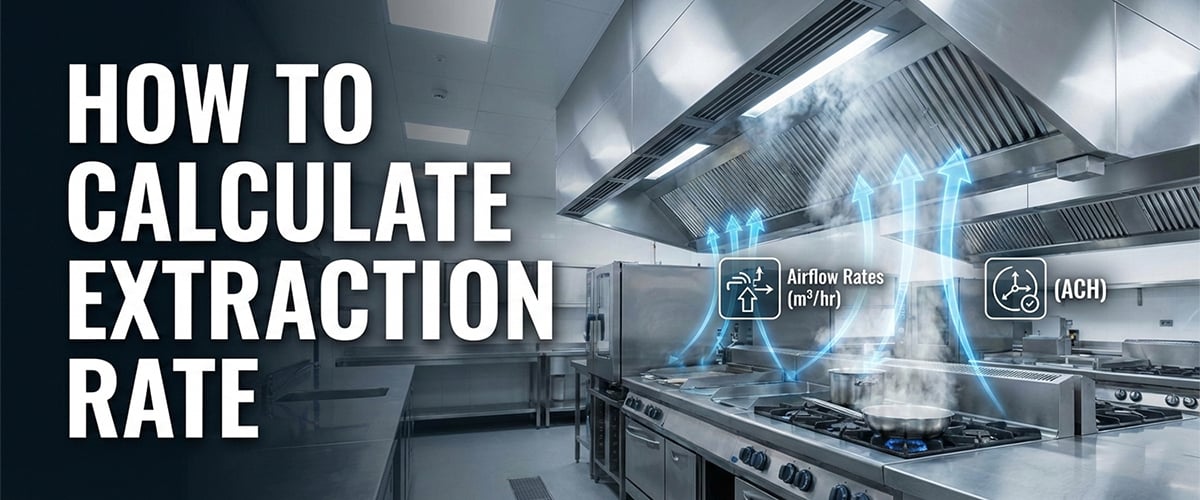
It’s significant to understand how to calculate the extraction rate before setting up a commercial kitchen ventilation system for your food service location.
A standard commercial kitchen ventilation system is composed of the hood, ductwork, grease filters, MUA unit, fire suppression system, and exhaust fan. Among all these elements, confirming the correct extraction rate is essential for selecting the right exhaust fan. A properly sized system helps remove heat, smoke, grease vapors, and odors while reducing health risks and improving overall kitchen air quality.
In this blog, SHINELONG shares 3 common methods to calculate commercial kitchen extraction rate, ideal for restaurants, hotels, fast food chains, and other food service premises.
What Is The Extraction Rate?
The extraction rate, also known as the airflow rate in a commercial kitchen, reflects how much air is removed from a space by the ventilation system within a specific period of time. It is typically measured in cubic metres per hour (m³/hr).
The higher the airflow rate an extractor fan delivers, the faster and more effective the removal of heat, smoke, and odors from the kitchen. In general, airflow rate is a key indicator of a commercial ventilation system’s performance. Calculating the correct figure is essential to keep the kitchen clean, safe, and compliant.
How is the Exhaust Rate Calculated for a Commercial Kitchen?
When it comes to the ventilation design stages of a commercial kitchen, determining the correct exhaust rate is one of the most important steps. However, focusing only on the exhaust fan is not enough; you must also consider the specific type of cuisine, the heat output of the cooking equipment, and the physical framework of the entire environment. Whether you are designing a star-rated hotel kitchen, a casual restaurant, or a public cafeteria, getting the airflow right is the difference between a comfortable workspace and a smoky, overheated disaster.
To determine the required exhaust volume (m³/h), commercial kitchen consultants generally rely on three primary formulas when discussing project requirements with their clients.
Calculating Based on Air Change Rate
The Air Change Method is typically the best approach for initial budgeting and general ventilation estimates. Instead of focusing on specific cooking equipment, this method is based on the total volume of the kitchen space and how many times the air inside needs to be completely replaced every hour.
When you are working out the initial estimate of the cubic meters required for the space, this is the most efficient way to get a baseline figure. Once you have determined the total volume of the kitchen and the appropriate Air Change Rate (n), you can calculate the exhaust volume using this formula:
Exhaust Volume (m³/h)=Kitchen Volume (m³)×Air Change Rate (n)
The "Air Change Rate" refers to the number of times the entire volume of air in a space is replaced per hour. For example, in a Chinese restaurant kitchen, where high-heat stir-frying and heavy oils are common, the rate typically ranges between 40 and 60 times per hour. Let's say you operate a Chinese-style restaurant and your kitchen has a volume of 240m³ (for example, 10m length, 8m width, and 3m height) and you choose a conservative rate of 60 changes per hour, your required exhaust volume would be:
240×60=14,400m³/h
Calculating Based on Equipment Output
As your kitchen design becomes more detailed and your equipment list is finalized, you can move toward the Heat Load Method. This formula is much more specific because it focuses on the actual energy output of your cooking appliances.
Exhaust Volume (m³/h)=Total Heat Load (kW)×Unit Exhaust Rate [m³/(h⋅kW)]
The calculation is based on the total heat generated (kW) by the cooking line. For Chinese stoves, we generally allow for a unit exhaust rate of 25–30 m³/(h⋅kW). If your kitchen features three Chinese stoves with a combined heat output of 90kW, and you apply a standard rate of 30m³/(h⋅kW), the formula would look like this:
90×30=2,700m³/h
Calculating Based on Vent Hood
Finally, for the most precise local extraction, we can calculate it based on the vent hood above the cooking range. This formula accounts for the physical dimensions of the hood and its distance from the cooking surface to ensure that no smoke or grease escapes into the kitchen environment. You can follow this formula to calculate the exact extraction rate based on the commercial vent hood. This is how it works.
L=1000×P×H
In this calculation, P represents the perimeter of the exhaust hood (excluding any sides that are flush against a wall), and H is the vertical distance from the hood opening down to the range stove. For a standard setup where the perimeter is 4m and the hood is hanging 0.7m above the burners, the calculation would result in:
1000×4×0.7=2,800m³/h
These three formulas allow you to roughly estimate the extraction rate of a commercial kitchen. However, when it comes to realistic ventilation system design, airflow calculation is more than numbers. A practical solution must balance cooking intensity, equipment layout, kitchen size, and on-site conditions. In professional ventilation design, the total exhaust volume is usually divided into two parts. Local exhaust accounts for about 65%, capturing heat, grease, and smoke directly from cooking equipment, while general exhaust makes up the remaining 35%, maintaining overall air quality and pressure balance in the kitchen.
As a mature commercial kitchen equipment supplier in China, SHINELONG has been deeply rooted in the food service industry for over 18 years. We have delivered thousands of successful commercial kitchen projects worldwide, providing complete turnkey solutions that cover kitchen layout design, equipment supply, and ventilation system planning.
If you are looking for a reliable partner capable of building commercial kitchens for all types of premises, from restaurants and hotels to institutional kitchens, SHINELONG is always ready to turn your ideas into reality.