After-Sales:
 EN
EN
 AR
AR
 HR
HR
 NL
NL
 FI
FI
 FR
FR
 DE
DE
 EL
EL
 HI
HI
 IT
IT
 PT
PT
 RO
RO
 RU
RU
 ES
ES
 TL
TL
 ID
ID
 SL
SL
 VI
VI
 ET
ET
 MT
MT
 TH
TH
 FA
FA
 AF
AF
 MS
MS
 IS
IS
 MK
MK
 HY
HY
 AZ
AZ
 KA
KA
 UR
UR
 BN
BN
 BS
BS
 KM
KM
 LO
LO
 LA
LA
 MN
MN
 NE
NE
 MY
MY
 UZ
UZ
 KU
KU

News
Commercial Kitchen Fire Suppression Systems: Everything You Need to Know for Safety
Let's be real for a second. If you work in the catering industry, you know the kitchen is the engine, but it's also a massive liability. High heat, gas lines, and volatile grease make it a ticking time bomb. The unfortunate reality is that too many operators rely on standard ABC extinguishers, which are not just useless against a deep fryer blaze; they often spread the burning oil and cause fire risk. You need a specialized defense.
That is where the Commercial Kitchen Fire Suppression System comes in. Whether you run a casual dining hall or a luxury hospitality, this guide explains exactly what this mandatory system is and what you need to know to ensure safety and compliance.
What is the Fire Suppression System for Commercial Kitchens?
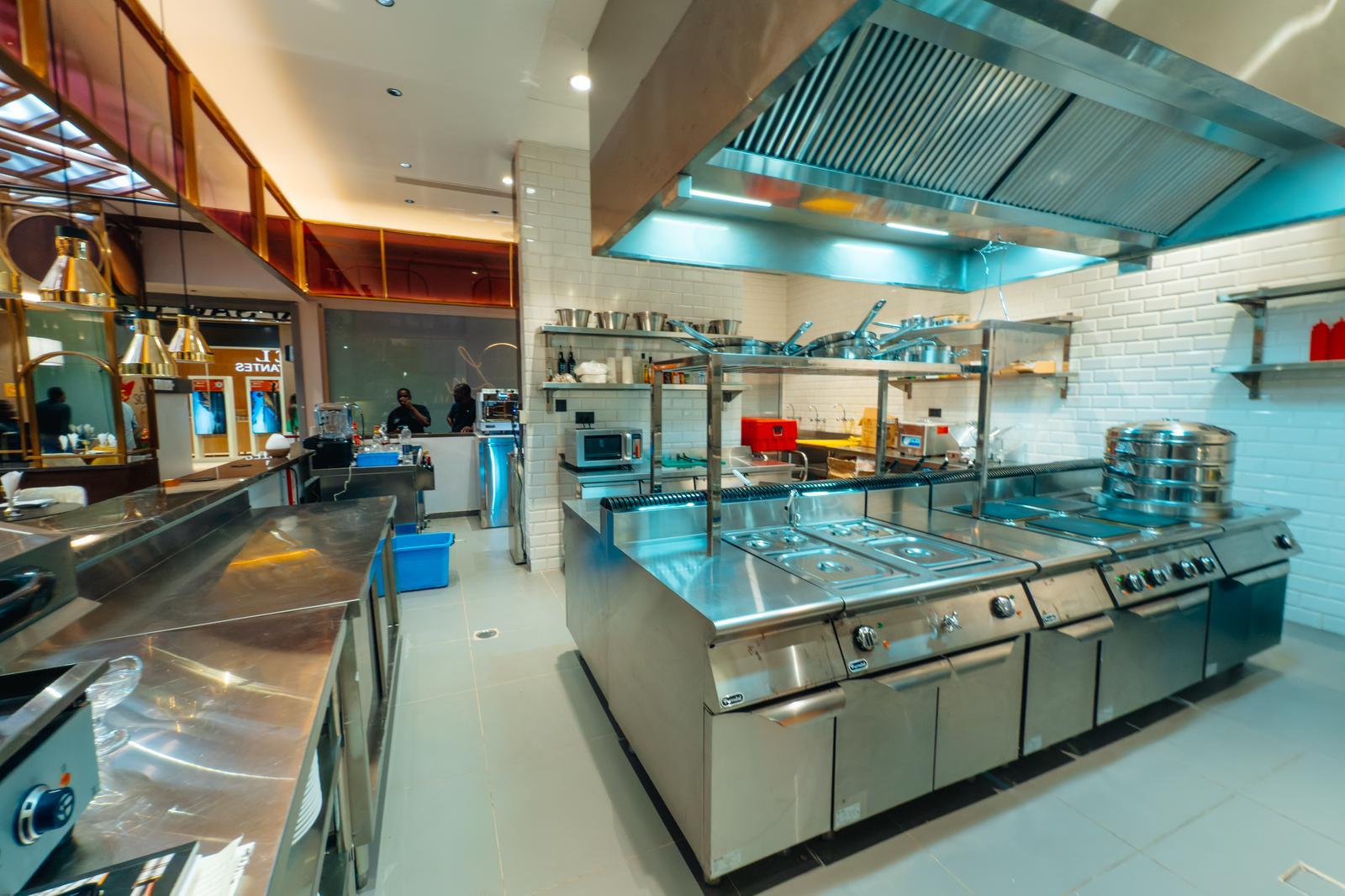
A commercial kitchen fire suppression system is an automatic, pre-engineered safety device installed directly into the ventilation hood (the "exhaust hood"). Unlike a standard building sprinkler system that sprays water everywhere (which is a disaster for grease fires), this system is designed for cooking lines such as fryers, griddles, ranges, and woks. It’s your first line of defense. It detects a fire automatically and suppresses it without needing staff to be brave enough to grab an extinguisher.
The Critical Difference: Class K Fires vs. The Rest
Fire is fire — that’s one of the most common misconceptions. In the fire-safety world, cooking oil and grease fires are classified as Class K (or Class F in some regions). These fires burn at extremely high temperatures, and using a standard dry-chemical extinguisher (ABC-rated) or water can instantly boil the oil and blast it upward.
The "wet chemical system" is the proper standard for modern commercial kitchens. It uses a specialized liquid agent that reacts with hot cooking oil to safely suppress the fire. Relying on generic extinguishers is both non-compliant and unsafe.
The Regulatory Landscape: Why It’s Mandatory
You might think skipping a high-end suppression system saves money. It doesn't. It costs you your business. Authorities—whether it's the local fire marshal, the health department, or your insurance provider—are zeroing in on catering businesses. Restaurants, bars, and bakeries are all high-priority targets for inspection.
Who Needs an Automatic System?
Regulations vary slightly by location, but the core standards (often based on NFPA 96 or local building codes) are strict.
The 1000m² Rule: generally speaking, if you are operating a restaurant or canteen with a building area greater than 1000m², the requirements tighten significantly. In these facilities, the cooking operation area must have an automatic fire extinguishing device installed in the exhaust hood and over the cooking surfaces.
The "Linkage" Rule (Automatic Shut-off)
This is a detail many contractors miss. It is not enough to just put out the fire; you have to kill the fuel. The regulations state that there must be an automatic shut-off device on the gas or fuel pipes. This device must be linked to the automatic fire extinguishing system.
Here is the scenario: A fire starts on the grill. The suppression system trips. Simultaneously, a mechanical or electrical signal slams the gas valve shut. If you don't cut the gas, you’re just spraying chemical on a fire that is still being fed fuel. That’s a losing battle.
The Consequences of Non-Compliance
If inspectors come in, checking fire safety, ventilation, layout, or electrical wiring—and find you lacking, the consequences are brutal. We aren't just talking about a warning. You face:
1. Heavy Fines: Immediate financial penalties.
2. Suspension of Business: Being forced to close until the issue is fixed (losing days or weeks of revenue).
3. Revocation of License: Losing your catering or business license entirely.
4. Administrative Bans: In severe cases, you may be blocked from changing the legal representative or transferring the shop ownership. You are effectively stuck with a dead asset.
The Anatomy of the System: Key Components
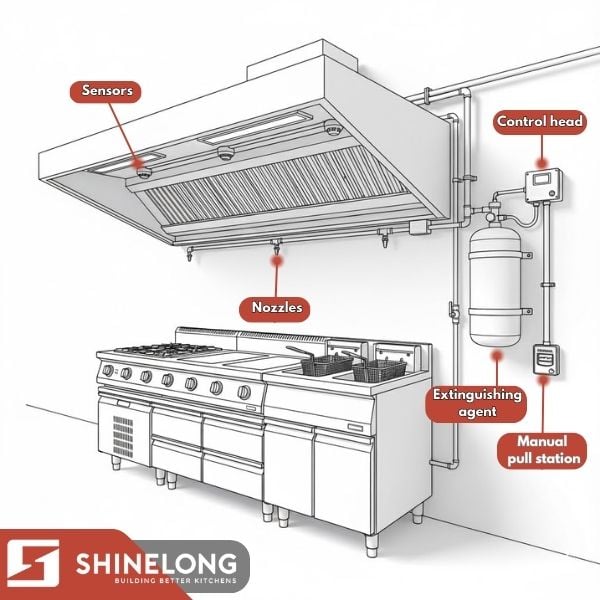
To maintain a fire suppression system for commercial kitchen, you need to know what you are looking at. Here are the key parts of a compliant system:
1. The Cylinder (Storage Tank): This stainless steel tank holds the wet chemical agent. It’s usually tucked away in a cabinet or mounted on a wall nearby.
2. Nozzles: These are the small metal caps you see under the hood, pointed directly at your equipment and up into the ductwork.
3. Fusible Links: These are the "triggers." They are small metal links strung along a wire detection line running through the hood. They are designed to melt at a specific temperature.
4. Manual Pull Station: Usually located near the exit of the kitchen. This is the "Break Glass" box. If the fire starts and the automatic system hasn't tripped yet, a staff member can pull this to activate the system immediately.
5. Gas Valve (Mechanical/Electric): As mentioned above, this cuts the fuel supply the moment the system activates.
How Does the System Work?
The beauty of these systems is that they don't require electricity to run (usually), relying on mechanical tension. Here is the lifecycle of a suppression event:
1. Detection: A fire flares up on the deep fryer. The temperature rises rapidly.
2. Actuation: The heat melts the Fusible Link in the detection line. The tension on the wire is released.
3. Release: This slack in the wire triggers the firing mechanism on the cylinder. Compressed gas pushes the wet chemical agent out through the pipes.
4. Suppression: The chemical sprays out of the nozzles, coating the fire.
5. Shutdown: At the exact same moment, the gas valve trips, cutting off the fuel.
Why Wet Chemical Systems Are the Gold Standard
Why do we use "Wet Chemical" specifically? It comes down to a cool bit of chemistry called Saponification. You might hear industry folks throwing that term around, but what it means is critical to your kitchen's survival.
When the wet chemical agent (usually a potassium-based solution) hits the burning oil or grease, it reacts chemically. It effectively turns the burning grease into a layer of soap (a foam blanket).
This foam layer does three critical things that water and dry powder can't:
- Smothers: It cuts off the oxygen supply required for the flame to survive.
- Cools: It lowers the temperature of the oil quickly, taking it below its auto-ignition point.
- Seals: By creating a soapy layer, it prevents flammable vapors from escaping, which is what stops the fire from immediately re-igniting.
Water cannot do this. Dry chemical powder cannot do this. Only specialized wet chemicals can seal the surface of a grease fire effectively—and that’s why it’s the only compliant option for Class K Fires.
Inspection, Maintenance, and Hygiene: Keeping Your Kitchen Compliant
Installing the system is step one. Keeping it legal and functional is the rest of the journey. Neglect is, hands down, the number one cause of system failure in a commercial kitchen.
The Cleaning Schedule (The Law of the Duct)
Grease buildup in your ducts is fuel waiting to burn. Regulations are very specific about cleaning frequencies based on the type of facility. You need to be hyper-vigilant if you run a high-traffic spot:
- Quarterly Cleaning (Every 3 Months): This is mandatory for high-volume or high-risk locations, including Hotels, Restaurants, Hospitals, and Schools.
- Periodic Cleaning: For other venues, regular cleaning is required based on usage volume.
Pro Tip: Archive Everything. You must file away and archive your Cleaning Contracts and Cleaning Records. When an inspector walks in, they don't just want to look at the hood; they want the paper trail proving you cleaned it. No paper = No proof of compliance.
System Maintenance
You cannot just install it and forget it. Even the best equipment needs a check-up:
- Annual Maintenance: The stovetop automatic fire extinguishing device must undergo a comprehensive maintenance check once a year by a qualified professional. You must file these records.
- Infrastructure Checks: You need to frequently inspect, test, and maintain all kitchen infrastructure, including fuel lines, gas pipes, and electrical equipment.
- Fireproofing: Ensure there is proper thermal insulation or heat dissipation measures between your stoves/flues and any combustible materials.
The "Human Factor": Daily Safety Protocols & Best Practices
You can have a million-dollar system, but if your staff panics or the setup is chaotic, you have a major liability. Here is a quick "Back of House" safety guide to keep your team sharp and prevent a minor incident from becoming a catastrophe.
1. Don't Let Fire Fighting Become "Chaotic."
Daily Check-in: Before the shift starts, confirm that your fire blankets are placed in a handy, accessible position. Don't let them get buried under aprons, towels, or ingredient boxes.
In the event of a minor grease fire, a fire blanket is often faster and less disruptive than pulling the suppression system.
2. The "Lifeline" of the Kitchen (Escape Routes)
This is a major code violation I see constantly: the escape channel is blocked by supplies. Your exit route is your staff's lifeline. It must never be blocked.
- No Obstacles: Cardboard boxes, ingredient crates, and cleaning supplies cannot occupy the walkway—keep those escape routes clear!
- Valve Labeling: Gas valves and emergency shut-offs need conspicuous labels. In a panic, nobody remembers which valve is which. Label them clearly with bright, high-contrast stickers.
Wrapping It Up: Safety is Business Continuity
Investing in a proper Commercial Kitchen Fire Suppression System isn't just about avoiding a fine from the fire marshal. It's about protecting your staff and your entire investment. A kitchen fire can destroy a business in minutes—not just from the flames, but from the water damage, the reputation hit, and the devastating consequences like revoked licenses or transfer bans.
Make sure you have a Wet Chemical system, make sure it’s interlocked with your gas shut-off, and for the love of food—keep your ducts clean. Stay safe, stay compliant, and keep cooking.
FAQs: Common Questions About Commercial Kitchen Fire Safety
Q1: Can I just use a standard fire extinguisher for a small fryer fire?
A: Absolutely not. Standard ABC extinguishers will likely cause the oil to splash, which instantly spreads the fire. You must use a Class K (Wet Chemical) extinguisher or, ideally, your installed suppression system.
Q2: How often do I need to service my fire suppression system?
A: Professional maintenance is required annually (once a year) by code. However, your staff should be visually inspecting nozzles and pressure gauges monthly.
Q3: What happens if I don't clean my exhaust hood?
A: Aside from the immense fire risk, you are violating health and safety codes. If a fire starts and investigators find heavy grease buildup, your insurance company can deny your claim due to negligence. For high-volume businesses, quarterly cleaning is the standard.
Q4: Does the chemical agent ruin the equipment or food?
A: Any food exposed to the wet chemical agent must be discarded. While the chemical is non-toxic, it is corrosive. The entire area must be thoroughly cleaned and sanitized immediately after discharge, but the equipment itself is typically fine.
Q5: What is the "1000m² Rule" and how does it affect me?
A: In many jurisdictions, if your restaurant or canteen exceeds 1000m² in building area, you are legally required to install an automatic extinguishing device in the hood and cooking area, which must be linked to a gas shut-off valve. This is a crucial compliance point for larger venues.
Q6: Why do I need a manual pull station if the system is automatic?
A: It's a mandatory redundancy. While the system is automatic, human eyes can spot a fire faster than the temperature threshold might be reached. A staff member can trigger the system manually to ensure immediate suppression, giving you the fastest possible response time.