After-Sales:
 EN
EN
 AR
AR
 HR
HR
 NL
NL
 FI
FI
 FR
FR
 DE
DE
 EL
EL
 HI
HI
 IT
IT
 PT
PT
 RO
RO
 RU
RU
 ES
ES
 TL
TL
 ID
ID
 SL
SL
 VI
VI
 ET
ET
 MT
MT
 TH
TH
 FA
FA
 AF
AF
 MS
MS
 IS
IS
 MK
MK
 HY
HY
 AZ
AZ
 KA
KA
 UR
UR
 BN
BN
 BS
BS
 KM
KM
 LO
LO
 LA
LA
 MN
MN
 NE
NE
 MY
MY
 UZ
UZ
 KU
KU


News
How does an industrial food processor work in a vegetable processing line?
Core Working Principles of an Industrial Food Processor
Shear, Impact, and Precision Cutting Dynamics
Modern industrial food processors handle veggies through three main mechanical actions: shearing, impacting, and precise cutting. When it comes to slicing fibrous stuff like celery, shear force works by pushing blades against each other. For tougher items such as carrots or nuts, impact does the job by smashing them against solid surfaces at high speed. Precision cutting takes over for those perfect dices or shreds, relying on super sharp blades spinning between 1,500 to 3,000 revolutions per minute. What makes all this work so well is how these different forces maintain the cell structure of fruits and vegetables. Take tomatoes for instance—they lose about 40% less juice when processed this way compared to chopping by hand. Most machines have motors ranging from half to three horsepower which keeps everything running smoothly even when processing large batches without coming to a stop.
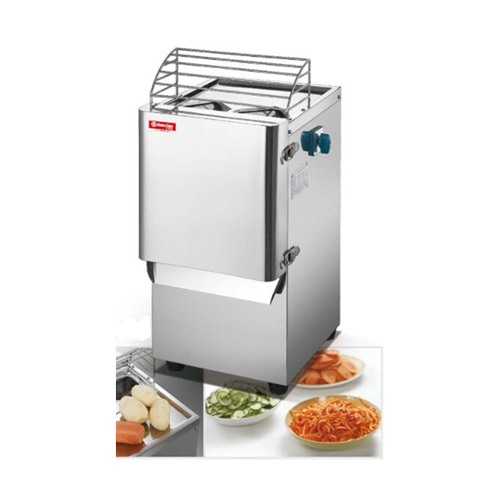
Continuous Feed Systems for Consistent Vegetable Sizing
Conveyor belts that are automated work together with cutting systems so everything stays consistent in size. These systems use variable frequency drives which can change how fast the belt moves between half a meter per minute all the way up to five meters per minute. This speed matches exactly what the blades need to rotate at for really tight cuts, usually within plus or minus 1.5 millimeters. There are also load sensors on board that constantly tweak how much material gets fed into the machine.
This helps stop blades from getting jammed and allows production rates anywhere from two to eight tons each hour. What's impressive is that about 98 percent of the output ends up being uniform in size when making things like potato cubes or those crispy onion rings we all know and love. To achieve this level of efficiency on a commercial scale, integrating high-performance
Integration of the Industrial Food Processor into the Vegetable Processing Line
Synchronized Workflow: From Washing to Blanching
Maximum system performance happens when the processor works seamlessly with both the washing stage before it and the blanching stage after. After being washed, veggies move right along on those specially set conveyors that keep pace with what comes out of the washer, which stops them from drying too much on the surface—something that really messes with cutting precision later on. What goes through the processor next gets sent straight into the blanchers within about 90 seconds flat.
That timeframe matters a lot because if there's any delay at all, enzymatic browning kicks in faster for certain products, especially potatoes, where color loss can jump as high as 40%. For facilities looking to optimize these fast-paced workflows, utilizing advanced
Conveyor, Sorter, and Viner Handoff Protocols
Reliable material handoffs depend on three coordinated protocols:
Conveyor harmonization: Variable-frequency drives match belt speeds between processor discharge and sorter infeed to prevent pileups.
Bufferless sorting: Optical sorters positioned within 3 meters of the processor evaluate each piece in real time using weight and color data.
Viner integration: For tomatoes or peas, vine removal systems use gentle oscillation frequencies (5–7 Hz), tuned to processor throughput.
Sanitary quick-release mechanisms allow rapid component swaps between root and leafy vegetable lines. Proximity sensors trigger emergency stops if product accumulation exceeds 15% capacity at transfer points—ensuring continuous flow hygiene.
Vegetable-Specific Optimization of the Industrial Food Processor
Blade Geometry and Feed Rate Tuning for Leafy Greens vs. Root Vegetables
Getting good results means adjusting parameters just right to keep quality intact while maintaining production levels. For leafy greens such as spinach and lettuce, we need slicing at pretty high speeds around 1,500 RPM or so using super sharp thin blades that cut without bruising the leaves or breaking cells apart. When dealing with denser roots like carrots or potatoes, things change a bit. These require stronger blades set at angles plus slower feeding rates below about 50 kg per minute to prevent blades from getting stuck but still get uniform slices across the board.
Research back in 2023 showed when folks didn't tune these settings properly, they lost nearly 18% of their leafy greens because of water loss, and saw about 15% more waste among root veggies simply because sizes weren't consistent enough for packaging needs. To minimize these operational losses, selecting the right specifications from professional
| Vegetable Type | Blade Geometry | Feed Rate Range | Key Optimization Goal |
| Leafy Greens | Thin, high-sharpness | 70–100 kg/min | Minimize cellular rupture |
| Root Vegetables | Angled, reinforced | 30–50 kg/min | Prevent crushing/chipping |
This differentiation reflects structural realities: leafy greens benefit from rapid slicing across high surface-area tissue, while root vegetables require torque-focused cutting to manage density. The result is extended shelf life—fewer oxidation sites in delicate greens and reduced microfractures in starchy tubers.
Food Safety and Shelf-Life Assurance Through Precision Processing
CIP-Compatible Design and Sanitary Blade-Change Protocols
Better precision in food processing means safer products that last longer on shelves. Clean-in-place (CIP) systems take care of those tough spots without needing to tear things apart. They use automated sprays and circulate cleaning solutions to knock out stubborn biofilms hiding in places like blade housing areas. The new tool-free blade cartridges are another win for hygiene since operators don't have to touch any food contact surfaces when changing blades.
When it comes to cutting geometry, we've seen improvements that cut cellular damage down around 37%. Less cell damage means fewer nutrients escape, which slows down microbial growth and spoilage. Mechanical preservation works differently than chemical additives. It keeps the texture intact while greens stay fresh for about three weeks in the fridge. This happens because oxidation gets minimized and those natural defenses in plants remain intact. Putting good sanitary design together with accurate cutting techniques delivers real results in both safety and product quality across the board.
Frequently Asked Questions (FAQs)
Q1: How does blade rotation speed (RPM) affect the moisture retention and shelf life of processed leafy greens?
A: High-speed precision slicing between 1,500 and 3,000 RPM using ultra-thin, razor-sharp blades minimizes the physical crushing of vegetable cell walls. When blades are properly tuned, cellular rupture is reduced by approximately 37%, which effectively stops essential nutrients and moisture from leaking out. This mechanical preservation limits the number of open oxidation sites, significantly slowing down microbial spoilage and extending the refrigerated shelf life of delicate greens up to three weeks without chemical preservatives.
Q2: Why is variable frequency drive (VFD) integration critical for continuous feed systems in industrial food processing?
A: Variable Frequency Drives (VFDs) allow operators to dynamically scale conveyor belt speeds anywhere from 0.5 to 5 meters per minute, perfectly synchronizing product movement with the rotation frequency of the cutting blades. This precision control, paired with automatic load sensors, maintains highly uniform vegetable sizing within a strict $\pm1.5\text{ mm}$ tolerance. It prevents processing blades from jamming during high-volume spikes and ensures consistent throughput across varying vegetable weights and densities.
Q3: What role do Clean-In-Place (CIP) systems play in mitigating biofilm risks within high-throughput processing lines?
A: High-throughput commercial processors are highly susceptible to organic residue accumulation inside complex internal blade housings and transfer junctions. CIP-compatible designs eliminate the need for time-consuming equipment teardowns by using strategically placed automated spray nozzles to continuously circulate specialized sanitizing solutions throughout the closed system. This deep cleaning protocol completely neutralizes stubborn bacterial biofilms in hard-to-reach areas, protecting food safety standards and avoiding cross-contamination during volume processing.