After-Sales:
 EN
 AR
 HR
 NL
 FI
 FR
 DE
 EL
 HI
 IT
 PT
 RO
 RU
 ES
 TL
 ID
 SL
 VI
 ET
 MT
 TH
 FA
 AF
 MS
 IS
 MK
 HY
 AZ
 KA
 UR
 BN
 BS
 KM
 LO
 LA
 MN
 NE
 MY
 UZ
 KU


News
What Is The Buzz About Foodservice Carts?
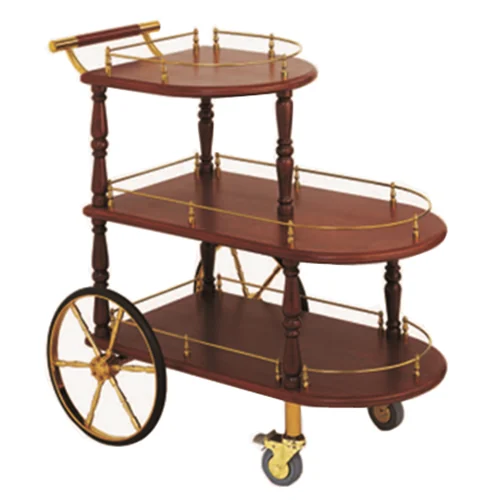
The Moving Layer Every Kitchen Depends On
Foodservice carts are the moving layer of a kitchen: they carry food, trays, and clean ware between the places where work happens, and a layout only functions if that layer is sized correctly. A well chosen set of foodservice carts removes walking from every shift. In hospital tray service a food transport cart covers the distance between the assembly line and the ward; in a hotel banquet operation, service carts move plated covers from the pass to the ballroom without a second handling step. Labour cost is why foodservice carts deserve a specification rather than a catalogue order: every minute a cook spends carrying something is a minute not spent cooking. Operators who treat service carts as an afterthought buy too few, of the wrong type, and then pay agency staff to compensate. Specifying foodservice carts properly is one of the cheapest productivity decisions available in a kitchen project.
The Four Families and How They Differ
Four families cover most requirements, and mixing them up is the usual purchasing error. Heated holding carts keep plated meals or bulk pans above the hot holding threshold and are usually paired with a matching food transport cart. Tray make up and delivery carts are purpose built for institutional work, with slides pitched at the tray size the assembly line uses. Bussing and clearing carts collect soiled ware and should be sized for the racks the warewasher actually takes. Utility cart designs cover everything else, from ingredient movement between stores and prep to cleaning chemicals and linen. A cafeteria equipment package normally needs three of these four families, and the quantities differ by service model rather than by floor area. Listing foodservice carts by family before deciding numbers prevents the common mistake of buying a utility cart where a heated food transport cart was needed, and it also shows why service carts for banqueting and service carts for patient trays are not interchangeable.
Frames, Casters, and the Parts That Fail
The difference between a cart that lasts five years and one that lasts fifteen is in the frame, the welds, and the casters, not in the shelf finish. Stainless steel frames should be stated by gauge with welded corners rather than folded tabs, because a bussing cart is loaded and unloaded hundreds of times a week. Casters carry the whole specification: a shallow cart with four small casters and no brakes drifts on a wet floor and marks vinyl, while larger wheels with a total lock brake roll over thresholds and stay put on a ramp. Noise matters in hotels and hospitals, so specify non marking quiet running wheels. In a cafeteria equipment project the cart fleet is also a storage decision, because nested service carts recover floor space that parked foodservice carts consume. A utility cart bought on price alone is the item most often replaced first, and a heavy food transport cart is the item most often overloaded past its stated rating.
Hot Holding, Food Safety, and the HACCP Line
Hot holding is where foodservice carts touch food safety directly. A food transport cart holding plated meals must keep product at or above sixty degrees Celsius, and the way to verify that is to measure at the tray, not at the cabinet display. Humidity control separates a heated cart that dries a plate within forty minutes from one that delivers it in serviceable condition. Preheating before loading is the step most often skipped, and it costs ten to fifteen minutes of holding margin. Where a hospital or a school runs a delayed service, foodservice carts become part of the HACCP plan, with temperature logs and a defined maximum holding time. A utility cart used to extend that window is not a substitute for a heated unit, and buying on cabinet temperature alone, without a loaded heat test at commissioning, leaves the operator with documented risk rather than documented control.
The Route Survey That Sets the Fleet Size
Cart selection is a route survey as much as a product choice, and the survey should be done with a tape measure. Corridor width, lift door clearances, ramp gradients, door thresholds, and turning space at the pass all constrain the size of a foodservice carts fleet before any model is considered. A cart that cannot enter the service lift will be unloaded in the corridor, creating exactly the double handling the purchase was meant to remove. Deck height should match the pass and the warewasher bench so trays slide rather than lift. In a multi floor building the number of service carts required is set by lift cycle time rather than by the number of floors, and in a central kitchen feeding satellite sites the food transport cart specification shifts again towards dock handling and stacked transport. Reviewing foodservice carts against a week of real service is faster than reviewing them against a floor plan.
Writing a Specification You Can Hold a Supplier To
A written specification for foodservice carts should state the load, the route, and the cleaning method. Give the supplier the maximum load per shelf, the floor surfaces the cart will cross, and whether it will be cleaned in a warewasher or by hand. Ask for the caster specification by diameter, wheel material, and brake type, then ask which of those parts is a stocked consumable. Ask for a loaded heat test on a heated food transport cart at commissioning, and record the result against the holding limit. A cafeteria equipment package that derives utility cart quantities from the real prep list usually comes in smaller than the operator expected and is still sufficient. Every item on the foodservice carts list should be traceable to a task someone performs daily, or it should not be on the list at all.
Q: How many foodservice carts does a hospital kitchen need?
A: Count tray deliveries per meal period, divide by the loads one food transport cart carries per trip, then add a buffer for isolation rooms and late trays.
Q: What temperature should heated foodservice carts hold?
A: At or above sixty degrees Celsius, measured at the tray rather than the cabinet display, with preheating before loading and a documented maximum holding time.
Q: Are utility cart shelves strong enough for bulk ingredients?
A: Only where the shelf rating is stated and matched to container weight. A utility cart rated for light service should not carry bulk oil or flour.