After-Sales:
 EN
 AR
 HR
 NL
 FI
 FR
 DE
 EL
 HI
 IT
 PT
 RO
 RU
 ES
 TL
 ID
 SL
 VI
 ET
 MT
 TH
 FA
 AF
 MS
 IS
 MK
 HY
 AZ
 KA
 UR
 BN
 BS
 KM
 LO
 LA
 MN
 NE
 MY
 UZ
 KU


News
How A Commercial Range Can Transform Your Kitchen?
The Appliance the Kitchen Is Organised Around
A commercial range is the appliance a kitchen is organised around, because almost every other station either feeds it or receives from it. Choosing a commercial range is therefore a workflow decision before it is a budget decision: burner count, oven capacity, and the position of the unit relative to the pass determine how many covers an hour the line can actually produce. A gas range gives instant, visible heat that a cook can read from the flame, which is why high sear and wok work still favours gas. A heavy duty range adds a thicker plate, a reinforced frame, and burner components built for continuous service rather than domestic intermittency. In most production kitchens the commercial range is the largest single heat load in the room, so its specification also fixes the extraction requirement for the whole space.
Configurations and What They Suit
Range configurations differ by what sits on top and underneath. A standard open burner range offers a flat grate over independent burners and suits general pan work, sauces, and stock. A commercial cooking range with a griddle section integrates flat plate cooking into the same footprint, useful where the menu needs both searing and pan work in one station. A range oven pairs a hob above with a bake chamber below, recovering oven capacity without taking more floor. Heavy duty range models add higher output per position, a deeper oven, and a front rail that survives a full pot dragged across it, which matters when the unit runs fourteen hours. Where wok work dominates, a dedicated wok range with recessed rings replaces one section rather than adding a separate appliance. A gas range remains the default where the flame is the cook's instrument, but the configuration choice is a menu question, and the commercial range that fits a brasserie is rarely the one a banqueting kitchen needs.
Burner Output, Materials, and Service Life
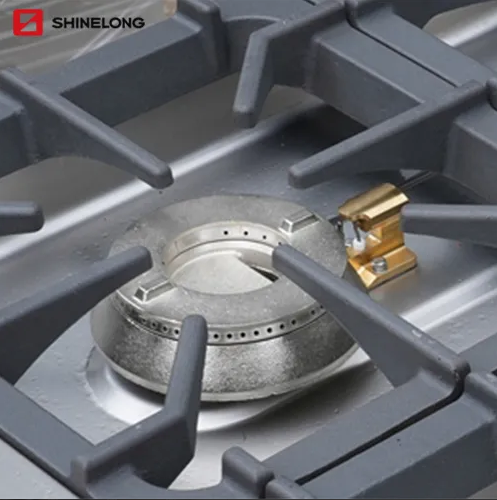
Burner output and grate material decide how a commercial range behaves in year five. Output should be stated per burner, and the total compared with the menu rather than with the largest number available, because an oversized commercial range raises the heat load that extraction must clear. Cast iron grates hold heat and survive heavy pans, while pressed steel grates deform and eventually drop. Plate and frame should be stated by gauge and grade, with 304 stainless steel at the front and a welded frame that does not flex when a full pot is dragged across it. On a gas range the burner cap, injector, and flame failure device are the parts that fail, so access for cleaning and local availability of those spares matter as much as headline output. A commercial cooking range that cannot be stripped and cleaned daily will lose performance long before it breaks, and a range oven chamber that is hard to clean will simply stop being used.
Utilities, Ventilation, and Fire Suppression
A commercial range drives the utility design of the whole kitchen. Every gas range must match the rated pressure and gas family of the supply, since a unit jetted for one family will underperform or become unsafe on another. Ventilation must be sized from the combined load of the commercial range and everything else under the hood, with make up air balanced so the room does not run under negative pressure. A heavy duty range with six positions and a range oven can commit more heat to the room than any other single item, which is why extraction capacity should be confirmed before the model is ordered rather than after. Fire suppression must suit the fuel and the cooking type, and it should shut off gas supply when it discharges. A commercial cooking range installed into a room that cannot support its load will be derated in practice, whatever the rating plate says.
Capacity and the Utilisation Curve
Capacity on a commercial range is measured in dishes per hour, not in burners. Take the busiest hour, list every dish that touches the top, and record how many minutes of burner time each one needs; the total against the service window shows whether the line needs another section. A gas range with four burners running at eighty percent utilisation across a two hour service has no reserve for the à la carte order that arrives at the end. In a hotel banqueting kitchen the commercial range may sit idle for long periods and then be fully loaded during a function, so the specification should follow the peak rather than the average. A heavy duty range bought for the peak and a lighter commercial cooking range bought for the average will produce very different results on the same night, which is why drawing the utilisation curve is worth the hour it takes.
Specifying With Evidence, Not Adjectives
A defensible commercial range specification states the menu, the peak hour, the gas family and pressure, and the extraction capacity available. Ask for output per burner position, grate material, plate gauge, and the chamber volume of any range oven included. Ask which components are consumables and whether gas range burner caps, injectors, and thermostats are stocked locally. Ask for the certification that applies in the destination market, and for a commissioning record showing flame failure devices tested under load. Across projects in more than eight thousand kitchens in over one hundred and fifty countries, the pattern is consistent: the commercial cooking range itself rarely fails at handover, while extraction, gas pressure, and drainage do. A heavy duty range specified against the real utilisation curve, then reviewed with the ventilation contractor, avoids the most expensive correction in a kitchen fit out.
Q: How many burners should a commercial range have?
A: Enough to cover peak burner minutes with a reserve. Count minutes per dish across the busiest hour and compare the total with the burners available, rather than copying another site.
Q: Is a gas range better than electric for a restaurant?
A: A gas range responds instantly and suits high heat work, while electric and induction give finer low temperature control. Many kitchens end up running both rather than replacing one with the other.
Q: What separates a heavy duty range from a standard unit?
A: A heavy duty range carries higher output per position, a reinforced frame, and service components rated for continuous use, where a standard commercial range suits lighter and shorter service.