After-Sales:
 EN
EN
 AR
AR
 HR
HR
 NL
NL
 FI
FI
 FR
FR
 DE
DE
 EL
EL
 HI
HI
 IT
IT
 PT
PT
 RO
RO
 RU
RU
 ES
ES
 TL
TL
 ID
ID
 SL
SL
 VI
VI
 ET
ET
 MT
MT
 TH
TH
 FA
FA
 AF
AF
 MS
MS
 IS
IS
 MK
MK
 HY
HY
 AZ
AZ
 KA
KA
 UR
UR
 BN
BN
 BS
BS
 KM
KM
 LO
LO
 LA
LA
 MN
MN
 NE
NE
 MY
MY
 UZ
UZ
 KU
KU


News
How to select commercial hoods for restaurants?
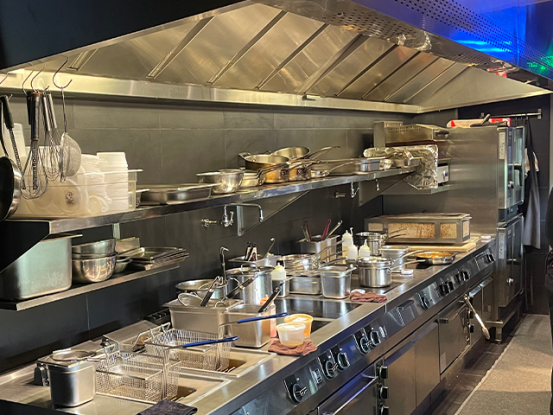
Selecting the Right Hood Type for Your Cooking Operation
Selecting commercial hoods for restaurants begins with understanding the two primary classifications defined by NFPA 96 and international mechanical codes. Type I hoods are designed to capture grease-laden vapors produced by cooking equipment that uses solid fuel, charbroilers, griddles, and deep fryers. These hoods must include grease filters, a fire suppression system, and a grease trough for liquid runoff. Type II hoods handle steam, heat, and odors from equipment such as steamers, ovens, and dishwashers where no grease is present. A restaurant using a combination of grease-producing and non-grease equipment will need both types installed over their respective zones to meet code requirements.
Calculating CFM Requirements Based on Equipment Load
Airflow capacity, measured in cubic feet per minute (CFM), determines how effectively a hood removes contaminated air from the cooking area. The standard calculation method follows the overhang rule: the hood should extend six inches beyond the edges of the cooking surface on all sides, and the CFM requirement is derived from the hood area multiplied by a capture velocity factor. For example, a charbroiler producing heavy smoke typically requires 150-200 CFM per square foot of hood area, while a standard range may need 100-150 CFM. Undersized hoods allow smoke and grease to escape into the dining area, while oversized systems waste energy and increase make-up air costs. Restaurant owners should request that their supplier perform a load calculation based on the specific equipment lineup before finalizing hood specifications.
Material Construction and Fire Suppression Integration
Commercial hoods for restaurants must be constructed from minimum 18-gauge stainless steel or equivalent corrosion-resistant material to withstand daily exposure to heat, moisture, and grease. The interior surfaces should be smooth and free of seams where grease can accumulate. Fire suppression systems are mandatory for Type I hoods and must be UL 300 compliant, featuring nozzles positioned over each cooking appliance with fusible links that activate at a predetermined temperature. The suppression agent, typically a wet chemical solution, must be compatible with the cooking media used. A practical sourcing scenario involves a 200-seat restaurant that installed a 10-foot Type I hood over a cooking line consisting of a six-burner range, flat griddle, and two fryers. The project required coordination between the hood manufacturer, the fire suppression system provider, and the mechanical contractor to ensure proper nozzle placement and ductwork connection.
Ductwork, Make-Up Air, and Code Compliance
The effectiveness of a commercial hood system depends equally on the exhaust ductwork and the make-up air supply. Exhaust ducts must be constructed of 16-gauge steel with continuously welded joints, routed with minimal bends, and terminated at least 10 feet from any air intake. Make-up air systems replace the exhausted air to maintain building pressure balance; without adequate make-up air, the hood will not capture properly, and negative pressure can cause doors to stick and pilot lights to extinguish. Local health and fire codes dictate inspection intervals, cleaning frequency, and documentation requirements. Restaurants operating in jurisdictions following the International Mechanical Code must have their hood systems inspected at least every six months, with records maintained for audit purposes.
Evaluating Hood Accessories and Filtration Options
Grease filtration represents the primary maintenance variable in hood system operation. Baffle filters, the industry standard for Type I hoods, use interlocking metal vanes that force airflow through a series of direction changes, causing grease particles to condense on the filter surfaces and drain into the trough. Mesh filters are lighter and less expensive but are restricted to Type II applications because they clog rapidly with grease and pose a fire hazard. Water-wash hoods, which spray a continuous mist during operation to capture grease, offer the highest filtration efficiency but require plumbing connections and higher water usage. Restaurant operators should evaluate the total cost of ownership, including filter replacement frequency, cleaning labor, and utility consumption, when selecting filtration technology.
Matching Hood Specifications to Restaurant Growth Plans
Restaurants planning to expand their menu, add cooking stations, or increase seating capacity should select hoods with future flexibility in mind. A hood sized only for current equipment leaves no room for menu expansion without costly structural modifications. Modular hood systems that can be extended or reconfigured offer a practical solution for growing operations. Additionally, variable speed hood controls, which adjust fan speed based on cooking activity using temperature or optical sensors, can reduce energy consumption by 30-50 percent compared to constant-speed operation. When evaluating suppliers, restaurant owners should request references from similar establishments, verify the supplier's familiarity with local codes, and confirm that the proposed system includes all necessary components: hood body, filters, fans, ductwork, fire suppression, and make-up air. Beyond sizing, operators should verify that the selected hood matches the voltage and ventilation capacity available at their location, and confirm the exhaust fan motor is sized for the total duct run length. A hood that performs well in a showroom may underperform in a kitchen with long duct runs or multiple elbows. Requesting a load calculation from the supplier, including filter pressure drop and fan static pressure, ensures the system performs as designed from the first day of operation.
Q: What is the difference between Type I and Type II commercial hoods?
A: Type I hoods are designed for grease-producing cooking equipment and must include grease filters and a fire suppression system. Type II hoods handle steam, heat, and odors from non-grease equipment such as steamers and dishwashers.
Q: How do I calculate the CFM requirement for my restaurant hood?
A: CFM is calculated based on hood area and the type of cooking equipment. A charbroiler typically requires 150-200 CFM per square foot of hood area, while a standard range needs 100-150 CFM. Your equipment supplier should perform a site-specific load calculation.
Q: How often should commercial hoods be cleaned and inspected?
A: Most jurisdictions require inspection every six months for high-volume grease operations and annually for moderate-volume operations. NFPA 96 provides cleaning frequency guidelines based on cooking volume and fuel type.