After-Sales:
 EN
EN
 AR
AR
 HR
HR
 NL
NL
 FI
FI
 FR
FR
 DE
DE
 EL
EL
 HI
HI
 IT
IT
 PT
PT
 RO
RO
 RU
RU
 ES
ES
 TL
TL
 ID
ID
 SL
SL
 VI
VI
 ET
ET
 MT
MT
 TH
TH
 FA
FA
 AF
AF
 MS
MS
 IS
IS
 MK
MK
 HY
HY
 AZ
AZ
 KA
KA
 UR
UR
 BN
BN
 BS
BS
 KM
KM
 LO
LO
 LA
LA
 MN
MN
 NE
NE
 MY
MY
 UZ
UZ
 KU
KU

News
The Comprehensive Guide to Commercial Ranges: From Definitions to Selection
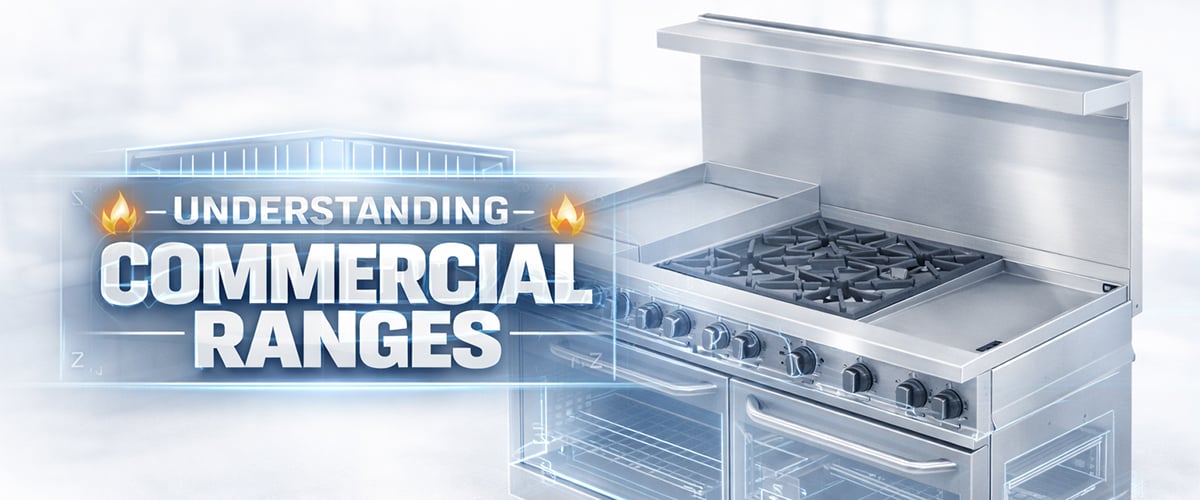
If you ask chefs to list the essential cooking appliances that most commercial premises simply can't live without, the commercial range would be at the top of that list. That isn’t an exaggeration.
With a multi-functional design in one unit, it allows chefs to stir-fry, boil, simmer, and stew on the cooktop while simultaneously baking in the base oven. This versatile cooking equipment meets modern professional kitchen requirements perfectly, offering both speed and flexibility.
In this blog, we’ll take you through the world of commercial cooking ranges and share the expert buying tips you need to know.
What is a Commercial Range?
A commercial range is a productive type of professional cooking equipment. Compared with a standalone cooking stove, it is a much more versatile version. Whether you call it a commercial stove, cooking range, or central range, they all refer to the same item.
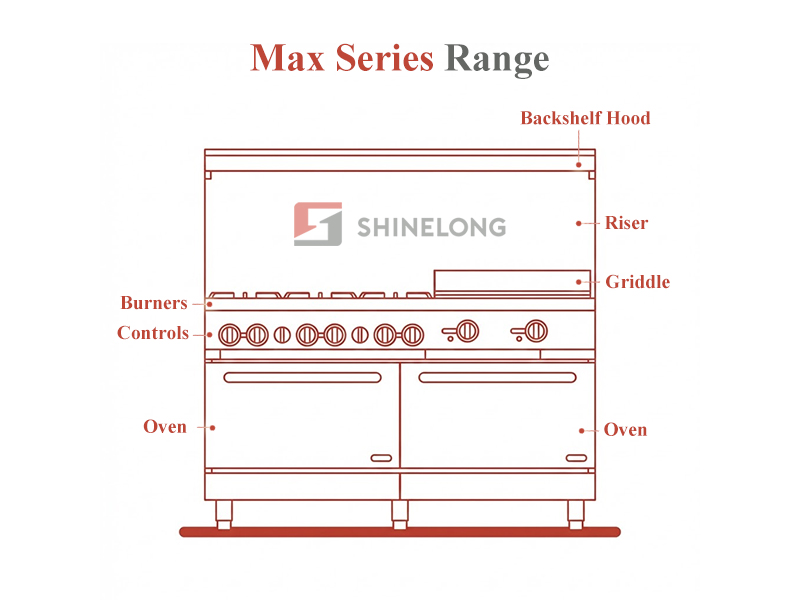
A typical unit consists of three main parts: the back shelf, the cooktop, and the range base. The back shelf holds seasonings for quick access. The cooktop offers a wide range of options, such as open burners, griddles, hot plates, or even worktables. Finally, the common base options are either an oven or a storage cabinet.
As a modular solution, these flexible combinations explain exactly why the range is essential for chefs. Whether sitting on a standard hot line or integrated into a customized island cooking suite, the commercial cooking range is always the ideal choice.
Types of Commercial Cooking Ranges
In the food service industry, you cannot talk about ranges without discussing Gas and Electric options. Both of these types are found in almost every hospitality operation, each offering different advantages depending on the kitchen setup.
- Gas Ranges
With precise temperature control, rapid heat-up times, and impressive power output, the gas range is consistently the optimal choice for commercial kitchens. Equipping a hot line with multiple gas burners is the key to keeping the Back of House (BOH) on the right track.
While a 4-burner commercial gas range is the most common entry point, the final choice must be based on actual serving needs. Depending on the menu complexity, there are 2, 4, 6, or even higher burner counts available in SHINELONG Kitchen. This variety provides chefs with the necessary "access points" to handle multiple pans and pots simultaneously when they are required to handle rush orders. Gas ranges rely on Natural Gas (NG) or Liquefied Petroleum Gas (LPG) to operate, providing the instant, visible heat needed for high pressure serving.
- Electric Ranges
Electric ranges are the go-to solution for buildings where gas line installation is restricted or too costly. Instead of an open flame, these units use high-output heating elements or induction coils. They are famous for being easier to clean and for keeping the kitchen temperature lower by reducing "wasted" ambient heat. For modern restaurants operating in malls with strict fire restrictions or those focused on energy efficiency, electric is a powerful contender.
- Other Option
In Asian-style restaurants, especially Cantonese cuisine, "Wok Hei" (the breath of the wok) is the soul of the dish. This requires much higher BTU output and robust materials that can withstand intense heat. In these cases, a specialized China Wok Range is the only way to go. The 700/900 Cooking Range Series both feature high-performance wok ranges designed to deliver that authentic searing power.
How to Choose the Right Range for Your Operation
Selecting a commercial range is a significant investment. To choose the one that fits your daily cooking use, you must evaluate these five essential factors:
Size and Dimensions
First things first: confirming the dimensions is a critical step. You must evaluate your kitchen footprint, especially the hot line area. Beyond the floor space, it's important to reserve available room for the ventilation hood and ensure easy access to the gas or power supply. Most importantly, don't forget the staff moving space; getting the wrong size will mess up the entire kitchen flow and create a bottleneck during daily service.
Fuel Supply: Gas or Electric?
Choosing your fuel source is a "tricky question" because it dictates your serving efficiency and monthly utility bills. Gas commercial ranges (operating on NG or LPG) remain the industry gold standard for high-intensity menus. If your menu relies on searing, heavy sautéing, or "Wok Hei," you need the instant, high-BTU flame that only gas provides. However, gas requires a heavy investment in ventilation and fire suppression systems, as it generates significant ambient heat and combustion byproducts.
While electric units might have a higher upfront cost, they offer superior energy efficiency, as almost all the heat goes directly into the pan rather than warming the room. This keeps your kitchen temperature lower, reducing the load on your HVAC system and creating a better environment for your staff. Before deciding, always confirm your building’s amperage capacity for electric or your gas pipe pressure for gas; choosing a range your facility can’t support is a costly mistake that will stall your opening day.
Cooktop Options
Open burners aren't the only choice for a range top. In fact, the wide variety of cooktop configurations is exactly what makes the commercial range so versatile. Each setup has its own specific advantage to help you achieve different cooking methods and menu requirements.
- Open Burners:
This is the most common option. While a standard unit typically consists of 4 to 6 burners, models are available ranging from 2 to 10 burners. When it comes to power, the SHINELONG 700 Series 6-Burner Gas Range is able to deliver a massive 7.7kW per burner (Natural Gas).
- Hot Tops:
Unlike open burners, a hot top is a flat, heavy-duty surface. It allows chefs to slide heavy pots across the surface without lifting them. It’s perfect for long-simmering stocks or keeping multiple small saucepans warm at once.
- Induction Hobs:
For the modern, electric-focused kitchen, induction hobs offer incredible speed and nearly 90% energy efficiency. They keep the kitchen cool and provide the most precise temperature control available in the industry today.
- Flat or Grooved Griddles:
If you are running a quick service restaurant or your menu includes breakfast, tacos, burgers, or seared proteins, integrating a griddle directly into your range is a space-saver. Flat griddles are for general use, while grooved griddles give you those professional "char-marks" on steaks and vegetables.
- Charbroilers:
Bringing the grilling flavor inside, a charbroiler module uses radiant heat or lava rocks to give your proteins that authentic smoky finish.
- Specialized Modules:
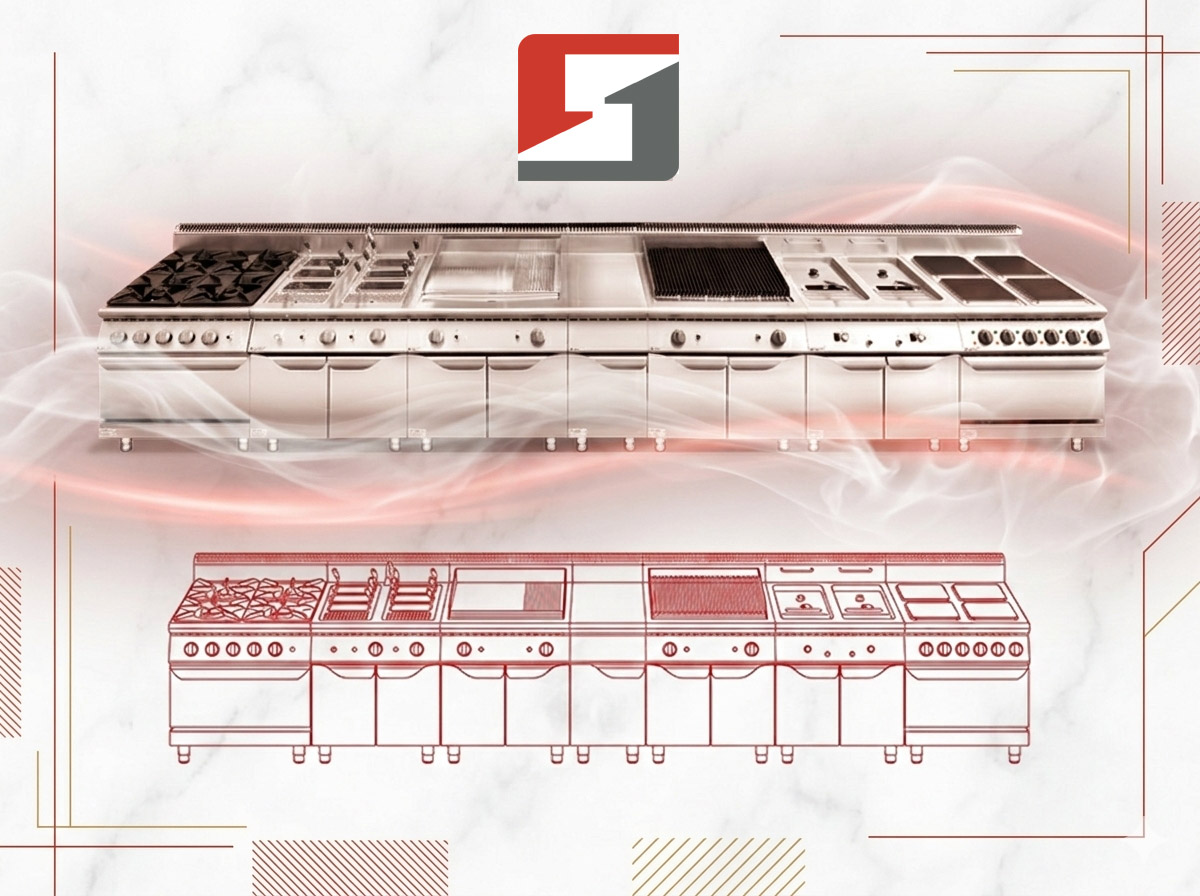
For high-performance kitchens such as those in hotels, cafeterias, or hospitals, a singular cooktop design often struggles to meet the requirements of consistent, massive serving volumes and diverse cuisines. In these environments, a customized range top is the perfect solution, turning a standard appliance into a full production line.
For example, the Max Series 6-Burner Gas Range & Charbroiler with Oven is a premier modular option for operations that need to cover multiple cooking techniques in one footprint. Beyond the standard options, you can integrate pasta cookers, fryer tanks, and bain-maries directly into the unit. Whatever your menu demands, you can find the exact module within the SHINELONG cooking range series to build your ideal station.
Base Options: Oven or Cabinet
What happens below the cooktop is just as important as the heat above it. Choice of base determines the commercial kitchen's secondary production capacity and overall workflow.
- Oven Base:
Options include standard ovens or convection styles. A standard oven provides consistent, conventional heat for items that don't require air circulation. A convection oven uses fans to circulate hot air, cooking food faster and ensuring even browning on every rack.
- Storage Cabinet:
If the baking task of the kitchen already relies on dedicated professional baking equipment, a cabinet base is the smart move. It keeps your heavy pots, pans, and essential tools with convenience access. In a professional kitchen, saving a chef those extra steps during a rush can significantly improve service speed.
- Drawer Base:
For the most productive hot lines, modular ranges can be fitted with refrigerated drawers. This allows chefs to pull cold proteins directly from the base to the burner without ever leaving their station. It’s the ultimate setup for maintaining food safety and peak efficiency simultaneously.
Burner Count
The number of burners mainly depends on available cooking area, serving volume, and the physical dimensions of the unit. While a 2-burner model is perfect for small prep stations, a 6 or 8-burner configuration is usually necessary to meet high-volume demands. When calculating your needs, ensure the burner count matches serving efficiency.
3 Safety Tips for Commercial Range Use
No matter what amazing cuisine you are cooking, there is one thing you're supposed to bear in mind: Safety always comes first. A commercial kitchen is a place with flames and very high temperatures. Learning these safety tips is not just about taking care of yourself; it’s about protecting your whole crew and your business.
- Professional Power and Voltage Check
The most common reason an electric range breaks is bad wiring. It's important to make sure the back-of-house power matches what the machine needs, whether it is 220V or 380V. Using the wrong wires or the wrong circuit breaker will cause the machine to overheat and can even start a fire. Always double-check that the restaurant can handle the power before plugging it in.
- Keep the Electric Parts Dry
Kitchens are wet and steamy, but the "brain" of the electric range must stay bone-dry. If water touches the heating parts or the control board, it will cause a short circuit. Never spray water directly on the control panels or the cooking appliance. When cleaning, only use a damp cloth.
- Give it Space and Fresh Air
Big cooking equipment needs room to breathe. Don't "choke" the range by crowding it with other equipment or boxes. Make sure the cooking range is sitting right under a strong exhaust hood. This helps the heat escape so the unit doesn't get too hot and shut down in the middle of a busy shift.
Safety is all about daily habits and maintenance. If you want to learn more about how to protect commercial ranges and stay safe, please check out our full guide here: Three Critical Safety Cautions for Commercial Electric Ranges.
How SHINELONG Can Help With Your Kitchen
What SHINELONG does best is provide comprehensive, professional kitchen solutions for every type of foodservice location, offering a full-service partnership from commercial kitchen design and full-line equipment supply to on-site construction and responsive after-sales support. This end-to-end approach ensures that any hospitality operation is built to stand out.
SHINELONG works with you through every phase of your project, catering to cooking requirements by offering top-quality commercial ranges from the versatile 700/900 Series to the heavy-duty Max Series, ensuring your kitchen is built for durability, efficiency, and long-term growth.
Frequently Asked Questions
1) What are the common sizes for the Max Series Range?
The Max Series is built for heavy-duty, high-output environments. These units typically come in 4 sizes: 24”, 36”, 48”, 60”. Because they are designed for massive serving volumes, they feature a deeper footprint than standard ranges to accommodate larger stockpots and industrial-sized cookware.
2) What are the main benefits of a commercial cooking range?
The biggest advantage is centralized productivity. A commercial range combines multiple cooking functions, stir frying, boiling, and simmering on top with roasting or baking in the base into one footprint. This saves valuable floor space and allows a chef to manage an entire menu without moving from their station.
3) What is the difference between a commercial range and a stove?
In the professional industry, a "stove" usually refers only to the cooktop burners used for pan-work. A commercial range is the complete, all-in-one unit that integrates the cooktop with a functional base, such as a convection oven or storage cabinet.
4) Can I mix gas burners with an electric oven?
Yes. These are called Dual-Fuel Ranges. They are highly recommended for chefs who want the "instant flame" and power of gas for the cooktop, combined with the "dry, consistent heat" and precision of an electric convection oven for baking and roasting.
5) Do I need an extraction system for a gas range?
Yes, absolutely. Operating a commercial gas range without a Type 1 Ventilation Hood is a major safety violation in most regions. Proper extraction is required to remove heat, grease, and combustion byproducts to ensure a safe and breathable environment for your Back of House staff.