After-Sales:
 EN
EN
 AR
AR
 HR
HR
 NL
NL
 FI
FI
 FR
FR
 DE
DE
 EL
EL
 HI
HI
 IT
IT
 PT
PT
 RO
RO
 RU
RU
 ES
ES
 TL
TL
 ID
ID
 SL
SL
 VI
VI
 ET
ET
 MT
MT
 TH
TH
 FA
FA
 AF
AF
 MS
MS
 IS
IS
 MK
MK
 HY
HY
 AZ
AZ
 KA
KA
 UR
UR
 BN
BN
 BS
BS
 KM
KM
 LO
LO
 LA
LA
 MN
MN
 NE
NE
 MY
MY
 UZ
UZ
 KU
KU

News
Cafeteria Serving Line Design Guide: Tips for Food Stations & Layout
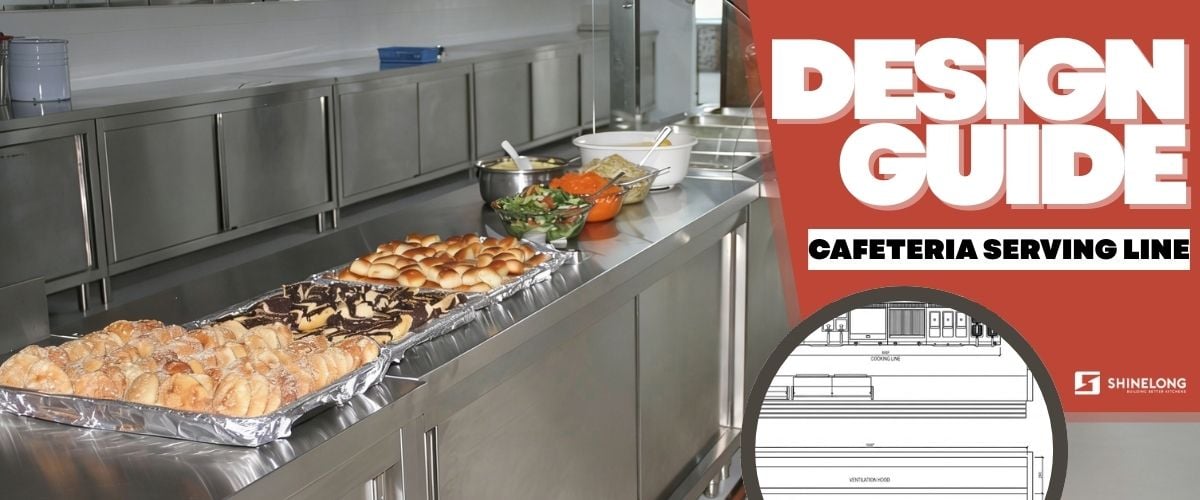
A cafeteria serving line is the core food distribution system in most canteens, including hospitals, schools, and other institutional public settings. A flexible and efficient serving line works like a highway for food service, improving serving speed while giving diners a smoother and more comfortable dining experience.
In this blog, backed by 18 years of experience in the commercial kitchen industry, SHINELONG takes you through the essential components of a cafeteria serving line and shares some tips on how to design a layout that actually fits in a cafeteria counter.
What Is a Cafeteria Serving Line
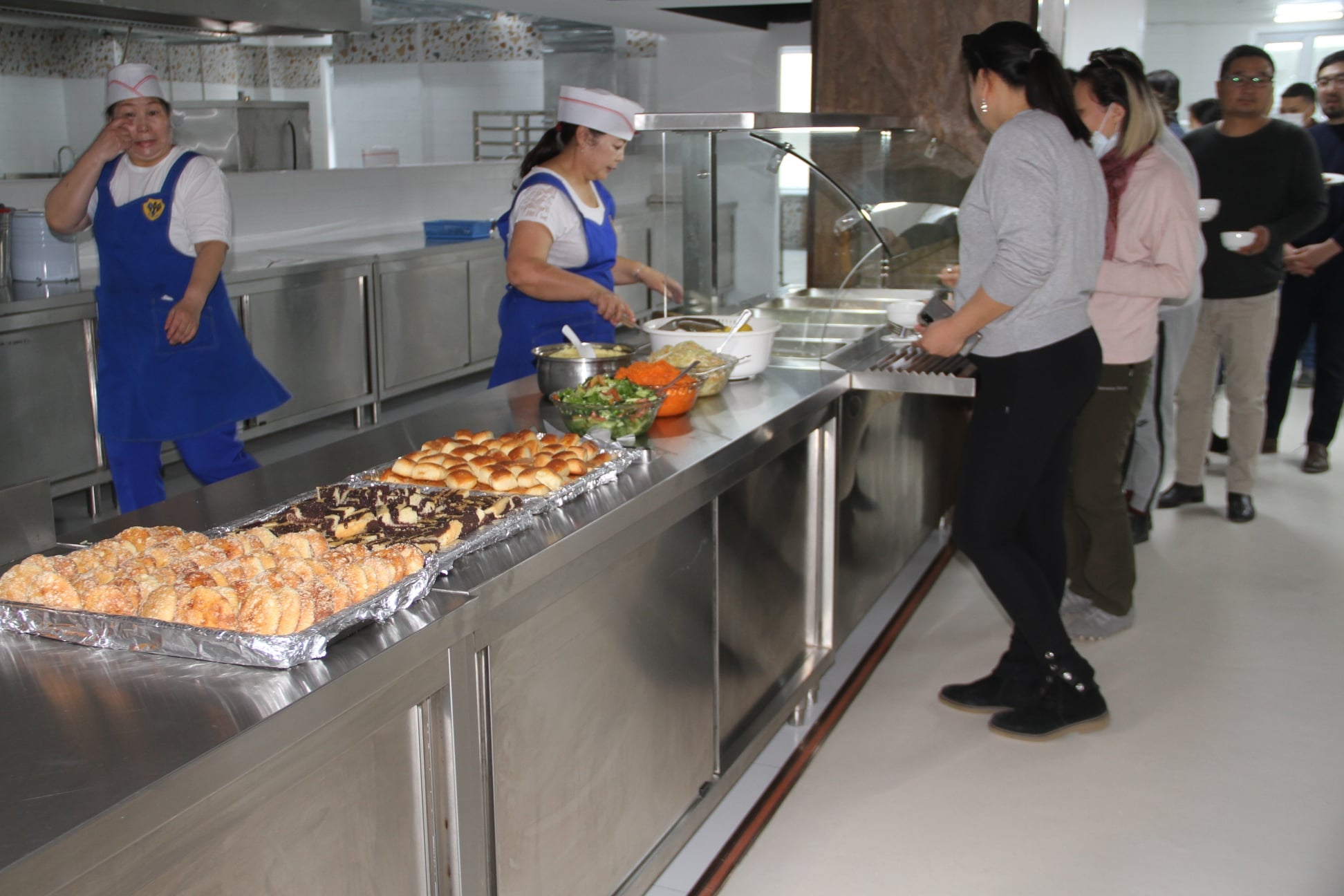
A cafeteria serving line is the central service hub of a dining commons. It typically combines multiple food stations placed in a straight line or loop layout, allowing diners to pick up food on trays while walking along the path. This self-service model is common in institutional settings.
Instead of focusing on dining atmosphere or plated presentation like restaurants, efficiency and convenience are the crucial elements of a cafeteria. For example, in corporate cafeterias or hospitals, lunch breaks often last only 30–40 minutes, which means the entire serving line layout must be well planned to ensure smooth flow and fast service.
Click here to learn what is Institutional Kitchen
Essential Food Stations in Line
No matter what kind of cafeteria, there are 3 indispensable serving counters, including a hot foodservice line, a cold food serving line and an accessory section.
1. Hot Food Serving Line
- Hot Food Wells (Bain-Marie / Steam Tables)
- Soup Station
- Heated Merchandisers
- Hot Beverage Station
- Grill Station
- Grab-and-Go Station
Learn more about SHINELONG Food Bar
2. Cold Food Serving Line
- Self-Service Salad Bar
- Deli & Sandwich Station
- Refrigerated Prep Tables
- Air Curtain Coolers
- Refrigerated Display Cases
- Dessert & Pastry Station
3. Essential Accessories
- Tray Slides
- Silverware & Condiment Stations
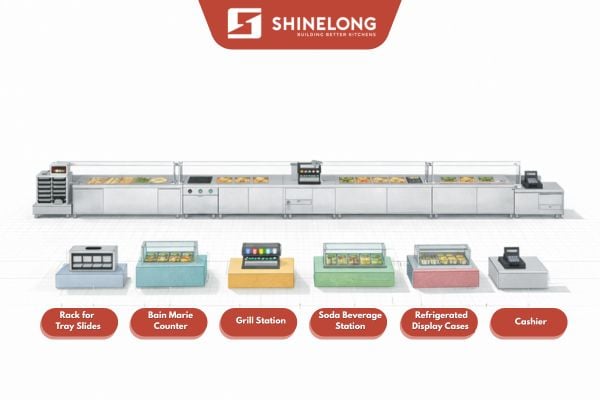
Essential Cafeteria Serving Line Equipment Checklist
Why Layout Matters in a Cafeteria Serving Line
Here’s the thing: a cafeteria serving line doesn’t about provide a grab-and-go pathway for guests. It also takes responsibility for connecting the back of house with the front of house. That means the primary goal of serving line layout design is to balance high service speed with guest satisfaction, while still maintaining an appealing and pleasant visual experience in the dining hall.
A well-designed layout helps food move efficiently from the kitchen, keeps queues flowing smoothly, and reduces congestion when a massive number of diners come in. When this connection fails, even good food can turn into a bad dining experience. There are several common considerations in cafeteria serving line layout design that apply to most types of institutional public canteens.
1. Smooth Layout That Follows the Path
Every serving line starts with flow. Not decoration or equipment stacking, but how diners and food move through the space. When the path is clear, service speed improves naturally. The linear flow layout is widely used for consistent serving canteens. Food stations are set along the straight sequence, allowing diners to move forward without backtracking. This works especially well in schools, hospitals, and corporate cafeterias where service windows are tight and volume is predictable.
From a BOH perspective, the Golden Triangle principle still matters. Storage, prep, and service areas must be positioned to minimize staff movement and avoid internal bottlenecks. Another critical detail is separating checkout points from high-frequency condiment areas. This prevents crowding at the payment zone and keeps the line flowing orderly.
2. Inclusive Serving Stations Designed for Real Dining Request
Modern cafeteria serving lines must support diverse menus and dietary needs without slowing service. Inclusivity is an essential option without doubt.
Cafeteria serving line equipment with a dual zone system allows cafeterias to shift smoothly between breakfast, lunch, and dinner service. This flexibility is especially useful in school settings where it's the same place but a different menu. Dedicated special-diet stations, such as vegan zones, give diners clear, modular choices through proper labeling and visual separation.
Chef-attended stations, such as carving, pasta, or grill counters, add interaction and distribute demand away from standard hot food wells. When positioned correctly, these live stations increase engagement without interrupting flow.
3. Scaling the Serving Line for 200, 500, or 1,000 Diners
Serving line design must scale with volume. What works for 200 diners will definitely fail at 1,000 if capacity is not planned correctly.
For 200 diners, two parallel serving lines of about 10.5 meters each are typically sufficient. This setup supports menu variety while keeping staffing and equipment simple.
At the 500-diner level, a hybrid model is a great option. Combining a main linear serving line with grab-and-go stations helps divert traffic and reduce pressure.
For 1,000 diners or more, centralized lines are no longer efficient. A scatter or island-based system becomes essential. By distributing multiple serving points throughout the dining hall, each serving around 200 diners with approximately 7.5 meters of service length, traffic is split into smaller streams.
4. Visual Details Would Influence Diners' Food Choices
Strategic visual cues play a quiet but powerful role in shaping diner behavior, especially in schools and healthcare dining environments where the focus is on nutrition and health options.
That’s why placing healthier meal options at eye level is far more practical. It can significantly increase selection rates. Fresh fruits, vegetables, and well-balanced meals should be the first things diners see as they approach the serving line. Digital menu boards also help diners make faster decisions by clearly displaying daily menus, allergen warnings, and ingredient information, instead of having them stand at the counter trying to figure everything out.
Warm lighting tones, cultural symbols, and institution-specific graphics can also influence how a space feels. In schools and corporate cafeterias, these visual elements help create a pleasure atmosphere while reinforcing community identity and team cohesion. When visuals are intentional, the serving line becomes both efficient and persuasive.
5. Building a Serving Line That Can Move and Grow
Menu flexibility and space limitations are two main challenges in institutional foodservice. This is where modular service equipment becomes a reliable solution.
Modular design allows individual service units to function independently while still integrating seamlessly into the serving line. These units can be rearranged, expanded, or reduced based on seasonal menus, special events, or changing traffic patterns.
Another advantage is cost control. Modular workstations are easier to relocate or reconfigure, significantly reducing future renovation and downtime costs. Instead of rebuilding the serving line, operators can simply reassemble it.
6. Technology Keep the Line Flowing
Nowadays, a modern cafeteria can't live without smart technology. When applied correctly, it reduces wait times, improves food safety, and optimizes daily operations.
Self-service kiosks, mobile ordering apps, and QR-code payment systems help simplify the ordering process. For corporate offices and schools, ID card payment systems are a convenient payment method because it's not only streamline transactions but also strengthen the connection between diners and the institution’s internal ecosystem.
Behind the line, connected sensors monitoring temperatures in refrigerators and hot food display counters provide real-time alerts, reducing the risk of food spoilage and compliance failures.
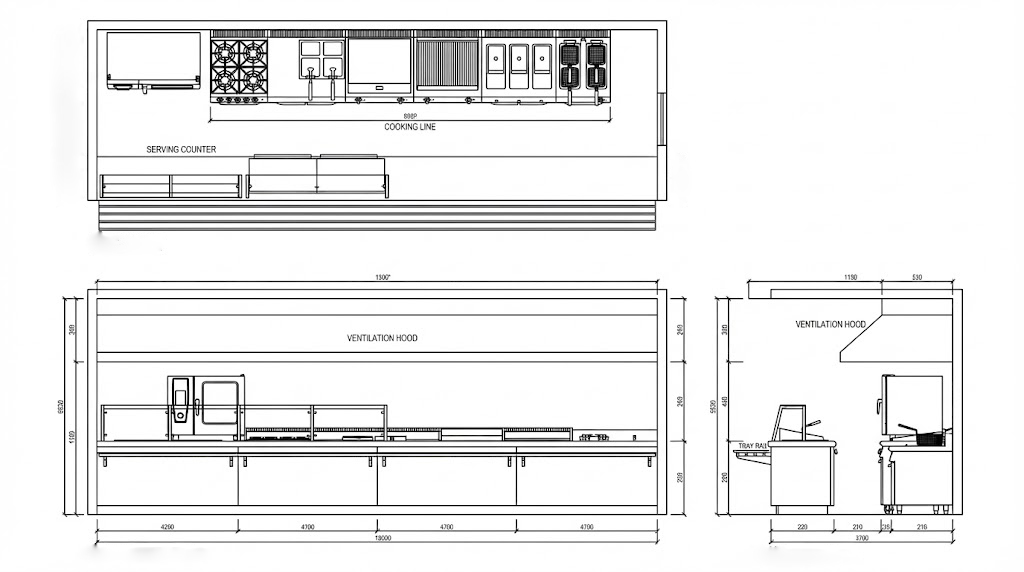
Which Serving Line Layout Is Right for Your Cafeteria?
Designing a workable serving line in a cafeteria usually comes down to four factors: menu, space, volume, and budget. The layout acts like the framework that brings all of them together.
Choosing the right configuration really depends on how your canteen operates day to day, how complex the menu is, and how many people you need to serve. A good layout always finds the balance between guest experience and efficient behind the line.
In most cafeteria halls, there are four common layouts you’ll see. Below, we break them down to help you decide which one fits your operation best.
-
Classic Linear Layout
The linear layout is definitely the classic option for quick route operations like office buildings and primary schools. Guests enter at one end, pick up a tray, select the food they want, and move in a single direction through different food counters, ending at the cashier. It is incredibly easy to manage and requires minimal labor.
For facilities serving up to 200 people within tight meal periods, the linear layout remains one of the most optimal solutions. It keeps queues organized and allows staff to maintain consistent service speed.
-
Loop Layout
The loop layout, also known as the island layout, is commonly used in medium to large cafeteria halls where traffic needs to be distributed more evenly. Guests enter the serving area and move along a circular or U-shaped path, selecting food from stations placed around the loop before reaching the cashier. This layout reduces head-on congestion and keeps diners moving without sudden stops.
Loop layouts work well when the menu offers more variety and diners need extra time to decide. For hospitals, prisons, and corporate campuses serving 300 to 500 people, this layout helps maintain a steady flow while improving the overall dining experience.
-
Multiple Stations Layout
The multiple-station layout focuses on splitting diners instead of pushing everyone through a single queue. Different food categories, such as hot meals, cold dishes, grills, and grab-and-go items, are set up as independent stations, allowing guests to choose where to line up.
This approach is ideal for cafeterias with diverse menus and high volume, like college and department stores. By separating popular items across stations, waiting time is reduced and pressure on the main serving line is eased. It also allows kitchens to operate different stations independently based on demand.
-
Scramble Layout
The scramble layout is designed for large-scale operations with very high traffic flow. Instead of a defined line, food stations are spread across the dining hall, letting diners approach from multiple directions.
This layout is often used in mega hospitals, universities, and factories serving over 1000 people. While it requires strong signage and clear zoning, it delivers the fastest throughput when space allows. When designed well, scramble layouts keep crowds moving smoothly without forming long queues.
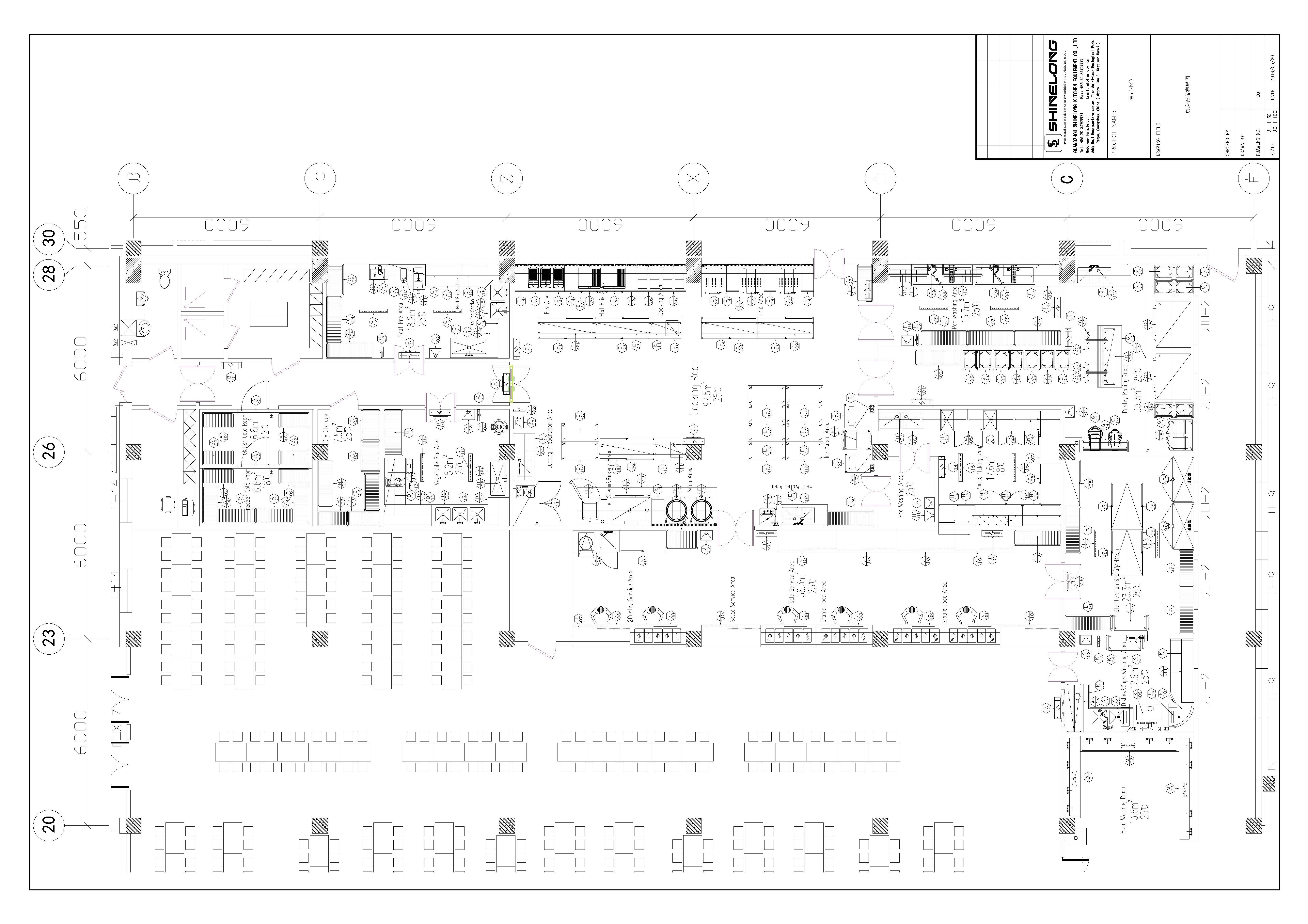
There’s no perfect cafeteria serving line layout in the world. You always have to put your feet on the ground and do proper preparation to design a layout that truly matches your operation.
At SHINELONG Kitchen, we focus on delivering comprehensive, turnkey commercial kitchen solutions for all types of premises. From professional consulting and full-line commercial kitchen equipment to kitchen floor plan design, on-site installation, and responsive after-sales support, we cover the whole process.
Planning an institutional kitchen project? Contact us, and we’ll help bring your ideas to life.
FAQs
Q. What are the essential components of a complete cafeteria serving line?
A complete serving line requires three core sections: a hot food line, a cold food line, and an accessory station for condiments. This combination ensures diners can get everything they need in one efficient pass.
Q. How do I choose the right serving line layout based on diner volume?
For under 200 diners, a Linear layout is most efficient; for 300-500, a Loop layout works best. If serving over 1,000 diners, a hybrid layout would be the ideal solution.
Q. Why is "flow" critical in cafeteria design, and how can I optimize it?
With lunch breaks often limited to 30-40 minutes, optimized flow prevents congestion and ensures fast service. A good design follows a logical, one-way path and separates payment zones to keep the line moving smoothly.
Q. What is the advantage of using modular equipment in a cafeteria serving line?
Modular units allow you to easily rearrange stations for seasonal menus without costly renovations. This flexibility saves money and lets your serving line adapt instantly to changing dining needs.
Q. What is a serving line?
A cafeteria serving line is the central service hub of a dining commons. It typically combines multiple food stations placed in a straight line or loop layout, allowing diners to pick up food on trays while walking along the path.
How we deliver a commercial kitchen solution for a mega hospital