Posluprodatni:
 EN
EN
 AR
AR
 HR
HR
 NL
NL
 FI
FI
 FR
FR
 DE
DE
 EL
EL
 HI
HI
 IT
IT
 PT
PT
 RO
RO
 RU
RU
 ES
ES
 TL
TL
 ID
ID
 SL
SL
 VI
VI
 ET
ET
 MT
MT
 TH
TH
 FA
FA
 AF
AF
 MS
MS
 IS
IS
 MK
MK
 HY
HY
 AZ
AZ
 KA
KA
 UR
UR
 BN
BN
 BS
BS
 KM
KM
 LO
LO
 LA
LA
 MN
MN
 NE
NE
 MY
MY
 UZ
UZ
 KU
KU


Novosti
Ključni faktori u modernom dizajnu komercijalnih kuhinja
Postoji jedna tvrda istina u industriji uslužnih prehrambenih proizvoda: što više razmišljate o dizajnu komercijalne kuhinje na početku, to ćete imati manje problema kada restoran započne s radom. Kuhinja je motor čitave operacije. Od planiranja koncepta i kupovine opreme do instalacije i obuke osoblja, sve ovisi o tome koliko je dobro postavljena osnova.
Poslovni kuhinja predstavlja značajnu investiciju. Ako je prvi korak, kao što je plan rasporeda poslovne kuhinje ili crtež tlocrta, loše urađen, to često vodi do gubitka prostora, neučinkovitih tokova rada, većih troškova rada i stalnog frustriranja vašeg osoblja. Ispравljanje ovih grešaka kasnije je skupo i uzrokuje prekid u radu. Zato je važno odmah ispravno napraviti raspored kuhinje restorana.
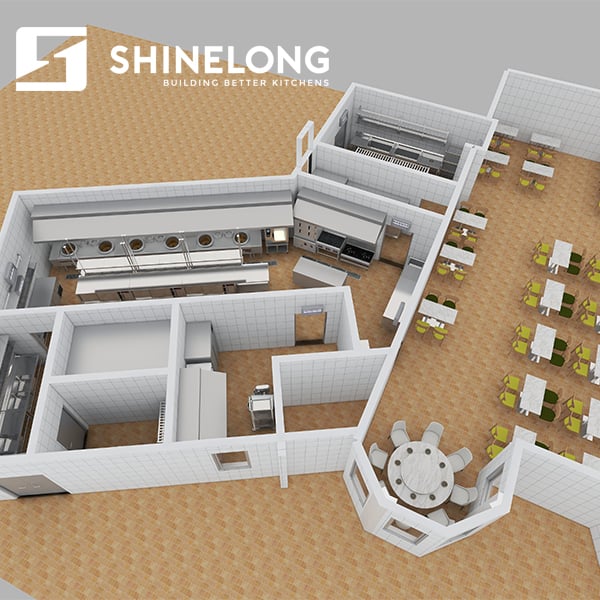
Planiranje rasporeda poslovne kuhinje na pravi način
Kada planirate raspored poslovne kuhinje, cilj je da se svakodnevni rad podrži na učinkovit način, čak i tijekom vršnog opterećenja. Dobro osmišljen tlocrt poslovne kuhinje omogućava osoblju prirodno kretanje, smanjuje nepotrebne korake i sprječava međusobno ometanje različitih procesa.
Osnovni radni tok u svakoj industrijskoj kuhinji za restorane ostaje isti: skladištenje, priprema, kuhanje, posluživanje i servis. Sve odluke o dizajnu trebaju podržavati ovaj redoslijed. Bez obzira da li je kuhinja velika ili kompaktna, raspored treba voditi hranu i ljude naprijed, a ne unazad.
Skladištenje nije naknadna misao
Skladištenje je jedna od najčešćih mrtvih tačaka u rasporedu. Kada je skladištenje loše planirano, kuhinje se brzo zaguše, čak i ako prostor na papiru izgleda prostrano.
Dobro osmišljen plan rasporeda komercijalne kuhinje koristi vertikalni prostor, prostore ispod šporeta i zidne elemente za skladištenje kako bi alati i sastojci bili uvijek pri ruci. To je najvažnije u kompaktnim kuhinjama, gdje svaki uštedjeni korak povećava brzinu i sigurnost.
U praksi, pametan dizajn skladištenja često čini da manja industrijska restoranska kuhinja bolje funkcioniše od veće, ali loše organizovane.
Efikasnost dolazi iz kontrole razdaljine
Učinkovitost u dizajnu poslovnih kuhinja usko je povezana s tim koliko daleko se ljudi moraju kretati. Prekomjerno hodanje jedan je od najvećih skrivenih troškova u radu kuhinje.
S ergonomskog aspekta, sudopera, hladnjaci , i glavni kuhalni šporet trebaju formirati zlatni trokut u profesionalnoj praksi, idealna ukupna udaljenost između ova tri mjesta obično se kreće između 4 do 6 metara. Ovaj raspon omogućava šefovima udoban kretanje bez gubitka vremena ili energije.
Dobra ergonomija ne poboljšava samo brzinu. Smanjuje umor i rizik od dugoročnih problema.
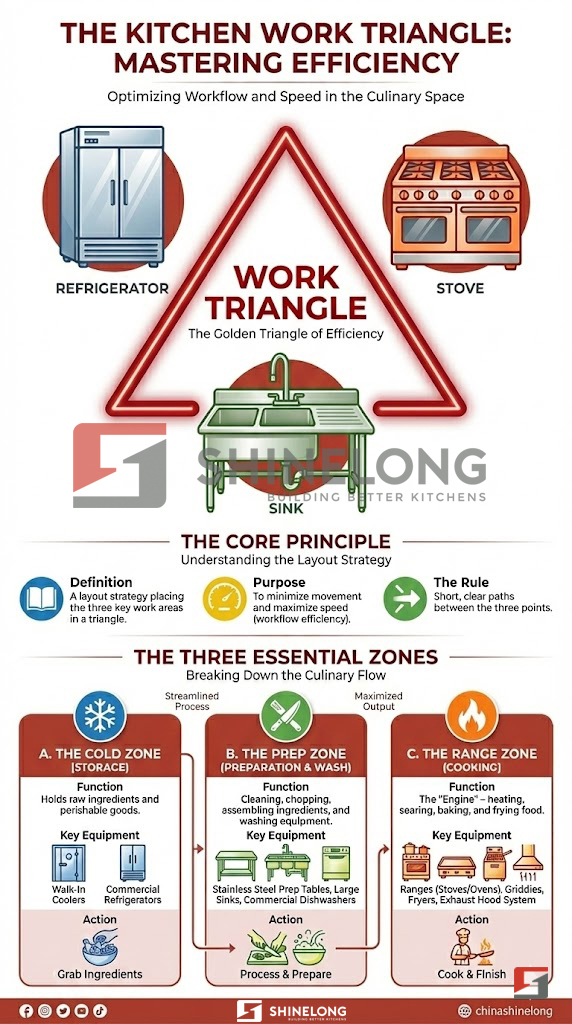
Odabir opreme mora odgovarati rasporedu
Oprema za poslovne kuhinje nikada ne bi trebala biti odabrana izolirano. Veličina, proizvodni kapacitet, potreban pogon i toplinski opterećenje utječu na odluke o rasporedu.
Za razliku od kućnih aparata, profesionalna oprema je dizajnirana za kontinuiranu upotrebu. Zbog toga se industrijske kuhinje u restoranima oslanjaju na specijalizovanu opremu koja ima veću izdržljivost i strože sigurnosne standarde.
Energetska efikasnost također igra sve važniju ulogu, jer moderne kuhinje imaju za cilj smanjenje operativnih troškova i uticaja na životnu sredinu istovremeno. Čvrst dizajn komercijalne kuhinje usklađuje odabir opreme sa rasporedom prostora, a ne obrnuto.
U profesionalnim hotelским kuhinjama, većina modernih instalacija opremljena je komercijalnom energetski uštednom kuhinjska oprema , od kojih mnoge mogu smanjiti potrošnju energije za 30% do više od 60% u poređenju sa tradicionalnim sistemima. Odabir opreme sa visokom termičkom efikasnošću i niskim gubicima energije direktno smanjuje operativne troškove, istovremeno podržavajući ciljeve održivosti.
Trošak je više nego samo nabavna cijena
Jedna od najvećih grešaka u projektovanju poslovnih kuhinja je fokusiranje isključivo na cijenu opreme. Realistička procjena uključuje ugradnju, logistiku, održavanje, potrošnju energije i dugoročnu prilagodljivost. Saradnja sa iskusnim dobavljačem poslovnih kuhinja često smanjuje ove skrivene troškove. Integrirano planiranje sprječava sukobe u rasporedu, skraćuje vrijeme ugradnje i poboljšava dugoročnu pouzdanost.
Projektuj jednom, koristi godinama
Poslovnu kuhinju nije stvar koju želite ponovo dizajnirati nakon otvaranja. Kada se projektovanje poslovne kuhinje pravilno obavi, uravnotežujući raspored, skladištenje, ergonomiju i opremu, kuhinja podržava rast umjesto da ga ograničava. Najbolje kuhinje nisu nužno najveće niti najskuplje. To su one u kojima raspored tiho funkcionira, dan za danom, bez da ometa.