After-Sales:
 EN
EN
 AR
AR
 HR
HR
 NL
NL
 FI
FI
 FR
FR
 DE
DE
 EL
EL
 HI
HI
 IT
IT
 PT
PT
 RO
RO
 RU
RU
 ES
ES
 TL
TL
 ID
ID
 SL
SL
 VI
VI
 ET
ET
 MT
MT
 TH
TH
 FA
FA
 AF
AF
 MS
MS
 IS
IS
 MK
MK
 HY
HY
 AZ
AZ
 KA
KA
 UR
UR
 BN
BN
 BS
BS
 KM
KM
 LO
LO
 LA
LA
 MN
MN
 NE
NE
 MY
MY
 UZ
UZ
 KU
KU


News
Best Fast Food Cooking Equipment on a Budget
A fast food cookline equipment is all about getting food out fast in a tight footprint, without sacrificing consistency.
Order to serve has to happen within 5 minutes. The cooking equipment behind that needs to bring higher heating performance while running on lower energy, and hold up to being used reliably hundreds of times a day, every day.
That's really the whole equation for a fast food kitchen: get the balance right between cost and reliability. A limited menu, cooked the exact same way, hundreds of times a day, in a kitchen the size of a parking spot.
Paying for a premium, full-featured cooking range for that job is a waste. Budget-friendly, countertop equipment is the smarter buy, not a compromise.
This article walks through what actually matters when choosing commercial cooking equipment for a fast food line and breaks down the best budget solution for the job.
What Commercial Cooking Equipment Do Fast Food Restaurants Need?
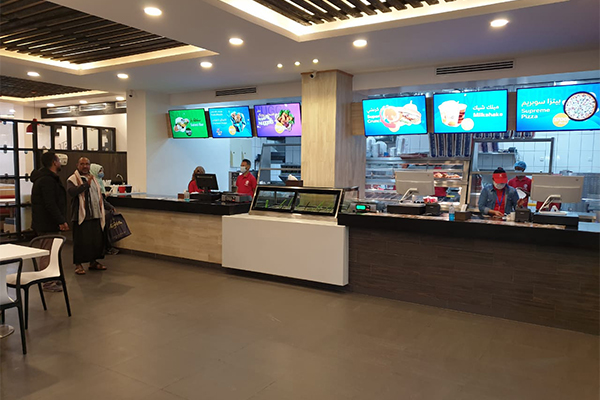
To set up a standard fast food cook line really comes down to five things: countertop equipment, consistent heating performance, lower energy consumption, staff-friendly and easy to operate, and reliable enough to run all day.
Sounds pretty tough, right? But each of these directly answers a real pain point in running a profitable fast food restaurant. Here's why:
- Cook line space: The typical fast food kitchen usually occupies just 30% of the entire store's footprint, which means every square foot back there has to earn its keep. Countertop equipment fits that constraint without forcing a bigger lease.
- Menu coverage and output speed: To be honest, most fast food menus can't live without a stove, griddle, fryer, grill, bain-marie, and a cooker for noodles or rice. Skip any one of those, and half the menu becomes impossible to serve fast.
- Staff training and ease of use: Fast food staff turnover is super high in the food service industry, which means someone new is stepping up to the line almost every few months. Equipment that takes a week to learn is a recurring cost.
- Chain replication and supply consistency: A cook line that works in store one has to work exactly the same way in store twenty, down to the same parts, the same layout, and the same training manual. Anything else turns every new location into a fresh engineering problem.
- Energy use and long-term running cost: Utilities typically sit around 5-8% of a fast food operator's total running costs, which is small compared to labor and food cost, but one of the few line items that compounds quietly, year after year.
Is there a cook line that checks every one of these boxes without blowing the budget? That's exactly what the 800X countertop series was built to do.
Meet the 800X Series
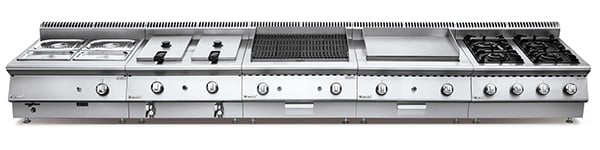
Featuring a refined, modular design from SHINELONG, the 800X countertop cooking series perfectly combines performance with flexibility. Every detail is crafted to maximize foodservice efficiency. The series includes ranges, griddles, lava rock grills, pasta cookers, fryers, bain maries, and hot plates, all available in both gas and electric models.
Why the 800X Series is Built for Fast-Food Environments
- Countertop design with standard dimensions of 800×700×325+50mm and a modular layout.
- Made of premium 304 stainless steel, corrosion-resistant and easy to clean.
- Delivers even heating performance with simple, staff-friendly operations.
- Low energy consumption, high efficiency.
- Covers a wide variety of cooking techniques to easily adapt to menu changes.
- All appliances can be paired with an open cabinet or a standard base.
How the 800X Series Maximizes Cook Line Space
A typical 90㎡ fast food store needs its back-of-house capped at roughly 30% of total space, call it 27㎡ , while still running a full menu. That's tight, and it gets rough on staff trying to handle rush orders around floor-standing equipment crowding the line.
With the 800X series, a fully equipped cook line with 6 functional stations takes up less than 4㎡. That means a back-of-house running on 800X can handle 350-500 orders a day in a fraction of the space a traditional floor-standing setup would need. Same output, way smaller footprint, which is the whole efficiency argument in one number.
| Cookline Configuration | Space(㎡) | Daily Orders |
| 4 units of 800X | 2.5 | 100-150 |
| 5 units of 800X | 3 | 250-350 |
| 6 units of 800X | ≤4 | 350-500 |
How the 800X Series Truly Covers Your Whole Menu
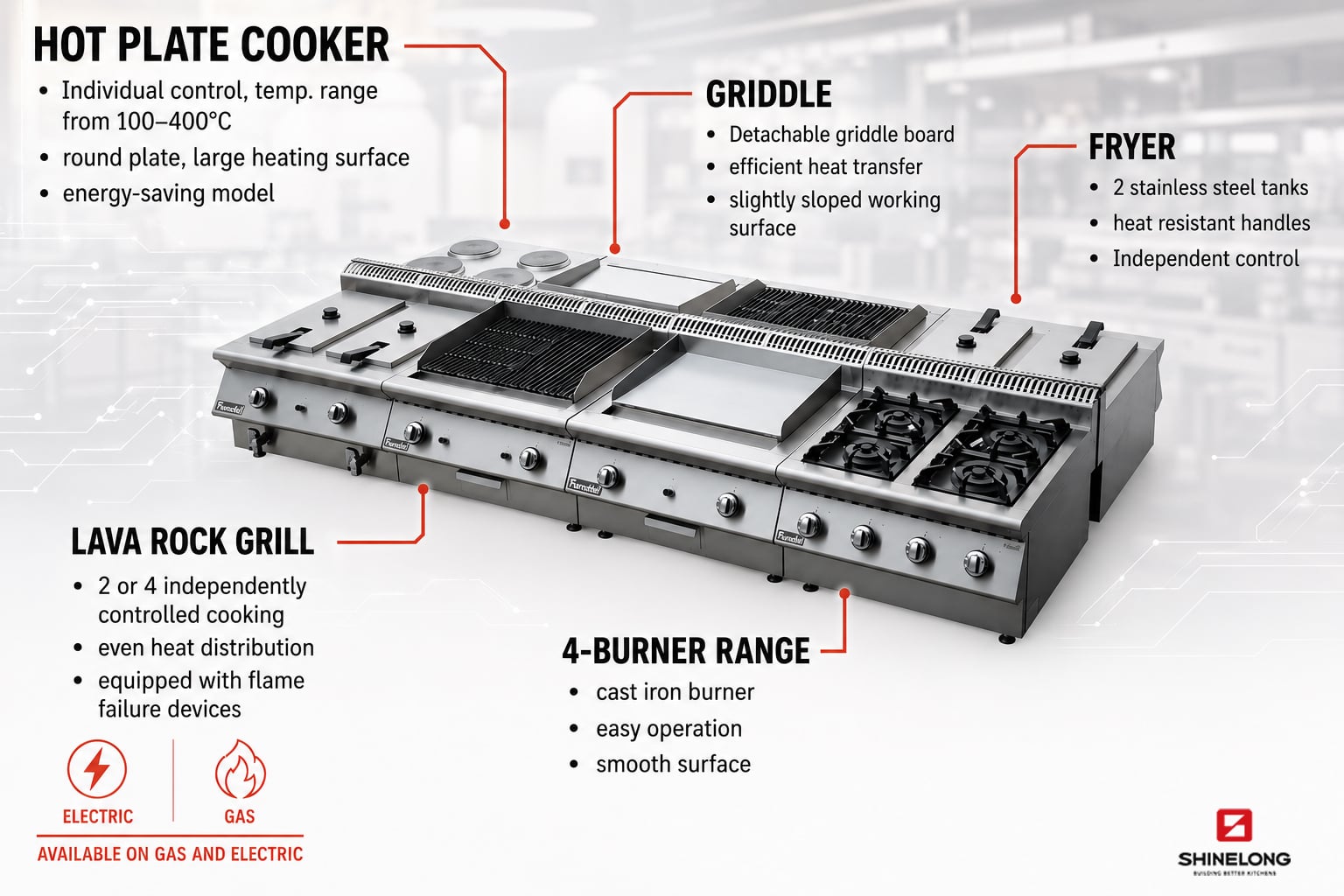
Most fast food combos can't live without burgers, fried items, grilled dishes, signature sauces, and sides. Every high-frequency category requires a specific appliance to bring it to the plate, and each station focuses on a different cooking method. Skip any one of those, and half the menu becomes impossible to serve fast. Here's how the 800X lineup maps onto those categories.
| Menu Category | Share of Menu | 800X Equipment | Features |
| Burger, sandwich, hot dog, pancake | 30-35% | Griddle | Even heat distribution across the whole surface |
| Grilled item | 15-20% | Grill | 2 or 4 independently controlled cooking zones |
| Fried chicken wing, nugget, onion ring, chip | 25-30% | Fryer | The 2-tank design maxes out productivity |
| Gravy, sauce | Consistency critical | Bain marie | Heating quickly, excellent thermal insulation |
| Noodle, pasta | 8-12% | Pasta cooker | 3 heating levels protect ingredients from overheating |
| Others | 3-7% | Burner | Extremely low emission, high efficiency |
Staff Friendly and Easy to Operate
Fast food staff turnover regularly runs 80 to 120% a year. Someone new is stepping onto the line every few months, not every few years, and equipment that takes a week to learn isn't a minor inconvenience. It's a recurring cost that shows up as slow mornings and botched orders.
An intelligent combi oven with ten buttons and layered menus can take 3 to 5 days to train someone on. An 800X station is a single-function unit. A 15-minute walkthrough, an hour of hands-on practice, and a new hire is running it safely. Chains that switched over have seen opening delays shrink by 3 to 5 days and early shift failure rates drop by roughly half.
Because every 800X module shares the same button layout, temperature display, and timer logic, a 10-store chain can run one SOP manual instead of thirty pages of device specific instructions. Staff moves between locations without relearning anything, which tends to show up as fewer order mistakes and a more consistent brand experience across stores.
There's a reliability side to this too. Built from 304 stainless steel with simple electric heating elements and no complex pneumatics or sensors, the mean time between failures runs past five years. Most repairs wrap up in about an hour, instead of the multi day wait that's common when a combi oven needs a factory technician.
How the 800X Series Makes Chain Expansion Easier Than Ever
Here's a question worth asking before buying anything. Should a small fast food startup go with new, standardized equipment, or piece together a kitchen from used units? For a single store, used equipment might pencil out. For a chain planning to open stores two, three, and twenty, it usually doesn't.
A lot of franchise buildouts run into the same problem. Franchisees source equipment on their own, kitchens end up mismatched, and head office can't standardize training or respond quickly when something breaks. Modular, single source equipment fixes this at the sourcing level. One supplier, one product family, one shared parts list.
That's exactly where the SHINELONG 800X series delivers. Every unit shares the same construction, button layout, materials, and operation, all built to the same 800×700×325+50mm standard dimension. Mix and match any combination of stations, and they line up and work the same way, every time, whether it's store number one or store number twenty.
Does the 800X Series Really Keep Energy Costs Low?
Energy efficiency tends to get less attention than labor or food cost when picking cooking equipment, but it's one of the few line items that compounds quietly over years instead of showing up all at once. For a typical fast food operator, the OpEx(operating expense) breakdown looks roughly like this.
| Cost Category | Share of OpEx |
| Labor | Around 40% |
| Food cost | Around 35% |
| Rent | Around 15% |
| Utilities (water, gas, electricity) | Around 5 to 8% |
That 5 to 8% might look small next to labor and food cost, but it's also one of the only categories an operator can meaningfully push down through equipment choice alone. The energy-saving 800X series is built to deliver reliable cooking performance while keeping that number in check. Here's how:
- Complete combustion ensures high heat efficiency with minimal waste
- Extremely low emission values
- Independently controlled cooking zones, so no station runs hotter than it needs to
- Excellent thermal insulation keeps heat where it belongs instead of leaking into the kitchen
- Even heat distribution that prevents hot spots from wasting extra energy
800X Maintenance and Warranty, Explained
It's impossible to extend the lifespan of fast food cooking equipment on durable materials alone, especially when it's running heavy-duty operations day after day. That's why the right maintenance routine, a fast aftersales response from the supplier, and a solid warranty are all extremely crucial. Not just for controlling costs, but for keeping a food service operation running steadily.
Budget-friendly only holds up if the equipment actually holds up. Before committing to any supplier, it's worth getting clear answers on a few things.
- Warranty terms: what's covered, and for how long
- Spare parts response time: heating elements and contacts wear fastest, so quick turnaround matters most here
- Compliance certifications: confirm relevant regional safety, electrical, and ventilation standards with your distributor before installation
- A basic maintenance routine: wipe downs, element checks, and calibration on a fixed schedule
The 800X series is built to meet all of that. Even as a cost-effective cooking line built for fast food restaurants, fast casual concepts, and small to medium volume food service operations, SHINELONG doesn't cut corners on service.
Every 800X countertop unit comes with a 1-year warranty. SHINELONG's service team responds within 24 hours and keeps essential spare parts on hand. On top of that, a full maintenance and operation guide video helps staff avoid the kind of small operating mistakes that shorten equipment life. All of this comes back to one thing: helping chefs unlock their full culinary potential, Building Better Kitchens.
Give Your Fast Food Line Reliable, Budget-Friendly Power
A fast food cook line isn't judged on versatility. It's judged on how fast it gets food out, how little space it eats up, how quickly new staff can run it, and how easily it copies from store one to store fifty. Run the 800X series against those standards, and it holds up on every count. Less footprint, faster output, easier training, predictable replication costs, and lower energy draw.
Want to see if the 800X countertop series fits your fast food operation? Chat with a SHINELONG kitchen consultant and find out through SHINELONG Contact.
FAQs
- What equipment is included in the 800X countertop series?
The 800X series includes a griddle, grill, fryer, bain marie, pasta cooker, and burner, all built to the same 800×700×325+50mm standard dimension so they can be mixed and matched into one modular cook line.
- Does the 800X series cover a full fast food menu?
Yes. Each station is matched to a specific menu category: griddle for burgers and sandwiches, fryer for fried items, grill for grilled dishes, bain marie for sauces, and a pasta cooker for noodles and rice-based sides.
- What warranty comes with the 800X series at SHINELONG?
Every 800X countertop unit comes with a 1-year warranty, backed by a service team that responds within 24 hours and keeps essential spare parts on hand.
- What should I consider when choosing cooking equipment for my new fast food restaurant?
Five things matter most: how much footprint the equipment needs, whether it covers your full menu without gaps, how fast new staff can learn to run it, whether it can be replicated identically across future locations, and how much it adds to your long-term energy costs.
- Can you recommend reliable brands for fast food cooking equipment?
It depends on the kitchen. Full-service operations running complex, high-variety menus often lean on established combi oven brands. Fast food operations running a limited, high-frequency menu are usually better served by a modular, purpose-built line like SHINELONG's 800X series, which trades broad functionality for speed, footprint, and cost efficiency.
- Where can I find reliable suppliers for commercial cooking appliances?
Look for suppliers who provide clear warranty terms, fast spare parts response, and relevant safety and electrical certifications upfront. SHINELONG kitchen equipment is built around exactly these standards, backed by a 1-year warranty and a 24-hour service response.