After-Sales:
 EN
EN
 AR
AR
 HR
HR
 NL
NL
 FI
FI
 FR
FR
 DE
DE
 EL
EL
 HI
HI
 IT
IT
 PT
PT
 RO
RO
 RU
RU
 ES
ES
 TL
TL
 ID
ID
 SL
SL
 VI
VI
 ET
ET
 MT
MT
 TH
TH
 FA
FA
 AF
AF
 MS
MS
 IS
IS
 MK
MK
 HY
HY
 AZ
AZ
 KA
KA
 UR
UR
 BN
BN
 BS
BS
 KM
KM
 LO
LO
 LA
LA
 MN
MN
 NE
NE
 MY
MY
 UZ
UZ
 KU
KU


News
A Real Bargain Guide to Setting Up Catering Kitchen
There’s no getting around it: setting up a commercial kitchen is a massive investment. From working closely with a professional supplier to designing, equipment selection, plumbing, installation, and decoration, every single step comes with a price tag. But here’s the real deal: if you pay more attention to the right parts of the setup process, you can save a ton of time and money, and I'm not just bragging. In this post, we’re going to show you how to build a high-performance kitchen that actually gives you great value for your buck.
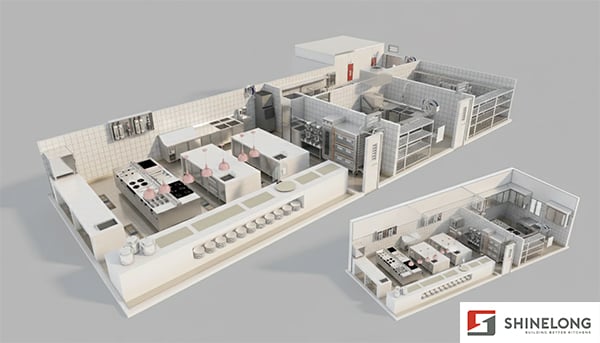
Investing More Wisely
Think of your commercial kitchen as the engine room of your catering business. Its job is to pump out safe, flavorful meals consistently and on time, which is the true foundation of any booming restaurant. Because these tools face a rigorous, high-heat, and consistent use environment daily, you simply cannot afford to choose your equipment based on the price tag alone.
- Performance Meets Durability
First things first: you need to evaluate the technical specs. Commercial kitchen appliances are lightyears away from home cooking tools; they must be heavy-duty powerhouses built with industrial-grade materials. But performance is only half the battle. You need to catch onto the importance of after-sales service. It’s the safety net that keeps you out of trouble. When equipment breaks down mid-service, a responsive support team is what minimizes your losses and keeps the doors open.
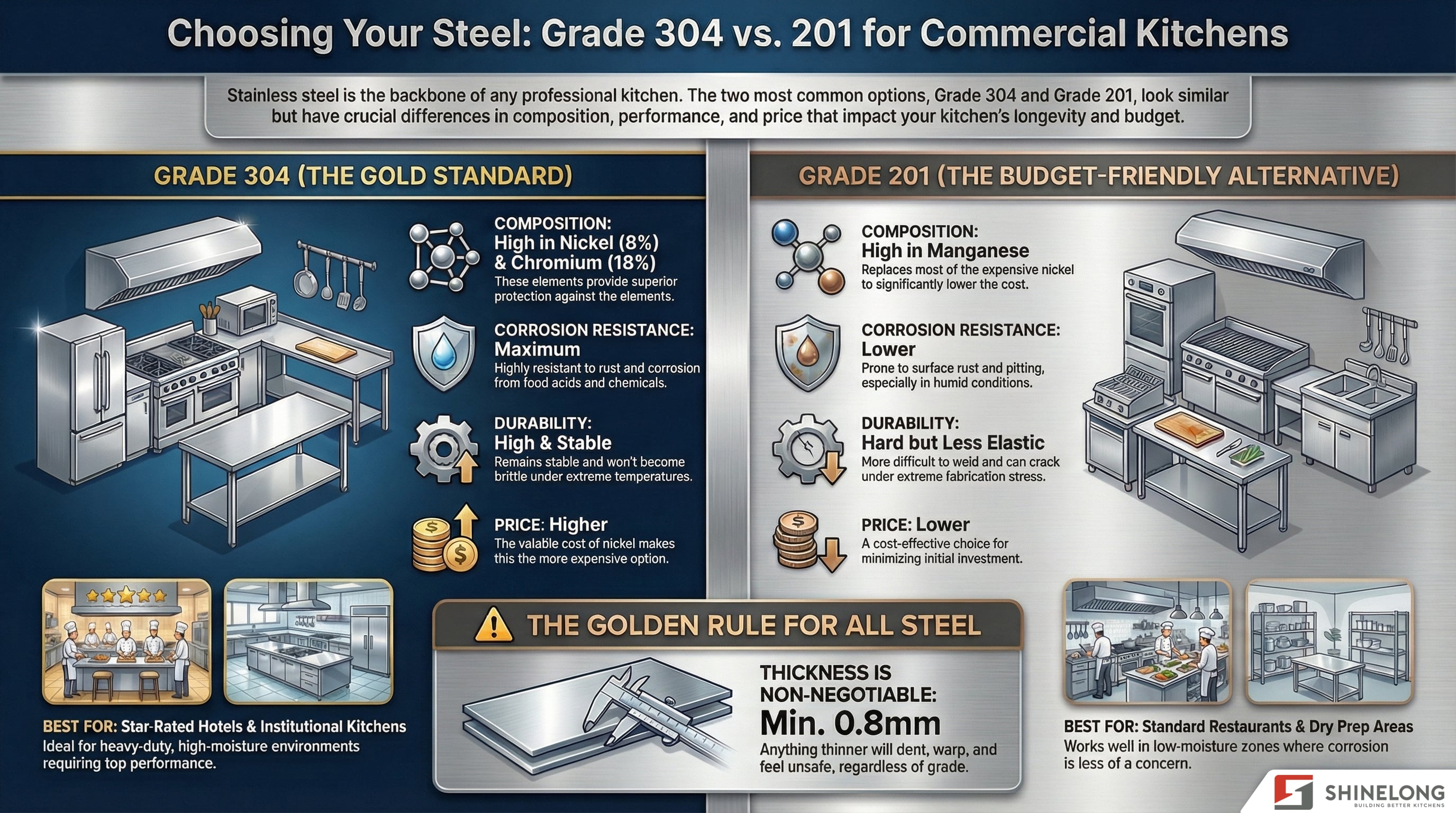
- The Science of Stainless Steel
Stainless steel fabrication shows up everywhere in any professional kitchen, from high-demand cafeterias to boutique bakeries. From the exterior of your cook range or refrigeration equipment to the pastry station worktables, and wall-mounted spice shelves.
In the "back of the house," you will typically choose between two grades: Grade 304 and Grade 201. Grade 304 is the premium option, favored by star-rated hotels and public institutional cafeterias for its incredible durability and rust resistance. However, it is significantly more expensive. For most standard restaurants, Grade 201 is a cost-effective alternative that does the job well.
Regardless of the grade, here is a golden rule for any commercial kitchen: ensure the material thickness is at least 0.8mm to guarantee structural integrity.
- Finding a Reliable Partner
Don't just look for a vendor; look for a trusted supplier of commercial kitchen equipment who offers a one-stop solution. A great partner like SHINELONG doesn’t just sell you a stove; they also help with floor plan design, MEP (mechanical, electrical, and plumbing) installation, and most importantly, long-term technical support. Investing in the right relationship is just as important as investing in the right oven.
Key Considerations in Catering Kitchen Design
Designing a kitchen is a complex, highly technical process. The more thoroughly you plan at the beginning, the fewer "expensive surprises" you'll face later. A well-prepared design isn’t an expense; it’s an investment that protects your budget and helps your restaurant take the market by storm.
Kitchen Layout
The layout defines your daily reality. It’s about the "flow," like how ingredients move from storage to prep, and how plated meals get to the diner without staff bumping into each other. A smart layout eliminates operational bottlenecks, reduces cross-contamination risks, and creates a safer, more ergonomic environment. To get this right, you can't just rely on a basic PDF drawing. You need to work with a professional designer who understands site-specific conditions and the exact dimensions of your equipment catalog.
So that is why you need to choose a mature supplier to help you with the kitchen setting, especially when you're not good at this area. With 18 years of experience in the F&B industry and delivered over thoudsound solutions for all types of premises, we can help you build your kitchen from zero to one.
Floor Plan for Kitchen
A great floor plan is the visual translation of your entire kitchen ecosystem. It must integrate walls, plumbing, gas, and ventilation into one coordinated map. Before the first brick is laid, every service point, water supply, drainage, and exhaust duct routing should be locked in. This ensures your kitchen design aligns seamlessly with the renovation work, avoiding the nightmare of "secondary modifications".
Ventilation hoods for commercial kitchens deserve a special mention here. If your exhaust and fresh air systems aren't designed correctly from day one, fixing them later will be incredibly disruptive and costly. You want a system that clears the smoke but doesn't suck the profit out of your energy bill.
Electrical and Plumbing Planning
Your MEP (Mechanical, Electrical, and Plumbing) design must be customized to your specific equipment models. High-demand gear like combi-ovens, dishwashers, and tilting frying pans all have unique power loads and drainage requirements. Proper planning ensures you have sufficient capacity and well-positioned outlets, preventing messy cable routing and ensuring long-term electrical safety.
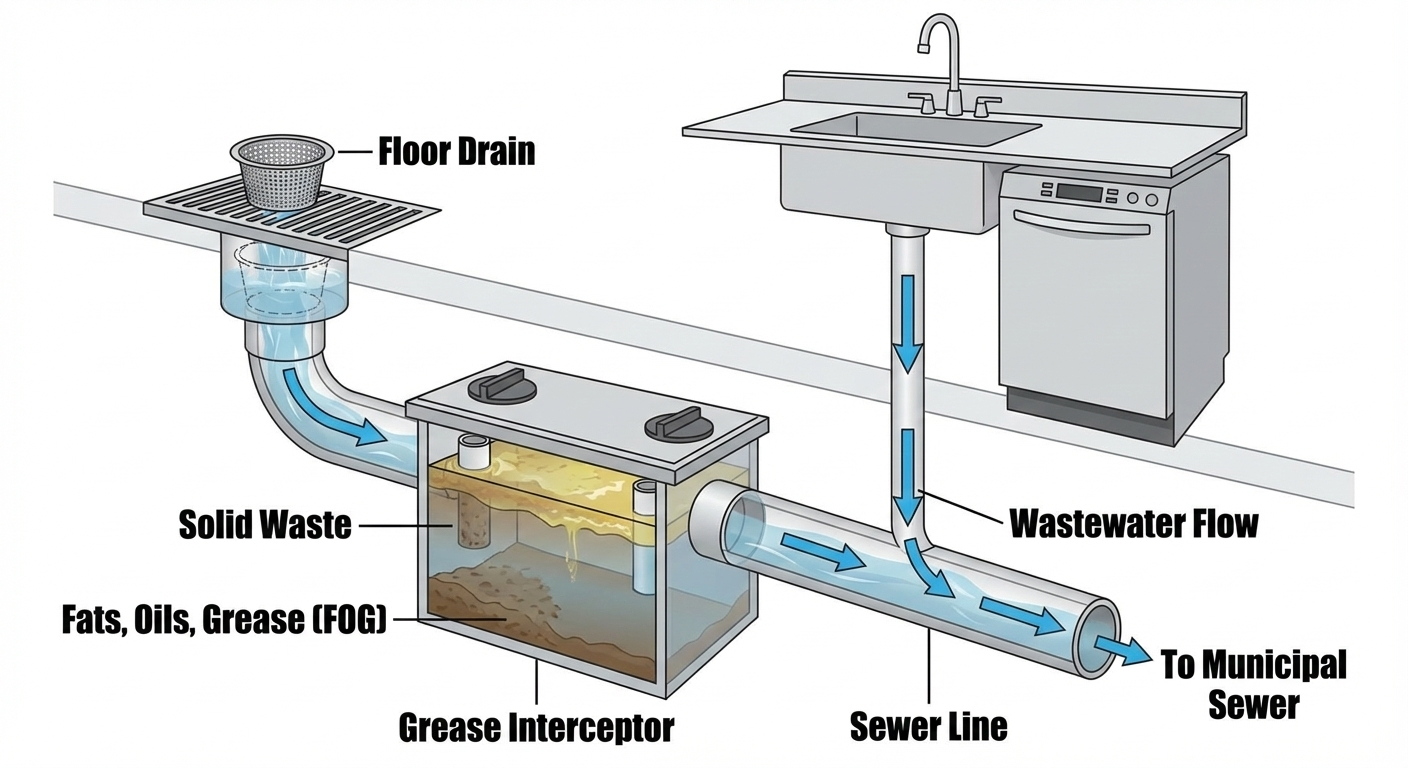
By the way, floor drainage is a critical hygiene decision. Standing water is a magnet for bacteria and can ruin your equipment (and your staff's mood). Choosing the right drainage is a critical hygiene and safety decision.
- Open Trench Drains:
These are visible channels at floor level. They are the heavy lifters—capable of handling large volumes of wastewater and debris quickly. They are easier to clear if a blockage occurs, making them the practical choice for high-volume, "heavy-duty" kitchens. However, they require frequent cleaning to manage odors and splashes.
- Concealed Drainage:
These systems live beneath the floor, with only the inlets visible. They offer a cleaner, more aesthetic look and do a better job of containing odors. They are safer for staff movement but can be harder to access if a deep blockage occurs. This is often the preferred choice for semi-open kitchens or light-prep zones where hygiene and appearance are the top priorities.
Related Resources
- Restaurant Kitchen Design: 6 Key Back-of-House Details
- Practical Tips Can’t Be Missed in Restaurant Kitchen Design
- What Is a Restaurant Kitchen? Sections, Layouts & Equipment Guide
- Understanding Quick Service Restaurants (QSRs)
- 8 Popular Types of Restaurants
RESTAURANT COLLECTION By SHINELONG Kitchen