After-Sales:
 EN
EN
 AR
AR
 HR
HR
 NL
NL
 FI
FI
 FR
FR
 DE
DE
 EL
EL
 HI
HI
 IT
IT
 PT
PT
 RO
RO
 RU
RU
 ES
ES
 TL
TL
 ID
ID
 SL
SL
 VI
VI
 ET
ET
 MT
MT
 TH
TH
 FA
FA
 AF
AF
 MS
MS
 IS
IS
 MK
MK
 HY
HY
 AZ
AZ
 KA
KA
 UR
UR
 BN
BN
 BS
BS
 KM
KM
 LO
LO
 LA
LA
 MN
MN
 NE
NE
 MY
MY
 UZ
UZ
 KU
KU


News
3 Complete Cookline Setups for Restaurants: How to Choose the Right Lineup
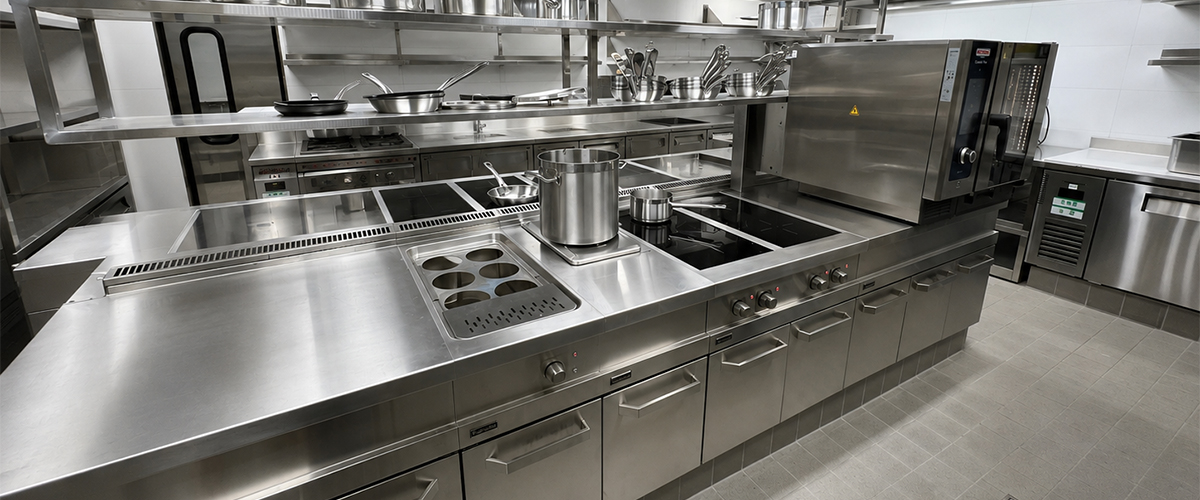
No restaurant runs without commercial cooking equipment. It's the heart of the hot kitchen and the engine of the entire back of house. But with so many options out there, you'll probably get stuck wondering which cooking range to pick and how to configure your setup. That's why we're here today.
With over 20 years in this business, SHINELONG has supplied cooking equipment to more than a thousand restaurants. Here's the thing: a tight bistro pulling 80 covers a night doesn't need the same cookline equipment as a 300-seat casual diner running back-to-back lunch and dinner rushes. Figuring out what kind of meals you'll serve and how many people you'll feed per day always comes first when it comes to picking the right setup.
In this guide, we're introducing three outstanding restaurant cookline setups, including the 800X, 900, and Max, all belonging to our premium Furnotel brand. Each one is a complete cooking suite, not a random pile of appliances, and each is built for a different restaurant type and output level. Want to know what each lineup includes, whether it fits your restaurant type, and how to actually decide between them? Let's jump right in.
What Does the "Cookline" Mean, and Why the Right Lineup Matters
A cookline is basically the station in a restaurant kitchen where chefs turn raw ingredients into hot meals using high heat, making sure it's ready to serve or ready for blast chilling. It's made up of a row of commercial cooking equipment: ranges, ovens, fryers, griddles, grills, salamanders, and induction cookers. For larger restaurants, a tilt skillet is often an essential part of the line too.
Actually, cookline equipment isn't a bunch of separate purchases you piece together and hope for the best. It's a system, a station and a production line that lets chefs use different cooking methods in the right order and get food out to guests faster.
The right commercial cooking suite isn't the biggest one or the cheapest one; it's the one sized to your actual menu, your actual peak-hour volume, and your actual kitchen footprint. That's exactly the problem the 800X, 900, and Max lineups are built to solve, each one built for a different point on that scale.
What Does a Standard Restaurant Cookline Include?
- Commercial cooking range
- Griddle
- Deep fryer
- Charbroiler
- Salamander
- Bain marie
- Induction cooker
- Pasta cooker
- Oven
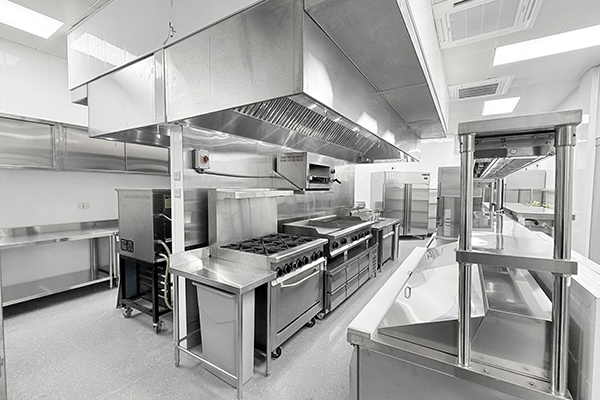
4 Things to Consider Before You Compare Lineups
Before anyone stares at a spec sheet, four questions decide almost everything. Skip them and even the best equipment ends up mismatched to the kitchen. Sort them first, and the right lineup practically picks itself.
Your Menu and Cooking Methods
The menu is the blueprint. A pizza-and-pasta spot leans on boiling water and oven heat; a burger joint lives on the griddle and fryer; a steakhouse rides the charbroiler hard. List the cooking methods each dish actually needs, such as fry, grill, sear, boil, roast, hold, and the shape of the cookline starts to appear on its own. A kitchen chasing char marks and smoke needs a charbroiler, while one built around eggs, pancakes and smash burgers wants a wide, flat griddle. Match the metal to the menu, not the other way around.
Peak Covers Per Hour (Output Level)
Daily totals lie. The number that actually sizes a cookline is peak covers per hour: the busiest 60 minutes of your busiest service. A kitchen that plates 40 covers an hour and one that plates 150 need very different burner counts, fryer tanks and griddle width. Forecast that peak first, then count the pans, baskets, oven loads and grill orders it demands. Sizing to peak load, not to a comfortable average, is what keeps tickets moving when the room is full and everyone orders at once.
Kitchen Space and Layout
Power means nothing if it won't fit. Measure the hot-line footprint before falling in love with any suite, then pick equipment depth that matches the space: countertop units for tight kitchens, full floor-standing modules where there's room to spread out. The layout matters as much as the square meters, appliances should sit in production order (prep, cook, pass) so food flows in one direction and staff aren't crossing hot pans. Common configurations include straight-line, galley, island and open-kitchen layouts, and the best one is simply the one that keeps the line safe and moving.
Gas vs Electric, and Budget
Neither fuel wins outright. Gas gives instant, high-output flame control that heavy searing and wok work love; electric and induction offer precise temperatures, cooler kitchens and easy cleaning. The real decision comes down to site utilities, menu demands, ventilation and local regulations and plus the budget, which should always be read as total cost over years, not just the sticker price. A cheaper line that eats energy and parts is rarely the cheaper line. All three SHINELONG lineups below come in gas and electric options, so fuel choice doesn't lock anyone out of a series.
800X vs 900 vs Max: A Quick Overview
Here's the whole comparison in a glance. Find the column that sounds like your kitchen, then jump to that section below.
| 800X | 900 | Max | |
| Best for | Cafés, fast food, small kitchens | Mid-to-upscale restaurants, casual restaurants, fine dining | High-turnover diners, hotels, resorts, chains |
| Output level | Medium | Medium to high | High |
| Type | Countertop model, with stand option available | Floor-standing, heavy-duty range | Floor-standing or countertop model, American-style high-BTU |
| Standard dimension | 800×700×325+50mm (W*D*H) | 800×900×850+120mm (W*D*H) | Depends on the specific unit |
| Highlight | Best budget, energy saving, stackable | Elegant, stable, high-quality output | Raw BTU power, high volume, easy maintenance |
| Fuel options | Gas (NG/LPG) & electric | Gas (NG/LPG) & electric | Gas (NG/LPG) |
| Material | Stainless steel 201 | Stainless steel 304 (2.0mm) | Stainless steel 304 (1.5mm) |
800X Series: The Compact Modular Hot Line
The 800X is the countertop cookline built for kitchens that need to balance consistent heat performance with limited space. At just 800 mm wide, each unit can be mounted on a worktable or an undercounter refrigerator. It's the lineup designed to sip energy rather than gulp it, which is exactly why smaller operators reach for it first.
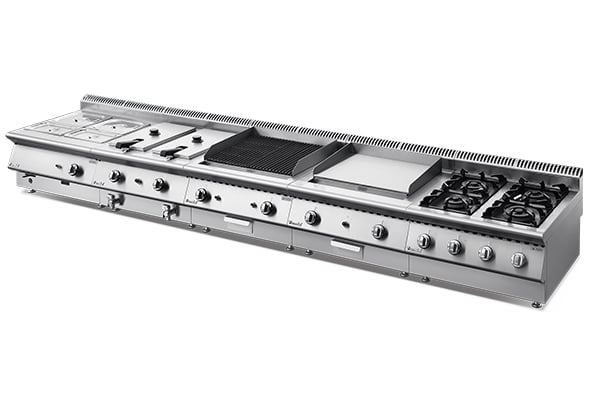
What's Included in the 800X Setup
| Equipment | Fuel options | Used for |
| 4-Burner Gas Stove | Gas (NG/LPG) | Diverse cooking tasks, such as boiling, stir frying or stewing |
| Flat-top Griddle | Gas (NG/LPG) or electric options | Burgers, eggs, sandwiches, flat-top items |
| Charbroiler | Gas (NG/LPG) or electric options | Char-grilling meats, seafood, skewers |
| Pasta Cooker | Gas (NG/LPG) or electric options | Pasta, noodles, blanching |
| Fryer | Gas (NG/LPG) or electric options | Deep frying chicken wings, nuggets and snacks |
| Bain Marie | Gas (NG/LPG) or electric options | Hot-holding sauces and sides |
| Hot Plate Cooker | Electric | Plug-and-play item for fast, daily light cooking |
What Restaurants Is the 800X Best For?
The 800X suits 20ft container kitchens, food trucks, snack bars, fast-food counters, and any kitchen operating within a compact footprint while continuing to serve hot food. Think focused menus, for example, a griddle-and-fryer burger bar, a pasta-and-grill café, or a breakfast spot, rather than sprawling all-day operations. Because the units are modular, operators can start with two or three pieces and expand as their menu grows.
Compact, modular, and easy to combine, the 800X lets a small kitchen build exactly the line it needs today and bolt on the next piece tomorrow. Energy-efficient by design, it keeps running costs low while still holding up to daily commercial use, all in a footprint that a full floor-standing suite can't match.
900 Series: Precision Performance, Elegant Design
The 900 is a versatile, high-function cooking suite designed for kitchens that care as much about how the food looks as how fast it leaves the pass. At 900 mm deep with a heavy-duty 2.0 mm 304 stainless steel top, it's built for long, steady service and the consistent, refined output that mid-to-upscale dining rooms are judged on. This is the foundation line that fine dining establishments and luxury hotels build their kitchens around.
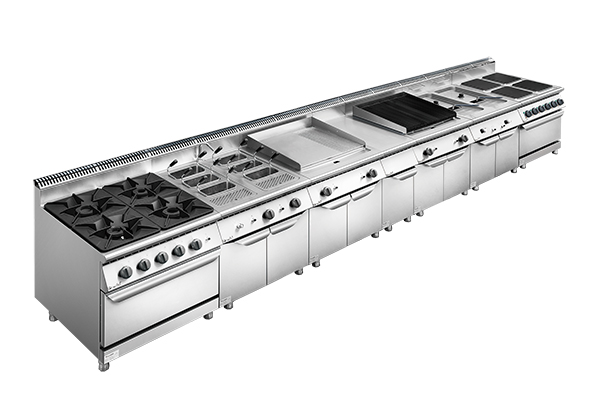
What's Included in the 900 Setup
| Equipment | Fuel options | Base options | Used for |
| 900 Series Range | Gas (NG/LPG) | Oven/Cabinet | Multi-burner cooking + roasting/baking |
| 900 Series Griddle | Gas (NG/LPG) or electric options | Oven/Cabinet | Divide into flat and grooved area, perfect for burgers, eggs, sandwiches, flat-top items |
| 900 Series Charbroiler | Gas (NG/LPG) or electric options | Oven/Cabinet | Char-grilling meats, seafood, skewers |
| 900 Series Pasta cooker | Gas (NG/LPG) or electric options | Oven/Cabinet | Boiling pasta and noodles, blanching vegetables |
| 900 Series Fryer | Gas (NG/LPG) or electric options | Oven/Cabinet | Deep frying chicken wings, nuggets and snacks |
| 900 Series Bain marie | Gas (NG/LPG) or electric options | Oven/Cabinet | Hot-holding sauces and sides |
| 900 Series Hot plate cooker | Electric | Oven/Cabinet | Plug-and-play item for fast and easy to operate |
| 900 Series tilt skillet | Gas (NG/LPG) or electric options | / | High-volume food production; easy transfer of hot batches into containers |
| 900 Series soup kettle | Gas (NG/LPG) or electric options | / | High-capacity cooking for soups, stocks, sauces, and congee |
| 900 Series China wok | Gas (NG/LPG) | Oven/Cabinet | High-heat stir-frying; essential for Asian-style cuisine |
| 900 Series work table | / | Cabinet | Provides extra prep space and storage within the cookline |
What Restaurants Is the 900 Best For?
The 900 fits mid-to-high-end restaurants and luxury hotels handling high peak covers and expansive menus. Its depth and high thermal capacity power through extended services and accommodate heavy-duty cookware without flinching. Plus, the integrated oven and optional tilt skillet allow batch prep and à la carte plating to seamlessly coexist on the same line.
Delivering refined output reliably, the 900 gives upscale kitchens the stable heat and premium finish their guests expect, shift after shift. It's the cooking suite that looks the part in an open display kitchen and performs flawlessly behind closed doors.
Shop the 900 Cookline Equipment
Max Series: American-Style Lineup Offers High-BTU Power
The Max Series is built for raw firepower. Styled after heavy-duty American ranges, it stands out for delivering consistent high-heat performance, wrapped in 1.5 mm 304 stainless steel and powered by CE-certified valves. When the ticket rail never empties and the menu demands serious searing, this is the line that keeps up.
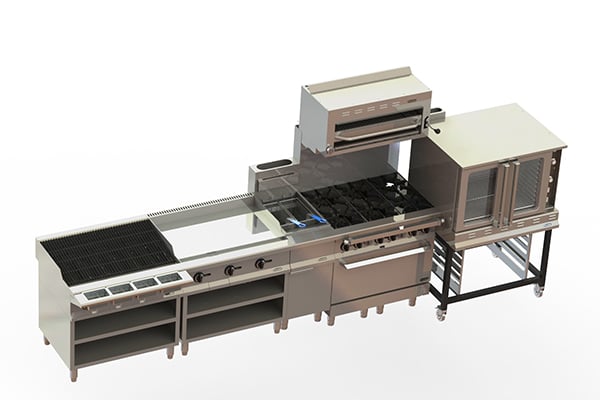
What's Included in the Max Setup
| Equipment | Fuel options | Type | Used for |
| Max Series Gas Range | Gas (NG/LPG) | Countertop, oven base, or custom combination | Multi-burner stovetop cooking, roasting, and baking |
| Max Series Griddle | Gas (NG/LPG) | Countertop or with base options | Ideal for burgers, eggs, and griddle items |
| Max Series Charbroiler | Gas (NG/LPG) | Countertop or with base options | Char-grilling meats, seafood, skewers |
| Max Series Fryer | Gas (NG/LPG) | Countertop or with base options | Deep frying chicken wings, nuggets and snacks |
| Max Series Convection Oven | Gas (NG/LPG) | Single or Double Deck | High-volume baking, roasting, and batch cooking |
| Max Series Salamander | Gas (NG/LPG) | Countertop | Broiling, quick cheese melting, browning, and finishing dishes |
What Restaurants Is the Max Best For?
The Max fits high-turnover diners, steakhouses, grill houses, central kitchens, and multi-site chains handling heavy peak cover counts. Its 32 kW burners and 30.9 kW charbroiler sections deliver rapid heat recovery between tickets, exactly what a packed house ordering steaks and burgers all at once demands.
Big flame, high throughput. The Max is the cookline built for kitchens that measure success in covers per hour and refuse to slow down during peak rushes. When high turnover is the business model, this is the engine room.
How to Decide Between 800X, 900, and Max
Deciding comes down to matching output level to what you're going to cook and how you're going to serve it. Sketch out the busiest service, count the covers, and let that number lead the decision.
1. Choose 800X when the kitchen is small, the menu calls for diverse hot dishes at a low-to-medium output level, or floor space is simply the real constraint. A tight kitchen is usually best suited to a galley layout, so 800X countertop cookline equipment paired with undercounter refrigeration or a chef base refrigerator is the natural match. Hot meal production and cold storage share the same footprint, lined up along the wall, which keeps space utilization as high as it can go.
It's also a smart starting point for a new concept that plans to scale, since modules can be added as covers climb.
2. Choose 900 when running a fine dining restaurant or preparing refined dishes for hotel dinner service. There's enough space here to fit larger appliances, guest expectations are higher, and the last thing you want is equipment that looks out of place undercutting the dining experience you've built.
3. Choose Max when high turnover defines the business and high-volume production happens every day: full-service hotels, fusion restaurants, steakhouses, burger-heavy menus, grill-heavy concepts, chains, anywhere the line needs to recover heat fast, order after order.
On the old debate of a complete suite versus individual modular appliances: a suite gives a compact, coordinated install and a continuous work surface, while modular pieces offer flexibility and easier one-piece replacement. The good news is that all three SHINELONG lines are modular and still build into a coordinated suite, so the choice isn't either/or.
To size it right, start from the menu, forecast the busiest service period, then estimate the portions, pans, fryer baskets, oven loads, and grill orders peak demand will require, leaving room for staff movement, plating, and cleaning. When in doubt, a SHINELONG kitchen designer can run the numbers with you.
Match Your Cookline to Your Kitchen, Not the Other Way Around
The best cookline isn't the biggest, the flashiest, or the cheapest. It's the fully equipped setup that's sized to your menu, your daily production, and your actual space. As a Chinese premium commercial kitchen solution supplier that has delivered thousands of professional kitchens, SHINELONG understands how to build a functional powerhouse and unlock your kitchen's full potential.
It starts with an initial consultation. We work closely with clients to figure out your concept and menu, how you want to serve, and the practical realities of your space. After that discussion, we can put together the right cookline equipment for your business. SHINELONG products come in three tiers, standard, premium, and premium plus, so you can get the suitable lineup without sacrificing your budget.
FAT (Factory Acceptance Test) and SAT (Site Acceptance Test) are essential parts of our process, from manufacturing your kitchen appliances to installing them on site. Once you get your lineup from SHINELONG, you're covered by a 1-year warranty and full aftersales service.
Still not sure which column is yours? That's what we're here for. Share your menu, your requirements, and your kitchen dimensions, and SHINELONG will supply a cookline built around your kitchen. Request a tailored quote from SHINELONG today, and let's build the line your kitchen actually needs.
FAQs
What is cookline equipment?
Cookline equipment is the row of commercial cooking equipment where a kitchen turns raw ingredients into finished plates, think ranges, griddles, fryers, charbroilers, and ovens arranged in the order food actually moves through service. It's usually sold and installed as a matched lineup rather than single units, since everything needs to work together under peak-hour heat. SHINELONG builds three ready-made cookline setups, 800X, 900, and Max, so operators don't have to piece one together appliance by appliance.
What is affordable cookline equipment for small restaurants?
For small restaurants and tight kitchens, countertop cookline equipment is usually the most affordable route since it needs less steel, less floor space, and less ductwork than a full floor-standing suite. 800X series is built exactly for this: modular countertop units in Stainless Steel 201 that keep upfront cost and energy use low without giving up performance. It's a common starting point for food trucks, cafés, and new concepts that plan to add pieces as they grow.
What should I consider when choosing a cookline setup for my restaurant?
The short version: start with your menu and cooking methods, then size everything to your peak covers per hour, not your daily average. After that, check what actually fits your kitchen's footprint and layout, and decide between gas, electric, or a mix based on your utilities and budget. Get those four right and the choice between a lineup like SHINELONG's 800X, 900, or Max mostly makes itself.
How do I know the equipment is durable?
Look at the steel grade and thickness first, that's usually the biggest tell. Commercial kitchens want 304 stainless steel over 201 wherever budget allows, and thicker gauge, 2.0mm versus 1.5mm, for example, means the equipment holds up better under constant high heat and heavy cookware. SHINELONG's 900 and Max lines use 304 stainless steel for that reason, while the entry-level 800X uses a lighter-duty 201 grade to keep costs down for smaller kitchens.
Does the cookline refer to the same thing as the hotline?
Pretty much, yes. "Hot line" and "cookline" both mean the row of hot cooking equipment where food actually gets cooked during service, as opposed to the cold line or prep line where ingredients get prepped and plated. Different kitchens and suppliers just default to different terms for the same station.