After-Sales:
 EN
EN
 AR
AR
 HR
HR
 NL
NL
 FI
FI
 FR
FR
 DE
DE
 EL
EL
 HI
HI
 IT
IT
 PT
PT
 RO
RO
 RU
RU
 ES
ES
 TL
TL
 ID
ID
 SL
SL
 VI
VI
 ET
ET
 MT
MT
 TH
TH
 FA
FA
 AF
AF
 MS
MS
 IS
IS
 MK
MK
 HY
HY
 AZ
AZ
 KA
KA
 UR
UR
 BN
BN
 BS
BS
 KM
KM
 LO
LO
 LA
LA
 MN
MN
 NE
NE
 MY
MY
 UZ
UZ
 KU
KU


News
How to Use Mixer Attachments Efficiently: Dough Hook vs Paddle vs Whisk
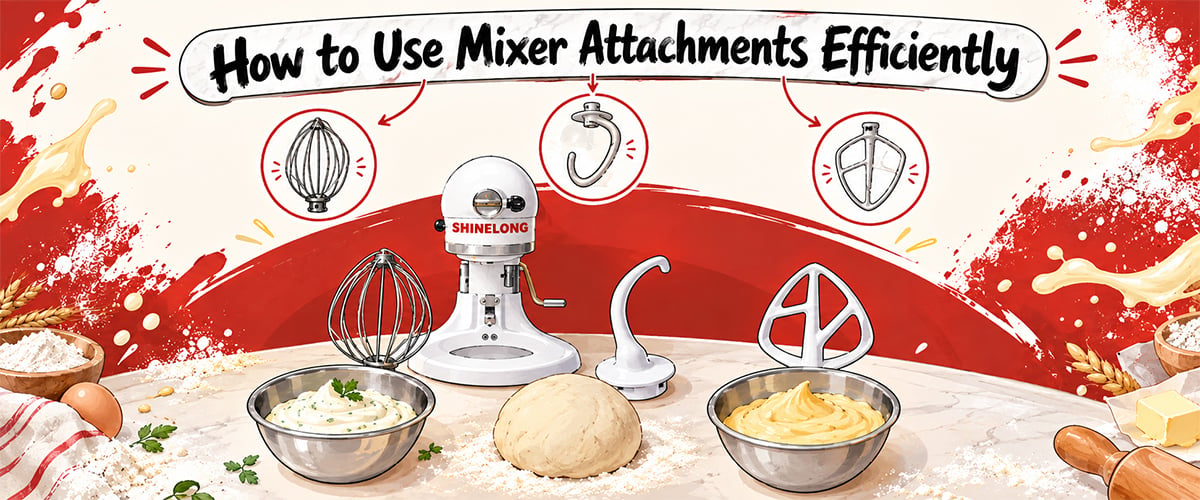
Whether you're prepping dough for bread and pastries or looking to step up your food texture game, a stand mixer is an essential piece of equipment in any professional bakery. With different attachments, it allows bakers to handle specific jobs and process ingredients according to each recipe's requirements, which can improve baking efficiency while creating remarkable texture.
There are 3 common attachments used across most bakeries: the dough hook, the paddle, and the whisk. Picking the wrong one slows down prep, wears out the motor, and ruins texture. So how do you choose the right one? Keep reading to understand these three main attachments, what they're used for, and when to use each for professional baking.
What Are Stand Mixer Attachments (And Why They Matter in a Bakery)
Stand mixer attachments are the interchangeable tools that lock into the mixer, and the most common ones are the hook, the paddle, and the whisk. They're versatile accessories, each one built to handle a different baking task.
For example, making bread leans on the hook, while prepping cookies and cake batter leans on the paddle.
To be honest, picking the wrong one doesn't just ruin the taste and texture of the product; it also hurts a bakery's reputation. Dough that's undermixed comes out dense; overmixed, it turns tough and chewy. Whipped cream that's underbeaten won't hold its shape on a plated dessert. Multiply a small mistake by 50 or 100 batches, and the cost adds up fast: wasted ingredients, wasted labor, and pastries that don't match what's in the display case.
Stand Mixer Accessories Compared: Dough Hook vs Paddle vs Whisk
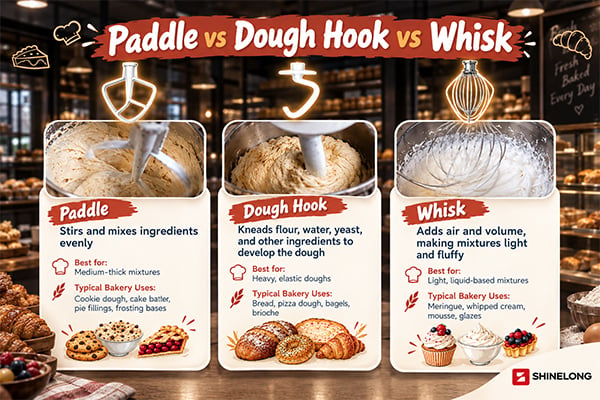
Before turning on the mixer, "Which attachment should I use?" is probably the first question that comes to mind. Here's a quick comparison table to help you pick the right one for your baking process.
| Types of Attachments | Used For | Best For | Typical Bakery Uses | Avoid Using For |
| Dough Hook | Kneads flour, water, yeast, and other ingredients to develop the dough | Heavy, elastic doughs | Bread, pizza dough, bagels, brioche | Batters, whipped items |
| Paddle | Stirs and mixes ingredients evenly | Medium-thick mixtures | Cookie dough, cake batter, pie fillings, frosting bases | Bread dough, egg whites |
| Whisk | Adds air and volume, making mixtures light and fluffy | Light, liquid-based mixtures | Meringue, whipped cream, mousse, glazes | Dense dough |
A quick overview of the difference between these three attachments
The Dough Hook for Bread Making
The quality of the dough plays an important role in the final taste of bread, and that much is undeniable. But kneading dough by hand is intensive work. It means mixing flour, water, yeast, and other ingredients called for in the recipe, then folding and stretching the dough until the gluten strands line up, which is what gives bread its chew and its rise.
In a bakery, it's impossible to knead anywhere from 30 kilograms to several hundred kilograms of dough by hand every day. That's why professional bakers rely on a commercial mixer with a dough hook attachment. It improves overall efficiency, kneads the dough evenly, and frees up bakers to focus on more important steps.
Actually, there are two types of dough hooks: the C-shaped hook and the spiral hook. The C-shaped hook works well on smaller mixer models and standard batch sizes, while the spiral hook is perfect for kneading large batches of dough, which is why it shows up more often in high-volume commercial setups.
Classic Bread & Dough Recipes in a Bakery Setting
- Sandwich loaves and dinner rolls
- Pizza and focaccia dough
- Bagels and pretzels
- Brioche and other enriched doughs
Common Mistakes to Avoid
- Running the mixer too fast, which overheats the dough
- Adding all the flour at once instead of gradually
- Pulling the dough too early, before the "windowpane test" passes
The Paddle for Divise Preparation
The paddle, also known as the flat beater attachment, is a versatile tool for mixing and stirring a wide range of ingredients based on the recipe. It works for mixing cookie dough, making cake batter, stirring butter and flour for tart crusts, and even prepping fondant for pastries.
This kind of blending keeps the mixture dense and smooth rather than fluffy. Thanks to its flat, wide design, the paddle increases the surface contact area with the ingredients, which makes it the ideal attachment for prepping batters and fillings.
Classic Batter Prep Recipes in a Bakery Setting
- Cookie and muffin batters
- Cake batter and quick breads
- Fruit and cream pie fillings
- Creaming butter and sugar for shortbread or scones
Common Mistakes to Avoid
- Overmixing cake batter, which develops gluten and toughens the crumb
- Using the paddle on bread dough (it can't develop gluten the way a hook does)
- Scraping the bowl too rarely, leaving unmixed pockets at the bottom
The Whisk Attachment for Air, Volume & Emulsions
The whisk's thin wires trap air as they spin, which is exactly what light, airy textures need. It's the go-to for anything that has to rise, foam, or hold peaks without the help of yeast or baking soda.
Classic Recipes in a Bakery Setting
- Meringues and soufflés
- Whipped cream and mousse bases
- Aerated buttercream and frostings
- Glazes and emulsified fillings
Common Mistakes to Avoid
- Whipping cream past stiff peaks into butter
- Using a wet or greasy bowl for egg whites (it prevents proper aeration)
- Rushing an emulsion, which causes it to break
Best Stand Mixer Attachments for Your Bakery Menu
The right attachment mix depends on what's actually on the menu:
- Bread-focused bakeries lean heavily on the dough hook and it should be the most durable one in the drawer.
- Cake shops and dessert-focused bakeries run the paddle constantly for batters, fillings, and frosting bases.
- Pastry shops need a whisk that can handle daily meringues and whipped toppings without wearing thin.
Most bakeries need all three eventually. The trick is buying attachments rated for the mixer's full capacity. A home-grade hook forced into a 30-quart commercial bowl won't survive long.
How to Clean Stand Mixer Attachments for Longevity
Attachments take a beating in a working bakery, and cleaning them properly is what keeps them from cracking, rusting, or seizing up early.
- Rinse right after use. Dried batter or dough is harder to remove and can gunk up the mechanism.
- Hand wash stainless steel attachments with warm, soapy water rather than tossing them in an industrial dishwasher, where high heat can wear down coatings over time.
- Dry immediately to prevent water spots and rust, especially on the hook's metal shaft.
- Check the attachment hub, the part that connects to the mixer, for buildup, since a clogged hub is a common reason attachments stop locking in properly.
- Store attachments separately, ideally hanging or in a rack, instead of tossing them in a drawer where the wires or paddle edges can bend.
If you'd like to find the commercial mixer and attachments that fit your production needs, SHINELONG is here to help you put together the right setup for your business. Just let us know what kind of bakery you're running and how much bread you need to prepare each day, and we'll send you a quotation that matches your business. No matter what bakery equipment or design service you're looking for, SHINELONG covers it all.
Frequently Asked Questions
Q: Can a paddle replace a dough hook?
A: Not for real bread dough. A paddle can handle very soft, batter-like doughs, but it can't develop the gluten structure a firm bread dough needs.
Q: How often should bakery mixer attachments be replaced?
A: It depends on usage, but daily commercial use typically wears down attachments every 1–3 years. Watch for bent wires, worn coating, or a hub that no longer locks in snugly.
Q: Do all stand mixers use the same attachments?
A: No. Attachment sizes and hub shapes vary by mixer brand and bowl capacity, so attachments are rarely interchangeable across different mixer models.
Q: Is stainless steel better than coated attachments?
A: For commercial use, yes, generally. Stainless steel resists corrosion better under frequent washing and heavy daily use than nonstick coatings, which can chip over time.