After-Sales:
 EN
EN
 AR
AR
 HR
HR
 NL
NL
 FI
FI
 FR
FR
 DE
DE
 EL
EL
 HI
HI
 IT
IT
 PT
PT
 RO
RO
 RU
RU
 ES
ES
 TL
TL
 ID
ID
 SL
SL
 VI
VI
 ET
ET
 MT
MT
 TH
TH
 FA
FA
 AF
AF
 MS
MS
 IS
IS
 MK
MK
 HY
HY
 AZ
AZ
 KA
KA
 UR
UR
 BN
BN
 BS
BS
 KM
KM
 LO
LO
 LA
LA
 MN
MN
 NE
NE
 MY
MY
 UZ
UZ
 KU
KU


News
How does a commercial kitchen hood work?
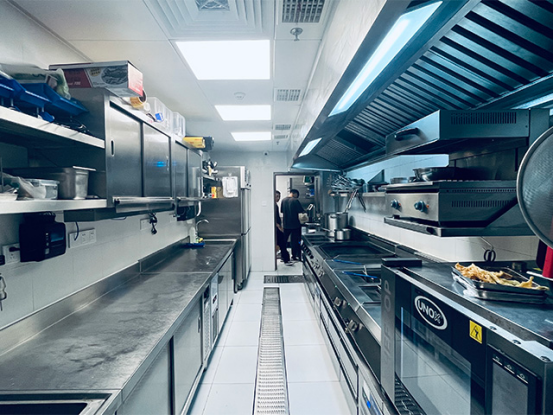
The Core Function of Commercial Kitchen Hood Systems
A commercial kitchen hood works by capturing airborne contaminants generated during cooking and exhausting them outside the building. The system operates on a simple principle: air contaminated with grease, smoke, steam, and heat rises from cooking equipment, enters the hood canopy, passes through filtration, and is transported through ductwork to the exterior. The hood must maintain a capture velocity sufficient to prevent contaminants from escaping into the surrounding space. This velocity, typically measured at 100-150 feet per minute at the hood opening, creates an air current that pulls contaminants upward while the cooking process continues below. A commercial kitchen hood therefore functions as the primary defense against airborne grease accumulation, fire risk, and indoor air quality degradation in professional kitchens.
The Airflow Path: From Canopy to Exhaust Duct
Understanding the airflow path clarifies how each system component contributes to overall performance. Contaminated air enters the hood through the capture zone, the opening beneath the canopy that faces the cooking equipment. Inside the hood, air passes through baffle filters that remove grease particles through a series of directional changes. The cleaned air then enters the exhaust plenum and flows into the ductwork. Exhaust ducts, constructed from welded steel, transport the air upward through the building structure to the roof termination point. At the roof, an exhaust fan creates the negative pressure that drives the entire system. The fan must be sized to overcome the static pressure losses of the filters, ductwork, and weather protection at the termination point. A restaurant kitchen with a 12-foot cooking line typically requires an exhaust fan rated between 6,000 and 12,000 CFM, depending on equipment density and menu type.
Grease Filtration and Fire Safety Mechanisms
The filtration stage performs the critical safety function of separating grease from the airstream. Baffle filters use a series of vertical vanes that force the airflow through multiple direction changes; grease particles, being heavier than air, impact the vanes and drain into a collection trough at the base of the filter. This design achieves filtration efficiency of approximately 75-95 percent for the particle sizes typical of cooking emissions. The remaining grease that escapes the filters deposits on ductwork surfaces, which is why NFPA 96 mandates regular duct cleaning based on cooking volume. Fire suppression systems are integrated into the hood structure, with nozzles positioned above each cooking appliance. When a fusible link melts at approximately 220°F, it releases a wet chemical agent that extinguishes the fire and simultaneously shuts down the gas supply and exhaust fan to prevent the fire from spreading through the ductwork.
Make-Up Air and Building Pressure Balance
A commercial kitchen hood cannot function effectively in isolation; it requires a make-up air system to replace the air it exhausts. When the exhaust fan removes air from the building, the resulting negative pressure must be balanced by fresh air introduced through a make-up air unit. The make-up air unit heats or cools incoming air to maintain kitchen comfort while providing the air volume needed for proper capture. Make-up air should be delivered at 80-100 percent of the exhaust volume, with the balance drawn from general building infiltration. If make-up air is insufficient, the hood loses capture efficiency, doors become difficult to operate, and combustion appliances may fail to vent properly, creating carbon monoxide risks. Kitchen designers typically position make-up air diffusers to deliver air without disrupting the hood's capture pattern, often through overhead supply registers located several feet from the hood opening.
Types of Commercial Kitchen Hoods and Their Applications
Commercial kitchen hoods are available in several configurations, each suited to different kitchen layouts. Wall-mounted canopy hoods are the most common type, installed against a wall above the cooking equipment. Island canopy hoods are suspended from the ceiling and serve cooking lines located in the center of the kitchen, requiring four-sided capture. Single- and double-sided pass-over hoods, also called "eyebrow" or "pass-through" hoods, serve equipment arranged in parallel lines. Compact hoods, designed for small operations, provide reduced capacity for limited cooking surfaces. The hood type selection depends on kitchen layout, equipment arrangement, and ventilation requirements. For example, a 60-seat restaurant with a cooking line against the back wall uses a wall-mounted canopy hood, while a hotel show kitchen with an open layout requires an island hood that captures contaminants from all sides while maintaining sightlines to the dining area.
Practical Considerations for Hood Installation and Maintenance
Installing a commercial kitchen hood involves coordination between the hood manufacturer, ventilation contractor, fire suppression provider, and kitchen equipment supplier. The installation sequence typically includes: positioning the hood canopy, connecting the exhaust ductwork, installing the exhaust fan and make-up air system, integrating the fire suppression system, and commissioning the complete system with airflow measurement and balance. A practical sourcing scenario involves a restaurant renovation where the existing 8-foot hood was replaced with a 10-foot model to accommodate an expanded cooking line. The project required reconfiguring the exhaust ductwork, upgrading the exhaust fan, and coordinating the fire suppression system retrofit. After installation, maintenance requirements include weekly baffle filter cleaning, quarterly duct inspections, and annual professional duct cleaning for moderate cooking volume operations. Operators should verify that the completed installation passes local code inspection and maintain the required inspection and cleaning records.
Q: How does a commercial kitchen hood capture smoke and grease?
A: The hood creates a negative pressure zone above cooking equipment, drawing contaminated air through the capture zone and baffle filters. The filters remove grease particles, and the exhaust fan transports cleaned air through ductwork to the outside.
Q: What is the typical CFM requirement for a restaurant kitchen hood?
A: A restaurant with a 12-foot cooking line typically requires an exhaust fan rated between 6,000 and 12,000 CFM, depending on equipment density and menu type. The exact requirement is calculated from hood area and cooking equipment load.
Q: How often should commercial kitchen hood filters be cleaned?
A: Baffle filters should be cleaned weekly for moderate to heavy cooking operations. Ductwork should be inspected quarterly and professionally cleaned annually, or more frequently for high-volume grease operations per NFPA 96 guidelines.