After-Sales:
 EN
EN
 AR
AR
 HR
HR
 NL
NL
 FI
FI
 FR
FR
 DE
DE
 EL
EL
 HI
HI
 IT
IT
 PT
PT
 RO
RO
 RU
RU
 ES
ES
 TL
TL
 ID
ID
 SL
SL
 VI
VI
 ET
ET
 MT
MT
 TH
TH
 FA
FA
 AF
AF
 MS
MS
 IS
IS
 MK
MK
 HY
HY
 AZ
AZ
 KA
KA
 UR
UR
 BN
BN
 BS
BS
 KM
KM
 LO
LO
 LA
LA
 MN
MN
 NE
NE
 MY
MY
 UZ
UZ
 KU
KU


News
Food Transportation Equipment for Catering: A Complete Checklist
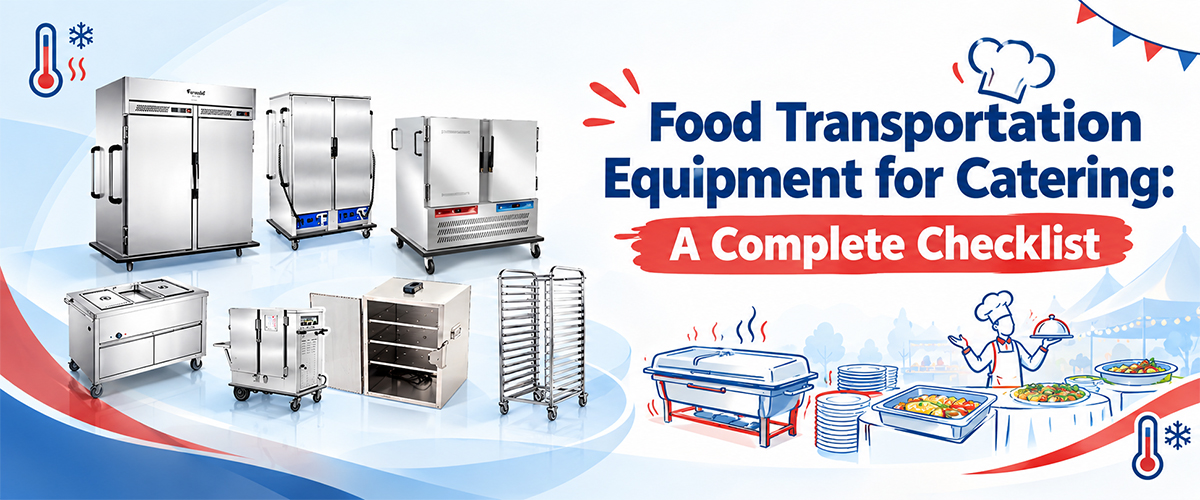
Food transportation play a major role in catering, especially for institutional catering, daily foodservice and large events. When an organization or facility serves a large number of people, meals have to travel from a central kitchen to the point of service, such as a cafeteria, a healthcare facility or an event venue. Along the way, the food must stay at the proper temperature and arrive efficiently and safely.
The right equipment makes that possible. Whether the job is feeding a public institution, catering an off-site event or preparing patient meals for a 600-bed hospital, the setup is built from the same basics: storing prepared food at the right temperature and keeping it safe during transport.
We’ve created this checklist to help you choose equipment for commercial food delivery: what each piece does, what to check before buying, and where it fits best. For temperature limits, loading routines and cleaning schedules, see our full guide on how to transport food safely in institutional foodservice.
Mobile Heated Holding Cabinet
Mobile heated holding cabinets are built to keep fully cooked food at the proper temperature during transport, ensuring it keeps its flavor until served. They are heated cabinets on large castors, so staff can easily deliver a batch of hot meals from the kitchen to the point of service inside a facility. The gap between food being ready and food being dispatched is where hot food usually gets into trouble. A mobile heated holding cabinet is an effective way to prevent this risk. For foodservice facilities that need to deliver prepared food to a serving line, mobile heated holding cabinets are usually the way to go.
What to check before buying:
▪ Capacity in GN pans: Count the pans for the largest dispatch window, then add a margin.
▪ Humidity control: Worth paying for when holding roasted meat, rice or vegetables. Dry heat is better for fried food.
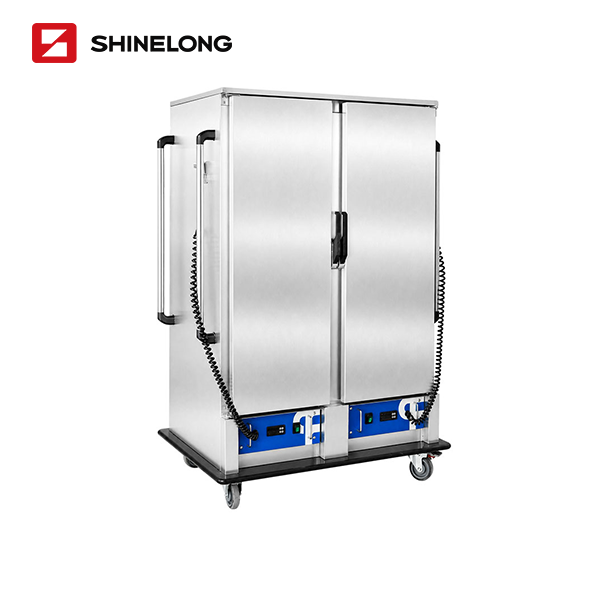
Refrigerated Holding Cabinets
Whether you are transferring salads, desserts, dairy or other chilled prepared food made in advance from a walk-in cold room or blast chiller, and holding it until it is served or taken to the front serving line to be reheated, refrigerated holding cabinets can help. Insulated cabinets, precise temperature control and adjustable racking provide flexible space for holding chilled food safely.
▪ Mobile models: A good choice for large-scale events and public institutions.
▪ Pass-through models: Load from the kitchen side and unload from the dispatch side, which keeps traffic moving in one direction.
▪ Roll-in models: Accept a full pan rack trolley. Recovery time matters. Ask how quickly the cabinet returns to temperature after the door is opened.
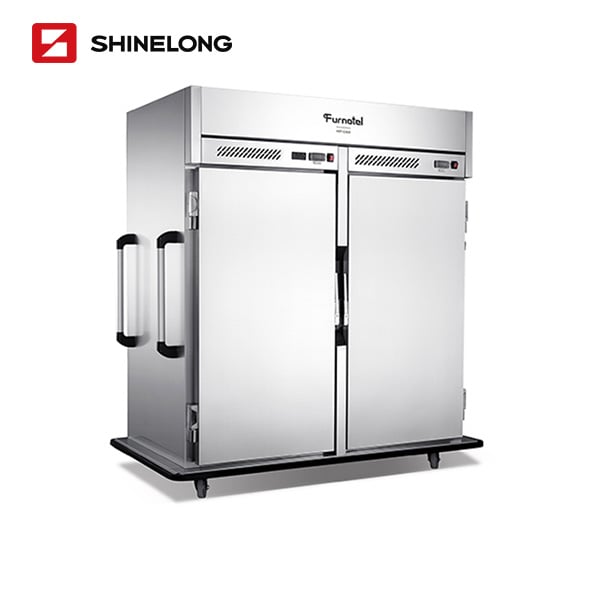
Dual-Temperature Holding Cabinet
A dual-temperature holding cabinet has a heated section and a refrigerated section in one unit. It solves a simple but stubborn problem: one meal, two temperatures. A hot main course and a cold dessert can be staged together without sharing the same air. The key buying point is separate controls with a properly insulated divider. If heat creeps into the cold side, the cabinet is doing two jobs badly instead of two jobs well.
Best for: tray meal service in hospitals, care homes, and correctional facilities.
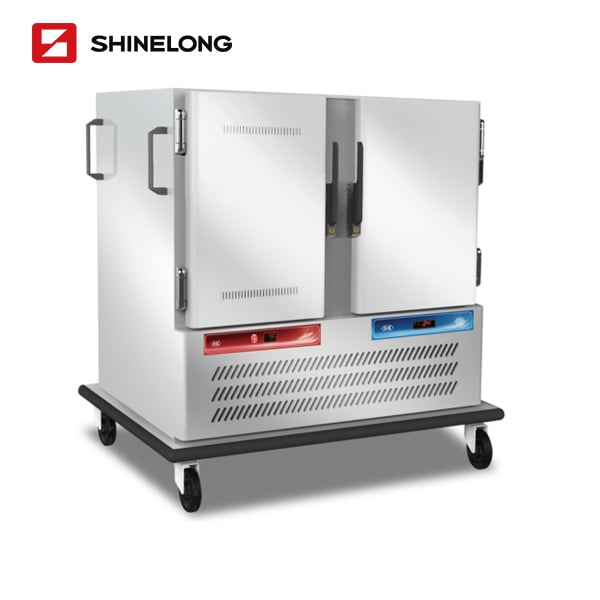
Insulated Food Transport Cart
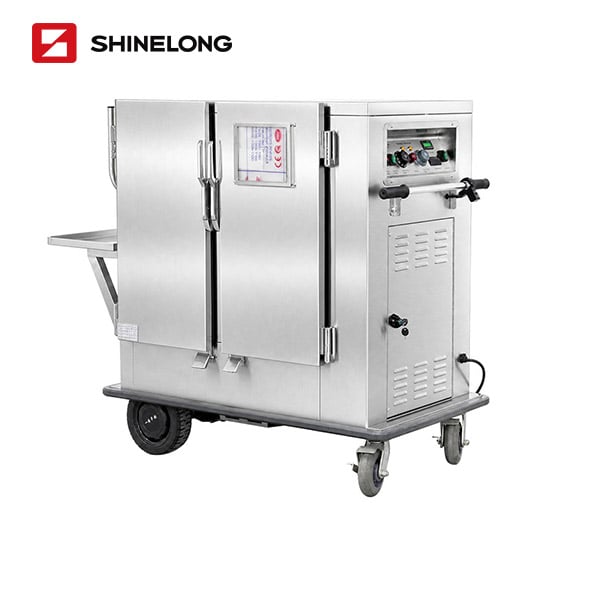
Delivering dispatched meals to a specific location is where an insulated food transport cart excels. For example, healthcare facilities need to transport meals to clinical areas, and some facilities provide in-room service. In these cases, a transport cart allows staff to move a limited number of portioned meals over a short distance while keeping them at an appropriate temperature.
Electric power-assisted transport carts are also available. In hospitals and other healthcare facilities, staff may need to deliver food to different floors or wards several times a day. A power-assisted model can improve efficiency and let staff push the cart with less effort.
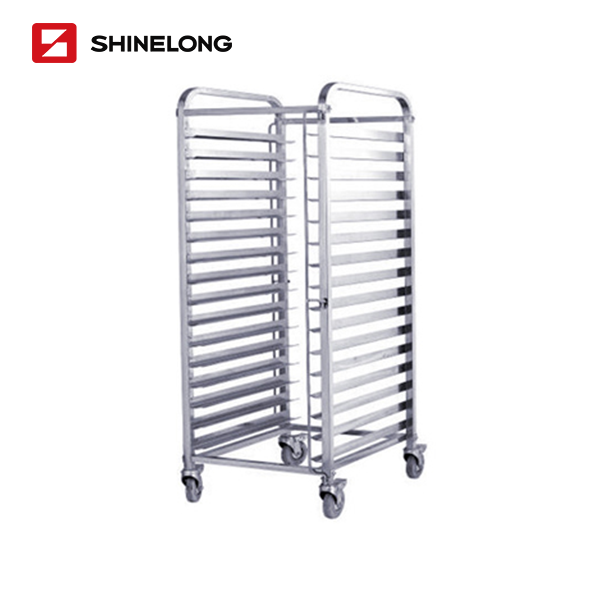
Stainless Steel GN Pan Rack Trolley
A stainless steel GN pan rack trolley moves whole racks of pans between the blast chiller, walk-in, holding cabinets, and loading dock. It doesn't control temperature by itself. Its value is fewer handoffs and faster transfers.
▪ Rail spacing should match the pan depths in use.
▪ Roll-in compatibility with the blast chiller and refrigerated cabinets is the whole point. Measure before buying.
▪ Thermal covers can add short-term insulation for quick internal moves.
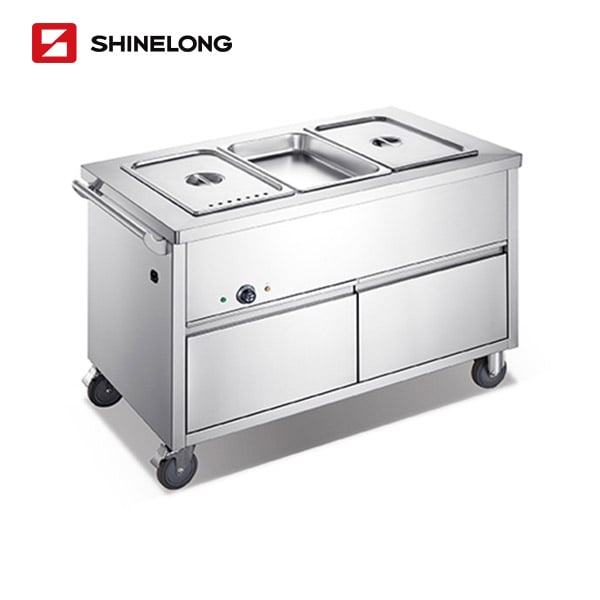
Mobile Bain Marie Trolley
A mobile bain marie trolley keeps food hot in heated wells right where it's served. It's the last link in the chain, the point where transport ends and the plate begins.
▪ Wet vs. dry wells: Wet wells heat more evenly and keep food moist. Dry wells are easier to clean and need no water.
▪ Independent well controls: Let soup, mains, and vegetables each sit at their own temperature.
▪ Pan compatibility: The wells should take the same GN pans used in the carriers. Re-panning at the venue wastes time and heat.
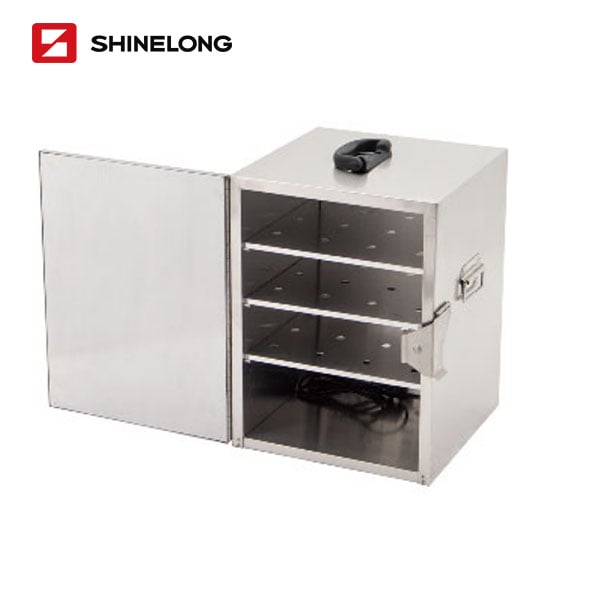
Insulated Food Pan Carriers
Insulated food pan carriers are portable, unpowered boxes that keep hot food hot and cold food cold. Caterers also call them catering food carriers, hot food carriers, or hot boxes, and they're the backbone of off-site catering.
Which Food Container Is Suitable for Transporting Food?
The right food transport container is the one that fits the equipment, survives the temperature, and keeps food sealed in transit. It's the smallest item in the system and the one most often chosen last, usually after the expensive equipment has already been bought.
Gastronorm (GN) Food Pans as the Standard
Gastronorm pans are the size standard that lets food move from oven to cabinet to carrier to service without being transferred. A full-size GN 1/1 pan measures 530 × 325 mm, and fractional sizes (1/2, 1/3, 1/4, and smaller) let mixed menus share one slot.
▪ One warning: the US full-size hotel pan (12 × 20 in) is close to GN 1/1, but not identical. Pick one standard and stick with it across every piece of equipment.
Choosing the Right Container Material
| Material | Heat Tolerance | Weight | Best For |
| Stainless steel | Oven, steam table, and freezer | Heaviest | Cooking, hot holding, and transport in one pan |
| Polycarbonate | Cold to steam table (not oven) | Light | Cold storage, display, hot holding |
| Polypropylene | Lower heat limits | Lightest | Cold storage, prep, ambient food |
Stainless steel is the safe all-rounder. Plastic pans earn their place in cold chains and in jobs where carrying weight matters. Check each manufacturer's temperature rating before mixing materials with hot food.
Pan Depth and Capacity
Pan depth changes how fast food chills and how long it holds heat. Shallow pans (20–65 mm) chill faster in a blast chiller and suit roasts and baked items. Deeper pans (100–150 mm) suit soups, stews, and rice, and hold heat longer on the road. The same dish might use a shallow pan for chilling and a deeper one for transport.
Building a Reliable Food Transport System with SHINELONG
It’s impossible to set up an efficient and reliable food transport system by relying solely on equipment. Workflow, routines and layout design are all key aspects of the entire process. Learn more about how to transport food safely in institutional foodservice.
If you are struggling with food transport system optimization, transport routine design or commercial kitchen equipment selection, contact SHINELONG for a free consultation. We are here to support you anytime.