After-Sales:
 EN
EN
 AR
AR
 HR
HR
 NL
NL
 FI
FI
 FR
FR
 DE
DE
 EL
EL
 HI
HI
 IT
IT
 PT
PT
 RO
RO
 RU
RU
 ES
ES
 TL
TL
 ID
ID
 SL
SL
 VI
VI
 ET
ET
 MT
MT
 TH
TH
 FA
FA
 AF
AF
 MS
MS
 IS
IS
 MK
MK
 HY
HY
 AZ
AZ
 KA
KA
 UR
UR
 BN
BN
 BS
BS
 KM
KM
 LO
LO
 LA
LA
 MN
MN
 NE
NE
 MY
MY
 UZ
UZ
 KU
KU


News
How to install a commercial range vent hood?
Understanding Commercial Range Vent Hood Requirements and Compliance
NFPA 96 Standards and Fire Safety for Type I Hoods
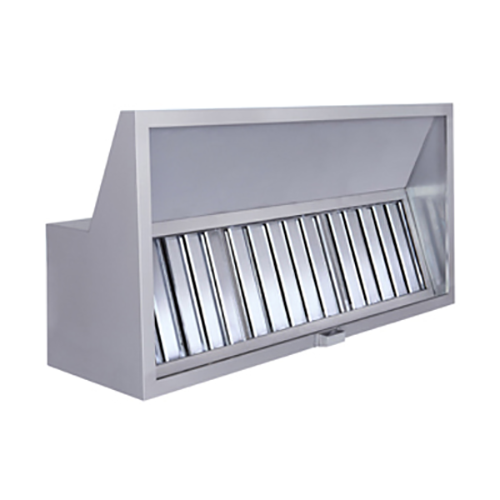
NFPA 96 sets the benchmark for fire safety in commercial cooking environments using Type I hoods—systems engineered to capture grease-laden vapors from frying, grilling, and broiling while mitigating ignition risks. Key construction and operational mandates include:
- Non-combustible materials: minimum 18-gauge steel or 0.043-inch stainless steel
- Minimum 6-inch overhang beyond all cooking surfaces
- Fire-rated clearances: 18+ inches from combustible materials (6" for non-combustible)
- Integrated automatic fire suppression systems using UL 300–compliant chemical agents
Per the 2025 NFPA 96 update, high-volume kitchens require quarterly professional cleanings; solid-fuel operations (e.g., wood-fired ovens or charcoal grills) must be serviced monthly. Noncompliance correlates strongly with severe outcomes: Ponemon Institute’s 2023 study found average fire-related losses of $740,000 per incident—and regulatory penalties can compound those costs.
Local Permitting, Mechanical Code Alignment, and Hood Classification
Permitting hinges on strict alignment with local mechanical codes, most commonly the International Mechanical Code (IMC), enforced by municipal building departments or fire marshals. Authorities verify three core elements:
-
Accurate hood classification, as misclassification accounts for 34% of inspection failures (industry field data). Browse our full Type I & Type II commercial hood models on our product page :
Type Function Fire Suppression Required I Grease removal Yes II Steam/odor control No - Exhaust flow rates (CFM per linear foot) clearly labeled per UL 710 certification
- Ductwork integrity—including sealing methods, material gauge, and slope compliance
Installers must submit engineered plans demonstrating capture velocity calculations, duct sizing, and UL 710 validation. Engineering sign-off is required before permit approval in most jurisdictions.
Sizing, Siting, and Engineering the Commercial Range Vent Hood System
Proper engineering of commercial range vent hood systems demands precision—not estimation. Undersized systems fail to contain airborne contaminants; oversized units waste energy, disrupt thermal layering, and induce negative pressure. Success begins with quantifying exhaust demand and positioning components to intercept emissions at the source.
CFM Calculation Based on Cooking Equipment and Load
Required Cubic Feet per Minute (CFM) is determined by cookline configuration, appliance BTU output, and menu-driven peak loads—not generic rules of thumb. Use this validated methodology:
- Linear-foot baseline: 150–200 CFM per foot of cookline length
- Appliance-specific adders: 50–350 CFM per burner or surface, scaled to BTU output (e.g., +250 CFM for charbroilers)
- Peak-load multiplier: Apply 1.25–1.5× baseline for high-volume frying, wok cooking, or simultaneous high-heat operation
A 10-foot cookline with four high-output fryers requires ≈2,800 CFM before applying safety margins—never a rounded-up fan selection. Always cross-check final CFM against equipment submittals and UL 710 airflow labels. You can match suitable exhaust fans, hoods and kitchen equipment via our product catalog.
Optimal Hood Placement, Capture Velocity, and Canopy Dimensions
Complete fume capture depends on four interdependent spatial parameters:
- Mounting height: 5–7 feet above finished floor—or 24–36 inches above cooking surfaces (24–30" for griddles/fryers; up to 36" for charbroilers)
- Canopy overhang: Extend 6–12 inches beyond all appliances on sides and front
- Capture velocity: Maintain 100–150 feet per minute (fpm) across active cooking zones
- Plenum velocity: Limit duct airflow to 1,500–2,000 fpm to prevent grease condensation and buildup
Even minor deviations degrade performance: one peer-reviewed field test recorded a 40% drop in particulate capture when hood height exceeded optimal by just 4 inches over fryers—creating persistent “escape zones.”
Commercial Range Vent Hood Installation: Mounting and Ductwork
Structural Mounting, Clearance, and Height-to-Cookline Guidelines
Commercial hoods are structural components—not fixtures—and must be anchored directly to ceiling joists or structural steel beams using heavy-duty mounting brackets rated for 3–4× the hood’s weight (often 200 lbs for stainless units). Critical clearance requirements per NFPA 96-2023 include:
- Minimum 18" vertical clearance between hood top and combustible ceilings
- 6" clearance for non-combustible surfaces (e.g., concrete or gypsum board with metal backing)
Height above cooking equipment is equally critical:
- Griddles & fryers: 24–30"
- Charbroilers: up to 36" to accommodate flare-ups
Common oversights—such as mounting solely to drywall, exceeding 30° tilt tolerance, or allowing insufficient vertical clearance—lead to heat stratification, grease migration into ceiling cavities, and premature system failure.
Duct Routing, Roof Penetration, and NFPA 96–Compliant Exhaust Path
Duct design must prioritize direct, vertical routing using fire-rated materials certified to NFPA 96. Acceptable ductwork includes:
- Minimum 16-gauge galvanized steel with continuous welded seams (flexible duct is prohibited)
- 18" clearance maintained from all combustibles along the entire exhaust path
- UL-rated storm collars and flashing kits at roof penetrations
- Duct sleeves sloped ¼" per foot for condensate drainage
- Exhaust terminals located ≳10 feet from any air intake or operable window
Fire dampers are mandatory where ducts penetrate fire-rated walls or floors. Per IMC 2021, access panels must be installed every 12 feet for cleaning and inspection. Most jurisdictions enforce 0.035" minimum duct thickness and require grease-tight slip joints sealed with high-temperature duct mastic—not tape or caulk.
System Integration, Verification, and Professional Best Practices
Rooftop Fan Synchronization, Air Balance, and Makeup Air Coordination
Optimal hood performance relies on precise integration between exhaust, makeup air, and building pressure dynamics. Mismatched airflow creates dangerous negative pressure—documented cases show up to 37% efficiency loss during peak service due to unbalanced systems. Modern solutions include:
- Hood-mounted controllers that modulate rooftop fan speed in real time based on cooking activity
- Makeup air units delivering 85–95% of exhausted volume, per ICC guidelines
- For kitchens exceeding 400 CFM: integrated building management systems (BMS) monitoring differential pressure continuously, maintaining ≈0.02 inch WC variance
Failure to coordinate makeup air violates NFPA 96 and risks backdrafting combustion gases from gas-fired equipment—a serious life-safety hazard.
Commissioning Tests, Smoke Capture Validation, and Common Installation Errors
Post-installation verification is non-negotiable. ANSI/ASHRAE 154–compliant smoke capture testing confirms containment at a standardized 2.5 ft/sec (150 fpm) capture velocity—visible vapor must remain fully within the hood canopy. In 2023 field audits, 62% of failed commissioning events traced to just three recurring errors:
- Undersized duct transitions violating NFPA 96 clearance or velocity limits
- Misaligned exhaust plenums inducing turbulence and airflow short-circuiting
- Incorrect filter loading—either over-packed (restricting airflow) or under-loaded (reducing capture)
Professionals validate uniform canopy airflow using calibrated thermal anemometers—not visual estimates—before issuing certification. Final testing must replicate actual service conditions: all cooking modes, including simultaneous high-BTU operation, must be verified under load.